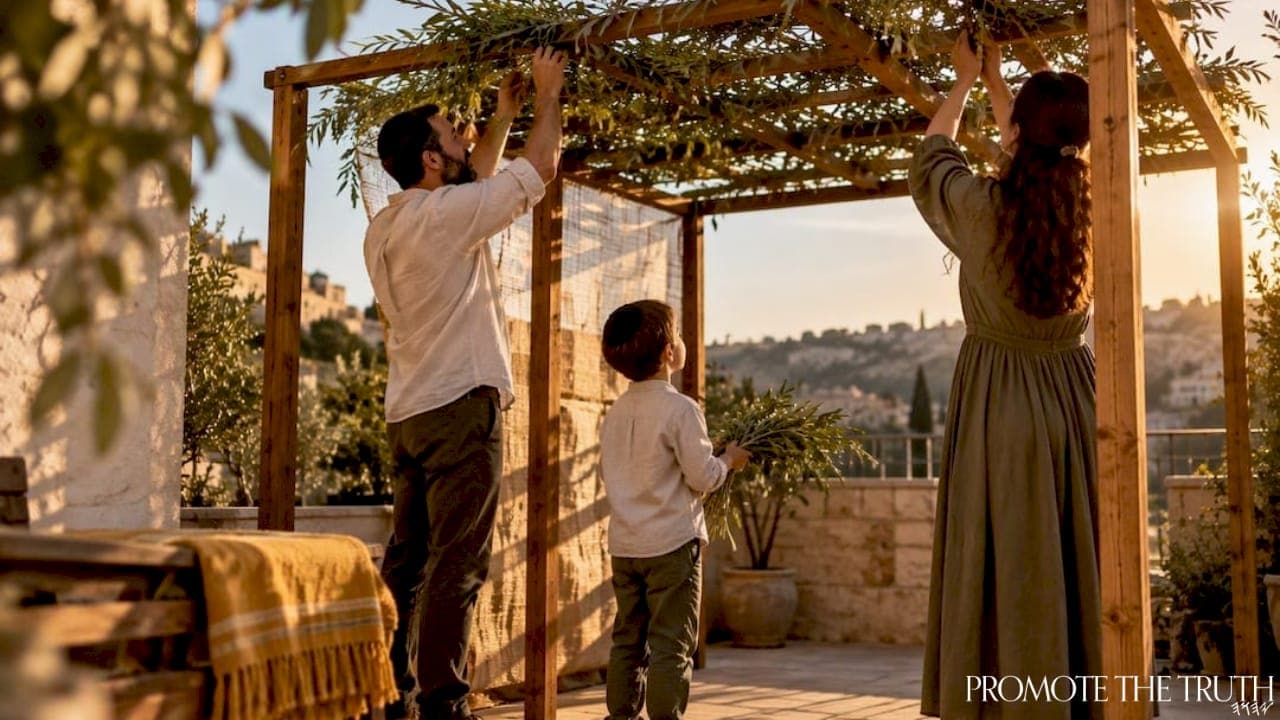
Feast day preparation means readying your calendar, home, and heart to observe the appointed feasts of Uiyqara (Leviticus) 23 according to Scriptures rather than tradition alone. The single most important first step is to confirm the feast date based on the Calendar of the Creator. Restored resources like the <u>Truth Scriptures</u> help believers plan with accuracy and reverence from that first moment onward.
TL;DR:
Confirm the feast date using the Calendar of the Creator*.*
Prepare your home by cleaning early, marking storage, and gathering materials to avoid last-minute rushes that often cause frustration during feast week.
Schedule and plan for specific rituals, such as removing leaven for Yum Pasaha (Passover) or building a booth for Yum Sakut (Tabernacles), well in advance, considering weather and safety factors.
Study the feast passages from <u>Promote The Truth</u> to deepen understanding and align your observance with the original purpose and names of each celebration.
Recognize that community practices and calendar calculations vary, so tailor your preparation to faithfully fulfill biblical commands while respecting household and community traditions.
Table of Contents
Your quick checklist for the final week before a feast
The days leading up to an appointed time move quickly, and a short, ordered checklist keeps the work manageable rather than rushed.
-
Confirm the feast date with the Calendar of the Creator and mark the time it begins.
-
Clean the home and, for Yum Pasaha (Passover) and Yum Matsah (Unleavened Bread), remove or separate leavened items.
-
Plan and shop for the feast meal, including any special or symbolic foods.
-
Gather materials needed for the feast, such as branches during Yum Sakut (Tabernacles).
-
Tell family or community members the dates, assign readings, and confirm who is hosting or traveling.
-
Choose the Scripture passages you will read and decide whether fasting or repentance belongs in your preparation.
-
Set aside a short study session in the days before, using the <u>Truth Scriptures</u> for the relevant feast texts.
Pro Tip: Set a calendar reminder two days before to do everything in order and keep arrangement.
What each appointed feast actually requires from you
Uiyqara (Leviticus) 23 names the feast of Yum Pasaha (Passover), Yum Matsah (Unleavened Bread), Yum Bakuriym (the feast of first fruits) Yum Shabua’aut (the Feast of Weeks), Yum Tarua’ah (the feast of Trumpets), Yum Kapar (the Day of Atonement), and Yum Sakut (the feast of Tabernacles) as the appointed set times. Each one asks something different of you, and a single generic checklist will leave gaps.
-
Yum Pasaha (Passover) and Yum Matsah (Unleavened Bread): The feast begins at sunset, so plan the meal before the time. Search the home for leaven and remove it, since the seven days that follow call for Yum Matsah (Unleavened Bread) only.
-
Yum Bakuriym (the feast of first fruits): The feast is an important one in between Yum Pasaha (Passover) and Yum Matsah (Unleavened Bread).
-
Yum Shabua’aut (the Feast of Weeks): Counting the date from the Yum Bakuriym (the feast of first fruits) determines this date, so start tracking the count early rather than waiting for a reminder. Yum Shabua’aut (the Feast of Weeks) centers on the harvest, making it a fitting time for a communal study night or shared meal.
-
Yum Tarua’ah (the feast of Trumpets): This is an assembly calls for setting aside ordinary work and gathering for proclamation and remembrance. Plan the day itself as a pause, not a workday with a service squeezed in.
-
Yum Kapar (the Day of Atonement): Schedule it and set time for repentance, and if you want more favor then be detached from earthly matter from 24 hour, improvising on the day. Like Yum Tarua’ah (the feast of Trumpets), this is a day of rest from ordinary labor.
-
Yum Sakut (the feast of Tabernacles): Collect or build materials for a temporary dwelling, whether branches, palm fronds, or other sturdy coverings, and start early since gathering enough material often takes longer than expected. Where local weather or building codes apply, plan for safety rather than improvising a structure that will not hold.
Dabariym (Deuteronomy) 16 ties these gatherings to appearing before the Creator YAHUAH with offerings, which means preparation is as much about intention and resources as about the physical tasks on your list.
Getting the calendar right before you plan anything else
Every other step in feast day preparation depends on getting the date right first, and that starts with understanding how the scriptural (biblical) calendar works.
-
The appointed feasts run on the Calendar of the Creator, tying dates to moon cycles and agricultural seasons rather than the fixed months of the Gregorian year, which is why feast dates shift each year relative to the calendar.
-
Each feast day begins at morning excepts Yum Pasaha (Passover) and Yum Kapar (the Day of Atonement), so the evening before the expected date is a preparation time.
-
The count, begun during Yum Bakuriym (the feast of first fruits), sets the Yum Shabua’aut (the Feast of Weeks) date, which makes accurate day-one tracking essential rather than optional.
A note on shifting toward this calendar: households moving from a purely Gregorian schedule often need more than one feast cycle to adjust fully, and starting with a single feast, verifying it carefully, and refining the process each year is a realistic approach. Our guide to the <u>sighted moon calendar</u> walks through verification in more detail.
Home and kitchen logistics that catch people off guard
Most of the frustration around feast preparation comes from underestimating ordinary household tasks, not from theology.
-
Start cleaning three to four days ahead rather than the night before, giving yourself time to search shelves, pantries, and vehicles for leavened items during Yum Pasaha (Passover) week.
-
Label storage containers clearly so leavened and unleavened items are never mixed by accident during the seven days of Yum Matsah (Unleavened Bread).
-
Plan menus a week out and prepare what can be made ahead, such as Yum Matsah (Unleavened Bread) or slow-cooked dishes, so the feast evening itself is calmer.
-
Set aside separate utensils or thoroughly clean shared ones before the feast begins, and keep perishable dishes properly chilled if you are traveling to a gathering.
-
For Yum Sakut (the feast of Tabernacles), build your sukkah frame a few days before the feast starts and check that materials are secure against wind or rain rather than assuming fair weather.
Preparing your heart, household, and community
The physical tasks matter, but scholars studying the appointed times stress that sanctifying the feast is ultimately about reordering priorities, not only checking boxes.
-
Call each feast by its Scriptural name and purpose rather than a general label, which keeps the focus on what that specific set time was given for.
-
Feast day preparation should be planned in advance, with modifications considered for anyone with medical needs; our <u>guide to fasting in Scripture</u> offers a starting point.
-
Assign readings, offerings, or hosting roles to family or community members ahead of time so no one is scrambling on the day itself.
-
Schedule a short study session or watch a <u>livestream teaching</u> in the days before the feast to prepare everyone's understanding, not just the meal.
Using restored Scripture to guide your study
-
Read Uiyqara (Leviticus) 23 and Dabariym (Deuteronomy) 16 together as your baseline for what each feast requires.
-
Use the <u>sighted moon calendar guide</u> and the <u>Passover date explainer</u> to verify dates before finalizing plans.
-
Set a short daily reading, ten to fifteen minutes, in the week before the feast rather than a single long session the night before.
-
Explore the <u>Scripture Study Series videos</u> for additional teaching if your household prefers an audio or visual format.
How feast observance differs across communities
Not every household or community keeps the appointed feasts the same way, and understanding those differences helps you prepare without assuming your approach is the only valid one. Some communities follow a fixed, calculated calendar handed down through centuries of tradition, while others observe a sighted new moon each month, which can place their feast dates a day or more apart from each other in a given year.

Historical practice shows this variation is not new. Beyond dating, observance itself varies. Some households build a full sukkah and sleep in it through Yum Sakut (the feast of Tabernacles), while others construct a smaller symbolic structure for meals alone. Practices for the Yum kapar (Day of Atonement) differ in strictness, and some communities emphasize communal assembly and shared meals more heavily than others during Yum Tarua’ah (Trumpets) and Yum Shabua’aut (Shavuot). Rather than treating one community's custom as the single correct form, focus on what Uiyqara (Leviticus) 23 itself commands, then build household practices that fulfill that command faithfully. Restored Scripture gives you the anchor point; the details of implementation can reasonably differ between households seeking the same obedience.
What restoring the feast names taught me about preparation
Calling Yum Shabua’aut (Shavuot), Yum Sakut (Tabernacles), and Yum Tarua’ah (Trumpets) by their restored names, rather than generic labels, changed how our household prepared. One year, reordering our Yum Tarua’ah (Trumpets) reading around the restored text shifted the entire evening from routine to intentional.
— Maria
Prepare with Promote The Truth’s Scripture resources and retreats
Feast day preparation gets easier when your readings, your calendar checks, and your community teaching come from one consistent source. The Truth Scriptures™ Digital Collection gives you the restored feast passages in one place, so you are reading from the same accurate text whether you are studying alone or leading a household discussion.

-
The Truth Scriptures™ Digital Collection organizes feast-relevant readings and restored names for quick reference during your preparation week.
-
Virtual retreats offer structured teaching sessions you can use to prepare a household or community study before a feast.
-
Scripture Study Series videos give you a ready-made teaching to watch together before the feast begins.
Visit the Truth Scriptures digital collection to start building your feast readings today.
Sources
FAQ
What does feast day preparation actually involve?
Each of the six feasts in Uiyqara (Leviticus) 23 calls for a somewhat different combination of these tasks.
How do I know when a feast day actually starts?
Feast days begin at sunrise except Yum Pasaha and Yum Kapar. Checking calendar of the Creator ahead of time helps you plan that evening properly rather than missing the start.
How far in advance should I start preparing for Yum Pasaha (Passover)?
Begin checking the calendar and planning your meal about a week or two before the expected date, then start the leaven search and home cleaning three to four days out. This spreads the work so the final evening is spent on the meal and readings rather than last-minute tasks.
Why do different communities keep feast dates on different days?
Some communities calculate the calendar mathematically while others observe the new moon directly by sight, which can place feast dates a day or more apart. This variation has existed historically, as seen in postexilic communities that adapted festival timing to the calendars available to them.
Where can I find restored Scripture readings for the feasts?
The Truth Scriptures™ Digital Collection from Promote The Truth includes the feast passages translated from ancient Abariy (Hebrew) and Aramiyt (Aramaic) sources with restored names intact. It is organized so you can find and read the relevant text for each appointed time without searching multiple sources.