
Scriptural (Biblical) community living is defined as a Spirit-shaped way of life built on four foundational practices: the Emissaries’ (apostles’) teaching, fellowship (koinonia), that is, covenantal fellowship, breaking of bread, and prayer. These practices, drawn directly from Ma’ashiym (Acts) 2:42–47, produce spiritual growth and relational harmony within a faith community. When you study Scriptural (Biblical) community living principles with sincerity, you gain more than knowledge. You gain a pattern for living that meets real needs, builds genuine trust, and reflects the character of YAHUAH to the world around you. Promote The Truth exists to help you access the original Scriptural text that makes this study possible.
What Are the Foundational Scriptural (Biblical) Practices for Community Living?
The four foundational practices of Ma’ashiym (Acts) 2:42–47 form the backbone of every healthy faith community. They are not suggestions or optional programs. They are the daily commitments that shape a community’s identity and mission.
-
Emissaries’ (Apostles’) Teaching: This means learning and living the testimony and instruction of the Mashiyha (Messiah). Teaching is not passive. It requires regular engagement with Scripture, honest discussion, and personal application. A community that neglects teaching quickly drifts from its foundation.
-
Fellowship (Koinonia): True Scriptural (Biblical) fellowship (koinonia) is a covenantal partnership and joint participation in a set-apart way of life. It is not merely social fellowship or shared meals. Relationships must precede any economic sharing; authentic generosity arises from transformation, not obligation.
-
Breaking of Bread: Communal meals embody reconciliation and unity. The Master’s (Lord’s) Supper sits at the center of this practice, reminding participants of the sacrifice that makes community possible. Shared meals also create the relational warmth that sustains long-term commitment.
-
Prayer: Corporate and individual prayer anchor communal life in dependence on YAHUAH. A community that prays together regularly develops a shared spiritual vocabulary and a collective trust in set-apart (divine) provision.
The believers continued to devote themselves to the teachings of the emissaries. They were devoted to the community in fellowship, shared meals together, and prayed together.A sense of awe and fear came over everyone who heard about what had happened. And Aluah performed miracles, signs, and wonders through the emissaries.” Ma’ashiym (Acts) 2:42–43.
These four practices work together as a system. Remove one, and the community weakens. Sustain all four, and the community becomes a visible expression of the Malakuta (Kingdom).
How Does the Early Set-apart Assembly (Church) Model in Ma’ashiym (Acts) 2:42–47 Illustrate Scriptural (Biblical) Community?
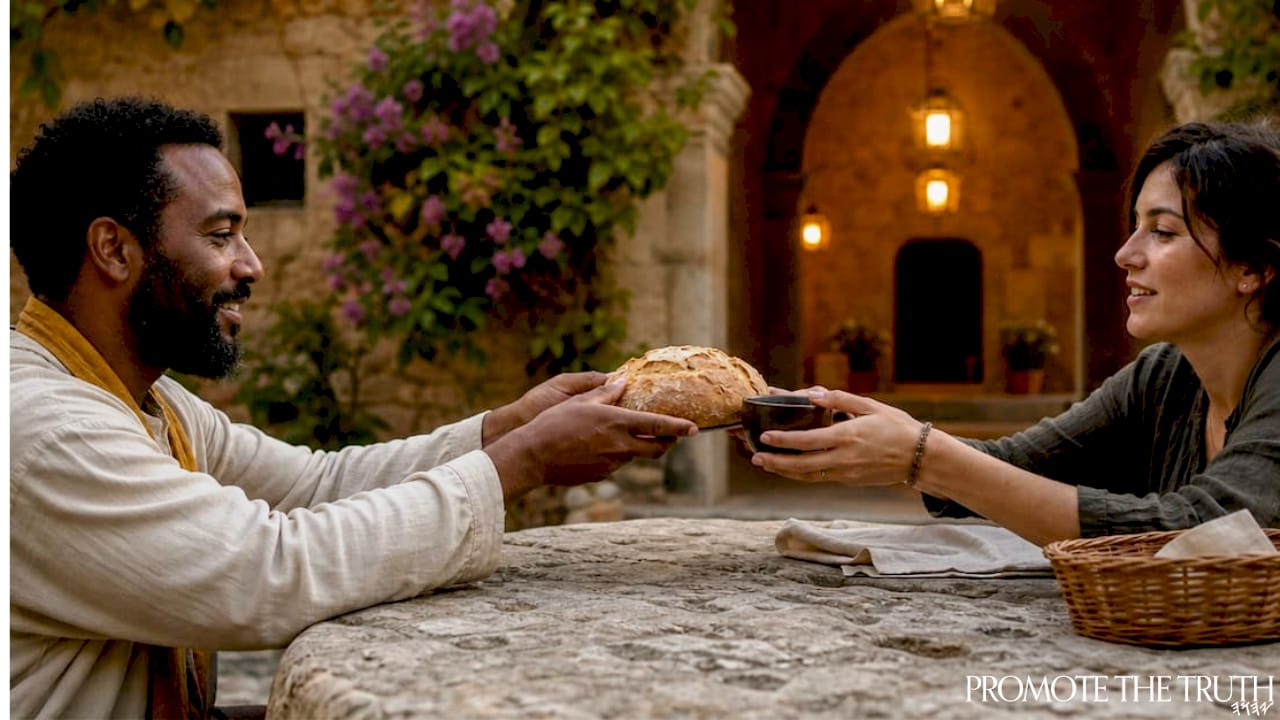
The early Set-apart Assembly (Church) in Ma’ashiym (Acts) 2 was not an idealized experiment. It was a living, breathing community shaped by the Spirit’s presence and the believers’ daily choices. Understanding its defining characteristics helps you build a faith community that reflects the same authenticity.
| Feature | Description | Application today | ||
|---|---|---|---|---|
| Daily devotion | Teaching and fellowship were daily commitments | Schedule regular gatherings, not just weekly services | ||
| Spontaneous sharing | Resources were shared according to need, not through enforced equality. | Create a community fund or a need-response system. | ||
| Dual gathering model | Public worship was combined with intimate home gatherings. | Pair corporate worship with small-group accountability. | ||
| Visible joy and reverence | Awe and gladness characterized their communal life. | Cultivate gratitude and reverence in every gathering. | ||
| Favor with outsiders | Their way of life naturally attracted new believers. | Let authentic love be your primary form of outreach. |
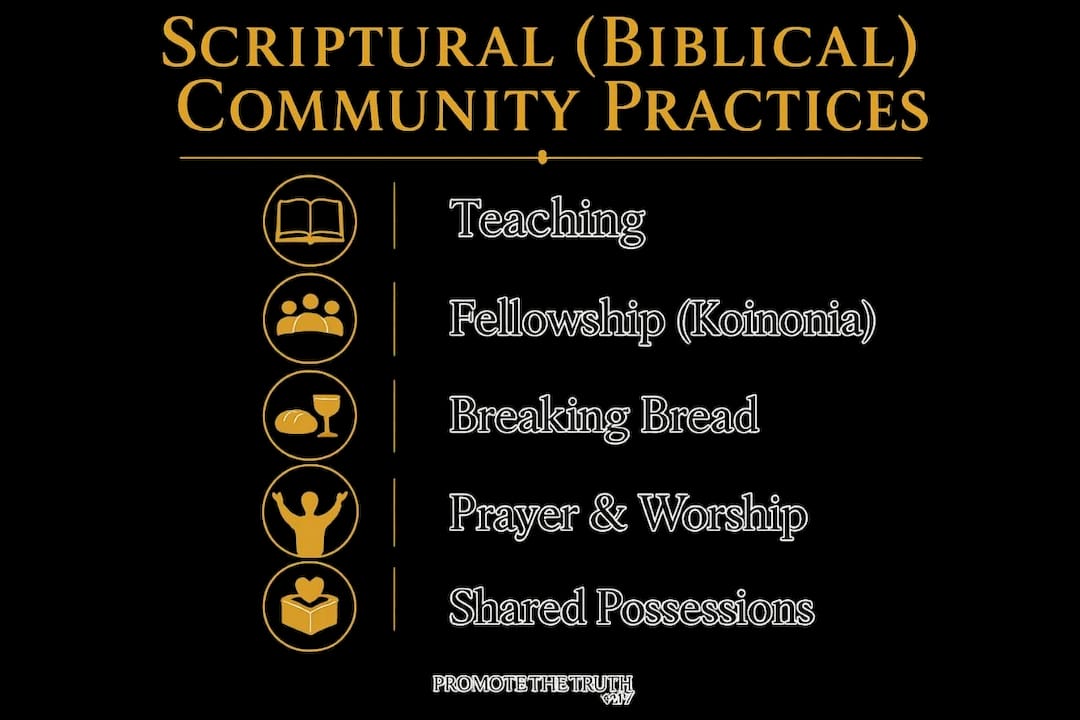
A healthy Scriptural (Biblical) community grows both larger and smaller at the same time. Public worship builds a shared identity, while intimate home gatherings provide personal accountability and spiritual depth. This dual structure is not a modern Assembly (church) growth strategy. It reflects the organic pattern that the early believers practiced from the beginning.
The sharing of possessions in Ma’ashiym (Acts) 2 is often misread as enforced communism. It was not. Believers gave spontaneously as needs arose, driven by Spirit-inspired generosity. That distinction matters enormously. Forced redistribution creates resentment. Willing generosity builds trust.
Pro Tip: Start small. Before launching a community fund or shared resource system, build six months of relational trust through consistent meals and prayer. Generosity flows naturally from genuine relationship.
The role of community in Scriptural learning cannot be separated from the Ma’ashiym (Acts) 2 model. Teaching was communal, not solitary. The early believers learned together, questioned together, and applied Scripture together.
What Practical Scriptural (Biblical) Community Guidelines Support Spiritual Growth?
Healthy Scriptural (Biblical) community guidelines protect both the mission and its members. They are not bureaucratic rules. They are expressions of YAHUAH’s character: fairness, set-apartness (holiness), and compassion applied to daily communal life.
Compassion (Grace)-Based Conflict Resolution
Conflict is inevitable in any community. The question is whether you address it with compassion or avoid it. Scriptural (Biblical) accountability requires repair and restoration when breaches occur. The goal is never punishment. The goal is reconciliation and the protection of the community’s integrity.
-
Name the breach clearly. Vague accountability protects no one. Identify the specific behavior or harm with honesty and care.
-
Involve the right people. Matatiyahu (Matthew) 18 provides a clear model for escalation: start with the individuals involved, then bring in witnesses, and finally involve the wider community if needed.
-
Pursue restoration, not removal. The default posture is restoration. Removal is a last resort, reserved for cases of unrepentant harm.
-
Document agreements. Written covenants or membership agreements clarify expectations and help reduce future conflict.
Protecting the Vulnerable
Community protection includes restitution for wrongs, care for the poor, widows, orphans, and foreigners, as well as compassionate (merciful) lending practices. These are not optional expressions of generosity. They are core expressions of YAHUAH’s compassionate character, built into the community’s structure.
-
Establish a clear process for identifying and meeting the financial needs of the community.
-
Create a designated role or team responsible for the pastoral care of vulnerable members.
-
Review the community’s bylaws annually to ensure they reflect Scriptural (Biblical) values of protection and fairness.
Set-apart Assembly (Church) bylaws serve a specific purpose: ensuring that everything is done in proper order and with dignity, as Shaul (Paul) instructs in Qaranatiym Alaf (1 Corinthians) 14:40. A well-written covenant document transforms membership from casual affiliation into genuine Scriptural (Biblical) commitment. That shift protects the mission, the members, and the community’s long-term stability.
How Can You Start Applying Scriptural (Biblical) Community Living Principles Today?
Applying these principles does not require a formal Set-apart Assembly (Church) program or a large group. It begins with personal commitment and grows through consistent, intentional practice. The ancient Scriptural teachings that shaped the early Set-apart Assembly (Church) are fully accessible to you today.
-
Prioritize the four practices. Schedule regular participation in teaching, prayer, fellowship, and communal meals. Treat these as non-negotiable commitments, not optional extras.
-
Identify one need in your community this week. Meet it in a practical way. Buy groceries for a struggling family. Offer childcare to a single parent. Small acts of targeted generosity build the relational foundation for deeper sharing.
-
Renounce self-will in one specific area. Individual transformation begins with renouncing self-will, which is the essential first step toward relational harmony. Identify where your preferences are creating friction, and choose to yield.
-
Join or form a small accountability group. Three to five people meeting weekly for prayer, Scripture study, and honest conversation provide the most direct application of the Ma’ashiym (Acts) 2 home-gathering model.
-
Integrate spiritual disciplines into your daily rhythm. Prayer, Scripture reading, and spiritual practice are not weekend activities. They are the daily habits that keep community life rooted in the Spirit rather than in human effort.
Pro Tip: Do not wait to find a perfect community. Begin practicing fellowship (koinonia) with two or three people who share your commitment to Scripture. The Spirit builds from there.
Community growth is ultimately the work of the Spirit. The Master (Lord) adds to the community in response to genuine devotion and visible love. Your role is faithfulness, not managing the results.
What Are common Challenges in Scriptural (Biblical) community living?
Every community faces predictable obstacles. Naming them honestly is the first step toward overcoming them.
-
Inward Focus. A community that becomes absorbed in its own well-being loses its missional calling. Scriptural (Biblical) community is a way of life shaped by the Spirit, not a management system. When a group stops looking outward, it begins to shrink spiritually, even as it may grow numerically.
-
Conflict Avoidance. Many communities mistake peace for the absence of conflict. True peace requires honest accountability. Unaddressed breaches erode trust faster than open conflict.
-
Impatience with Slow Growth. Implementing a communal Rule of Life is a slow process of discernment and cultural formation. One-year experimental commitments within small leadership groups help establish the culture quietly before wider adoption. Expecting rapid transformation leads to discouragement and premature abandonment.
-
Structure versus Spontaneity. Bylaws and covenants provide order. However, overstructured communities can suppress the Spirit-led spontaneity that makes Scriptural (Biblical) community genuinely alive. The goal is a framework that protects without controlling.
Scriptural (Biblical) community is not a program you launch. It is a culture you cultivate slowly and faithfully, one relationship at a time.
The most resilient communities hold structure and spontaneity in tension. They have clear agreements and open hearts. They plan for accountability while remaining ready for unexpected generosity.
Key Takeaways
Scriptural (Biblical) community living is built on the four daily practices described in Ma’ashiym (Acts) 2:42–47. It requires both personal transformation and communal commitment to produce lasting spiritual growth and relational harmony.
| Point | Details |
|---|---|
| Four foundational practices | Emissaries (Apostles’) teaching, fellowship (koinonia), the breaking of bread, and prayer form the non-negotiable core of Scriptural (Biblical) community. |
| Authentic generosity | Sharing arises from Spirit-transformed relationships, not from enforced systems or external pressure. |
| Dual gathering model | Combine public worship with intimate small-group gatherings for both accountability and spiritual depth. |
| Compassion (Grace)-based accountability | Address conflict with restoration as the goal, using clear processes and written covenants for protection. |
| Spirit-led growth | Community growth is a set-apart (divine) response to genuine devotion, not the result of human strategy or marketing. |
What I Have Learned from Years of Studying Community in Scripture
The most surprising thing about Scriptural (Biblical) community is how ordinary it looks up close. No grand programs. No polished systems. Just people showing up consistently, sharing meals, praying sincerely, and choosing to stay when things get difficult.
I have watched communities collapse not because of external pressure but because of internal neglect. They stopped gathering in homes. They replaced prayer with announcements. They let conflict fester because confrontation felt unkind. The Ma'ashiym (Acts) 2 model does not fail. People simply stop practicing it.
The principle that changed my own approach was this: relational presence must precede economic sharing. You cannot ask people to share resources with strangers. You share with people you trust—people you have eaten with, prayed with, and wept with. That trust takes time. Rushing it produces performance, not fellowship (koinonia).
Accountability also looks different in practice than it does in theory. The communities I have seen thrive are those where accountability is normal, not exceptional. When correction is rare, it feels like punishment. When it is woven into the fabric of weekly life, it feels like care. That shift requires leaders who model vulnerability first.
The Spirit does the heavy lifting. Your role is to show up, remain committed, and keep the four practices central. The rest follows.
— Maria
Deepen Your Study with Promote The Truth Resources
Promote The Truth offers a rich collection of resources for readers who want to move from understanding Scriptural (Biblical) community principles to living them out daily.

The Scripture Study Series on the Promote The Truth YouTube channel provides in-depth video teachings drawn from ancient Abariy (Hebrew) and Aramiyt (Aramaic) manuscript sources. These teachings bring the Ma'ashiym (Acts) 2 community model to life through historical context and practical application.
For readers who want to study the original text directly, the Truth Scriptures digital collection offers a meticulously translated restoration of the Ta'anak (Old Testament) and Bariyt Hadash (New Testament).
These are not paraphrases. They are faithful translations from the oldest available manuscript sources, designed to give readers access to the Scriptural message as faithfully as possible to its original intent.
Promote The Truth also provides access to original Scripture translations and study resources for readers who are ready to explore the text that shaped the early Scriptural (Biblical) community more deeply.
FAQ
What Is Scriptural (Biblical) Community Living?
Scriptural (Biblical) community living is a Spirit-shaped way of life built on the four practices described in Ma'ashiym (Acts) 2:42–47: the Emissaries' (Apostles') teaching, fellowship (koinonia), the breaking of bread, and prayer. It produces relational harmony, mutual care, and visible joy within a faith community.
What Does Fellowship (Koinonia) Mean in Scriptural (Biblical) Community?
Fellowship (Koinonia) means covenantal partnership and joint participation in set-apart (sacred) life. It is not casual social interaction but a deep, committed sharing of spiritual life, resources, and accountability rooted in relationship.
How Do Set-apart Assembly (Church) Bylaws Support Scriptural (Biblical) Community Guidelines?
Set-apart Assembly (Church) bylaws ensure that all things are done decently and in order, as Shaul (Paul) instructs in Qaranatiym Alaf (1 Corinthians) 14:40. They transition membership from casual affiliation to Scriptural (Biblical) covenant, protecting both the mission and the members.
How Does a Study Group for Scripture (Bible) Principles Strengthen Community?
A small study group for Scripture (Bible) principles creates the intimate accountability and shared learning that mirror the early Set-apart Assembly (Church) home gatherings. Regular, honest engagement with Scripture builds the relational trust that sustains a long-term community.
Why Does Scriptural (Biblical) Community Growth Require the Spirit's Work?
The Master (Lord) adds to the community in response to genuine devotion and visible love, not human strategy. Authentic community life, marked by joy, prayer, and generosity, naturally attracts others because it reflects YAHUAH's character.