Turah (Torah) leining, in this guide, means reading and studying the Turah (Torah) through manuscript-based, restorationist English translations that restore original Abariy (Hebrew) and Aramiyt (Aramaic) names, meanings, and textual structures. This is not a guide to synagogue cantillation or trope. Your immediate next step: obtain the Truth Scriptures Ta’anak, a restored English translation from ancient Abariy (Hebrew) and Aramiyt (Aramaic) manuscripts, and begin with the 8-week plan in this guide.
Why does this matter? Standard English Bibles often carry centuries of translation tradition that obscures the original Name YAHUAH, softens variant readings, and normalizes textual choices that manuscript evidence does not always support. A restorationist approach puts the primary witnesses first.
-
What this guide covers: manuscript-first Turah (Torah) reading, restoration translation principles, primary archival sources, a practical study workflow, and a structured 8-week plan
-
What it does not cover: synagogue leining, trope/cantillation, or liturgical Turah (Torah) reading schedules
Key Takeaways
Manuscript-based Turah (Torah) leining requires a restoration translation, primary Abariy (Hebrew)/Aramiyt (Aramaic) witnesses, and a structured study workflow to produce genuine textual insight.
| Point | Details |
|---|---|
| Define your study goal | Turah (Torah) leining here means manuscript-first restorationist reading, not liturgical chanting. |
| Use primary witnesses | OT2/NT2 manuscripts and Abariy (Hebrew)/Aramiyt (Aramaic) sources anchor every restoration reading. |
| Follow the 5-step workflow | Establish text, consult restoration, verify manuscript, analyze Abariy (Hebrew)/Aramiyt (Aramaic), then synthesize. |
| Complete the 8-week plan | Roughly 90 minutes per week covers the full Turah (Torah) with meaningful textual and lexical depth. |
| Start with Truth Scriptures | Promote The Truth’s Ta’anak restoration, with free sample downloads, is the recommended first resource. |
Table of Contents
-
What does “Turah (Torah) leining” mean in this restorationist context?
-
Why a manuscript-first translation changes what you actually read
-
What primary manuscript sources do restoration projects actually use?
-
How to study the Turah (Torah) using manuscript-based restoration translations
-
Where can you find facsimiles, interlinears, and the Truth Scriptures in the U.S.?
-
How the Truth Scriptures editorial team prepares a restoration edition
-
The Truth Scriptures: your starting point for restoration study
What does “Turah (Torah) leining” mean in this restorationist context?
Here, Turah (Torah) leining refers to the deliberate, text-critical practice of reading the Turah (Torah) as living Scripture through a Abariy (Hebrew)/Aramiyt (Aramaic)-first lens, using restoration translations that prioritize manuscript evidence over ecclesiastical tradition. The goal is not performance or liturgy. It is understanding.
This approach is out of scope for anyone seeking:
-
Cantillation marks (te’amim) or trope melodies
-
Synagogue Turah (Torah) portion schedules (parasha cycles)
-
Liturgical reading preparation for Shabat (Shabbat) services
The readers who benefit most from this method are manuscript students, restorationists, Abariy (Hebrew)/Aramiyt (Aramaic) language learners, and anyone who suspects that their current English Bible is one translation layer too far from the original text.
Why a manuscript-first translation changes what you actually read
Restorationist, manuscript-based translations reveal variant readings, restored names, and structural differences that can materially change interpretation. This is not a minor stylistic point.
Three categories of change appear most often:
Restored divine names. Where conventional translations render the Tetragrammaton as “LORD” or “God,” restoration editions restore the Name YAHUAH throughout the Ta’anak. That single change affects the theological weight of hundreds of passages.
Expanded or restructured passages. Some restoration projects, drawing on manuscript evidence, include passages that were condensed or omitted in the received text. Scholars showed how draft history directly affects editorial confidence in any given reading.
Modernized or corrected renderings. Where the King James Version produced awkward or demonstrably mistranslated phrases, Promote The Truth the restoration editions correct these against the Abariy (Hebrew)/Aramiyt (Aramaic) source.
See concrete examples of restored scriptural passages to understand how these changes look in practice.
Pro Tip: When evaluating any restoration translation, look for explicit editorial notes that identify which manuscript or source supports each change. Transparency in footnoting is the single most reliable signal of scholarly integrity.
What primary manuscript sources do restoration projects actually use?
The principal witnesses for Abariy (Hebrew) Scripture restoration are the Masoretic Text tradition, the Dead Sea Scrolls, the Turah Shamaruniyt (Samaritan Pentateuch), and Aramiyt (Aramaic) Targumim. For New Testament restoration, the Peshitta Aramiyt (Aramaic) and Yuuniy (Greek) manuscript families serve as primary witnesses.

Scholars identify OT1/OT2 and NT1/NT2 as draft and final manuscripts, with OT2 and NT2 together comprising several hundred pages of the final New Translation text. Multiple scribes, including John Whitmer, Sidney Rigdon, and Frederick G. Williams, contributed to these gatherings, and their roles affect how editors assess textual weight.
| Manuscript Set | Type | Archival Location |
|---|---|---|
| OT1 / OT2 | Draft and final Ta’anak (Old Testament) manuscripts | Church History Library, Salt Lake City |
| NT1 / NT2 | Draft and final Bariyt Hadash (New Testament) manuscripts | Community of Christ Archives, Independence, MO |
| Dead Sea Scrolls | Abariy (Hebrew) Scripture fragments (pre-Masoretic) | Israel Antiquities Authority / digital facsimiles |
| Peshitta | Aramiyt (Aramaic) Bariyt Hadash (New Testament) witness | Various institutional libraries; digital editions available |
For deeper background on how manuscripts travel from archive to printed edition, the scriptural manuscript transmission history guide at Promote The Truth is a reliable starting point.
How to study the Turah (Torah) using manuscript-based restoration translations
The core workflow runs in five stages: establish the text, consult the restoration translation, verify the manuscript witness, analyze Abariy (Hebrew)/Aramiyt (Aramaic) forms, and synthesize with historical and contextual notes. That sequence keeps you anchored to evidence rather than tradition.
Numbered study workflow:
-
Establish the text. Read the passage in the restoration translation (Truth Scriptures Ta’anak). Note any restored names, bracketed additions, or editorial footnotes.
-
Consult the manuscript witness. Cross-reference the passage against a facsimile transcription or interlinear that shows the Abariy (Hebrew)/Aramiyt (Aramaic) source. The ancient interlinear scriptures guide explains how to use interlinear texts alongside restoration editions.
-
Verify variant readings. Check whether the restoration edition’s reading aligns with the Masoretic Text, the Dead Sea Scrolls, or another witness. Note discrepancies without assuming one source is automatically correct.
-
Analyze Abariy (Hebrew)/Aramiyt (Aramaic) forms. Use a lexicon (Brown-Driver-Briggs for Abariy (Hebrew); Jastrow for Aramiyt (Aramaic)) to examine root meanings, verb stems, and semantic range. This is where the Name YAHUAH and other restored terms gain their full weight.
-
Synthesize. Write a brief note connecting the textual finding to its historical and literary context. The guide on reading Scripture in historical context offers practical techniques for this step.
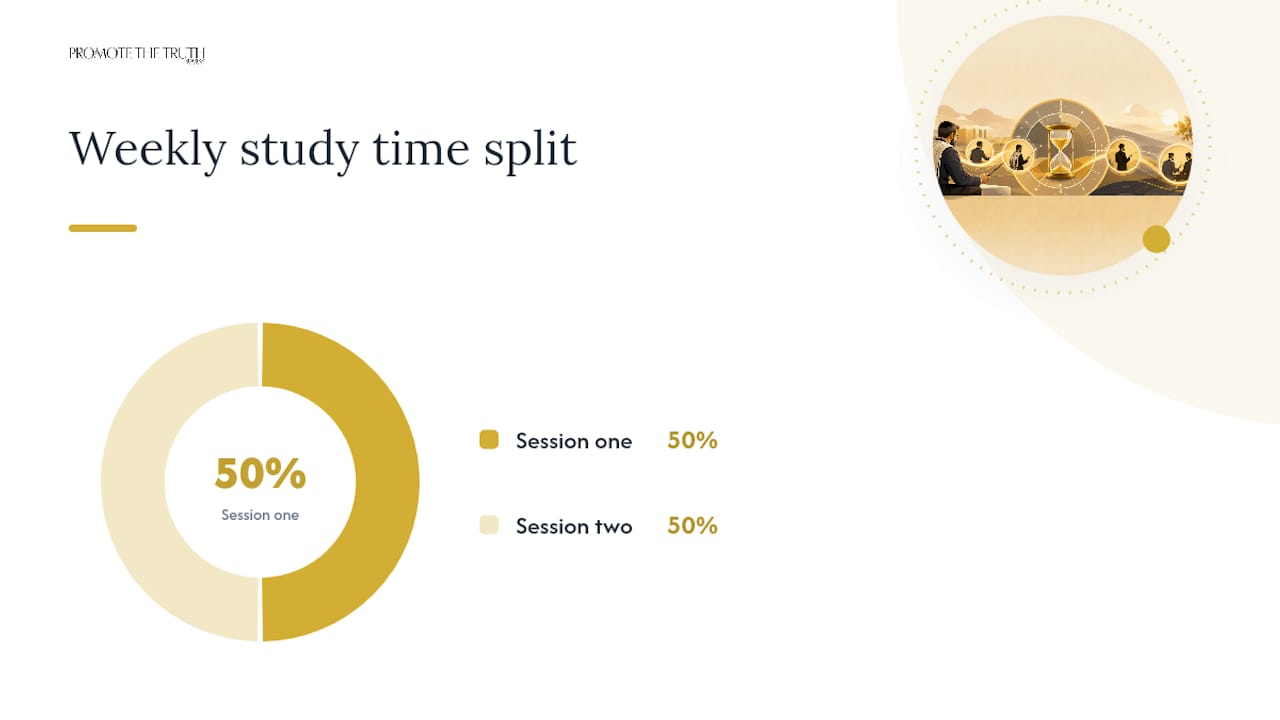
Sample weekly routine: Two sessions of 45–60 minutes each. Session one covers steps 1–3 (textual establishment). Session two covers steps 4–5 (language work and synthesis).
Pro Tip: When a restoration reading differs from the conventional text, resist the pull to accept it simply because it feels more spiritually resonant. Check the manuscript evidence first. Confirmation bias is the most common error in restorationist study.
Where can you find facsimiles, interlinears, and the Truth Scriptures in the U.S.?
-
Truth Scriptures Ta’anak (print): Available directly from Promotethetruth’s original scriptures page; includes restored names, editorial notes, and a translation from Abariy (Hebrew) and Aramiyt (Aramaic) manuscripts
-
Digital edition: The Truth Scriptures digital collection offers a downloadable bundle for readers who prefer screen-based study
-
Free sample downloads: Truth Scriptures Downloads provides sample chapters and study aids at no cost
-
Dead Sea Scrolls digital images: The Leon Levy Dead Sea Scrolls Digital Library provides open online access to scroll fragments
-
Interlinear tools: The Westminster Leningrad Codex (Hebrew) and the Peshitta Institute’s digital editions are available through institutional library access or interlibrary loan at most U.S. university libraries
For a curated list of lexicons, interlinears, and facsimile resources, the reliable scripture study resources guide at Promote The Truth organizes these by access type and cost. This resources can also provide valuable context for understanding how the Turah (Torah) has been transmitted and taught across communities.
How the Truth Scriptures editorial team prepares a restoration edition
The Truth Scriptures editorial process begins with Abariy (Hebrew) and Aramiyt (Aramaic) manuscript collation, moves through facsimile comparison, and concludes with transparent editorial notes that identify every significant departure from the received text.
The editorial steps follow a clear sequence:
-
Source collation: The team gathers primary Abariy (Hebrew) and Aramiyt (Aramaic) manuscript witnesses and identifies variant readings across the textual tradition
-
Transcription and standardization: Spelling, capitalization, and punctuation are normalized for readability while the source-language wording governs every translation choice
-
Name restoration: The Set-Apart (divine) Name YAHUAH and other restored proper names are reinstated throughout, with notes explaining the manuscript basis for each restoration
-
Variant notation: Where manuscript witnesses diverge, editorial notes flag the discrepancy so readers can evaluate the evidence themselves
This approach mirrors the best practices documented in scholarly JST editorial history, where critical scholarship recommends transparent presentation through parallel columns or appendices so readers can compare restored readings with traditional text. The textual criticism guide at Promote The Truth explains the collation and variant evaluation procedures that underpin this kind of work.
An 8-week Turah (Torah) leining study roadmap
A focused student can work through the five books of the Turah (Torah) with meaningful textual depth in eight weeks, committing roughly 90 minutes per week. By week eight, you will have read the complete Ta’anak's Turah (Torah) section in the restoration translation, checked key passages against manuscript witnesses, and built a personal lexical reference for recurring Abariy (Hebrew) terms.
-
Week 1 — Barashiyt (Genesis 1–11): Establish the text; focus on the Name YAHUAH and creation vocabulary in Abariy (Hebrew). Time: 90 minutes.
-
Week 2 — Barashiyt (Genesis 12–50): Patriarchal narratives; trace covenant terminology (bariyt) in the restoration translation. Time: 90 minutes.
-
Week 3 — Shamut (Exodus 1–20): The Name revelation (Shamut 3); compare restoration rendering of YAHUAH with manuscript evidence. Time: 90 minutes.
-
Week 4 — Shamut (Exodus 21–40): Legal codes and Sakut (Tabernacle) instructions; note structural differences between restoration and conventional translations. Time: 90 minutes.
-
Week 5 — Uiyqara (Leviticus): Priestly vocabulary; use Brown-Driver-Briggs to check key terms. Time: 90 minutes.
-
Week 6 — Bamadabar (Numbers): Census and wilderness narratives; verify any expanded passages against facsimile notes. Time: 90 minutes.
-
Week 7 — Dabariym (Deuteronomy 1–28): Mashah's (Moses’) addresses; compare restored readings with the Masoretic Text using an interlinear. Time: 90 minutes.
-
Week 8 — Dabariym (Deuteronomy 29–34) and synthesis: Complete the text; write a summary note on the three most significant restoration readings you encountered. Time: 90 minutes.
Students who want more time for language work can split any week into two sessions without losing the overall arc.
Why manuscript-first study is worth the extra effort
Shifting to a manuscript-based restoration approach changed the way we read every passage. The first time we encountered the Name YAHUAH restored throughout a Turah (Torah) portion, the text felt less like a translated document and more like a living address. That is not a sentimental reaction. It reflects what happens when you remove a layer of interpretive tradition and let the primary witness speak.
The conventional approach to Turah (Torah) study is not wrong. It carries centuries of careful scholarship. But it also carries centuries of accumulated editorial choices, many of which were made for reasons that had nothing to do with the original Abariy (Hebrew). Restoration study does not discard that tradition. It places it in honest conversation with the manuscript evidence, and that conversation produces insight that neither source generates alone. If you are ready to begin, Promote The Truth’s Scripture Study Series offers free starter lessons that pair directly with the restoration workflow described here.
The Truth Scriptures: your starting point for restoration study
The Truth Scriptures project gives you a single, authoritative starting point for manuscript-based Turah (Torah) leining practice. The Ta’anak edition is translated from ancient Abariy (Hebrew) and Aramiyt (Aramaic) manuscripts, with the Name YAHUAH restored throughout and editorial notes that identify the manuscript basis for every significant reading.
The digital bundle at Promote The Truth includes the full Ta’anak restoration, downloadable study aids, and access to the Scriptures Study Series video teachings. Free sample chapters are available through the Truth Scriptures Downloads page so you can evaluate the translation before purchasing. For those who want structured instruction alongside the text, the Digital Video Academy offers courses that walk through the restoration methodology step by step. Order the Truth Scriptures Ta’anak and begin the 8-week plan this week.