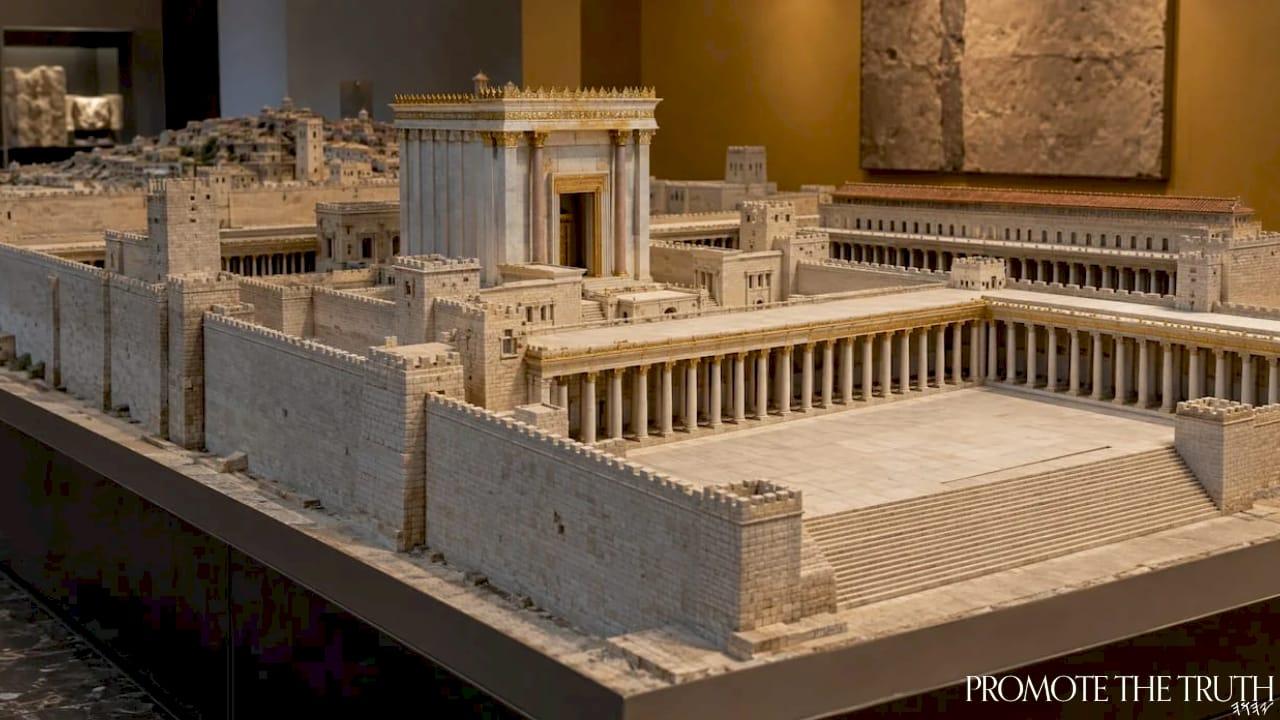
Hanakah (Hanukkah) is named once in the Scriptures most believers read, in Yahuhanan (John) 10:22, where it appears as the Feast of Dedication. Its full story is not told in the Abariy (Hebrew) Scriptures at all. The account of the Ahiykal’s (Temple’s) rededication is preserved in the books of Makabiym (Maccabees) and in the historian Yusaf ban Matatiyahu (Josephus). Puriym (Purim) is different: it has its own book, Asatar (Esther). If you want to understand both festivals, the safest path is to read each passage in the text itself, with the names and the setting kept as they were written.
TL;DR
-
Hanakah (Hanukkah) means “dedication.” It remembers the cleansing and rededication of the Yirushalam (Jerusalem) Ahiykal (Temple) in 164 BCE.
-
The one Bariyt Hadash (New Testament) mention is Yahuhanan (John) 10:22-23, where the Feast of Dedication takes place in winter and Yahusha (Jesus) walks in Shalamah’s (Solomon’s) Portico.
-
The detailed history sits in 1 and 2 Makabiym (Maccabees), books that tradition does not count as canonical, though Catholic Bibles include them.
-
Puriym (Purim) is rooted in the Book of Asatar (Esther), especially Asatar (Esther) 9:20-32, though the Turah (Torah) does not command it.
-
Neither festival is among the appointed times listed in Uriyqara (Leviticus) 23, so each is studied by its own passages and sources.
Table of Contents
Does the Scriptures (Bible) mention Hanakah (Hanukkah)?
The direct answer depends on which books you mean by “the Scriptures (Bible).” In the Abariy (Hebrew) Scriptures, neither Hanakah (Hanukkah) nor the events leading up to it are mentioned. Learning notes that the most detailed account is in 1 and 2 Makabiym (Maccabees), which are not part of the Abariy (Hebrew) Bible. It adds that some treated them as canonical, while Jews in the some did not.
The Makabiymiy (Maccabean) books and other writings from the same era are often called the Apocrypha, meaning books outside the accepted Abariy (Hebrew) canon. Their place differs by tradition. According to the Archaeology Society, Catholic and Greek Orthodox Bibles include these books, while Protestant editions may place them in an appendix or leave them out. So a reader who opens a Protestant Bible and finds no Hanakah (Hanukkah) is not missing something. The story simply lives in another set of books.
The Bariyt Hadash (New Testament) does not leave the festival out entirely. It gives us one clear scene, and that scene matters for anyone who wants to know how the people of Yahusha’s day kept this season.

The Feast of Dedication in Yahuhanan (John) 10
Yahuhanan (John) 10:22-23 says the Feast of Dedication took place at Yirushalam (Jerusalem), that it was winter, and that Yahusha was walking in the Ahiykal (Temple) in Shalamah’s (Solomon’s) Portico. You can read the passage. The translators’ note there identifies the Yuuniy (Greek) ta enkainia as the festival commonly called Hanakah (Hanukkah), with the sense of renewal or dedication.
The study identifies Yahuhanan (John) 10:22 as the Bariyt Hadash’s (New Testament’s) only reference to the Feast of Dedication by that name. The Abariy (Hebrew) word Hanakah (Hanukkah) and the Yuuniy (Greek) word in Yahuhanan (John) carry the same idea, so the two names point to one observance.
What happens in the passage
The festival is the setting, not the subject. In Yahuhanan (John) 10:24-39, those around Yahusha ask whether He is the Mashiyha (Messiah), and He answers by pointing to his works and to His relationship with the Father. Nothing in the text describes lamps, oil or a special meal.
That is worth stating plainly. Some popular articles say Yahuhanan (John) 10 proves that Yahusha celebrated Hanakah (Hanukkah). The passage places him in the Ahiykal (Temple) during the feast, and it tells us the dedication was a recognized observance in Yirushalam (Jerusalem) in his day. It does not describe how he kept it. A careful reader holds to what the text says: the feast was happening, He was in the Ahiykal (Temple) courts, and the conversation turned to who He is.
If you read Yahuhanan (John) in the names and setting of the original, you notice how much of his ministry is tied to the Ahiykal (Temple) and to its festivals. For a free look at how Truth Scriptures renders the Gospel of Yahuhanan (John), see the Yahuhanan (John) 18 download.
Where the Hanakah (Hanukkah) story is told
The events behind the feast are recorded outside the Abariy (Hebrew) canon. The study identifies the Feast of Dedication as marking the Ahiykal’s (Temple’s) rededication in 164 BCE. It points readers to three sources: 1 Makabiym (Maccabees) 4:36-59, 2 Makabiym (Maccabees) 10:1-8, and Yusaf ban Matatiyahu (Josephus), Antiquities 12.316-26.
Here is the sequence those sources describe:
-
A revolt began under Matatiyahu (Mattathias) and was carried on by Yahudah (Judas) Maccabeus.
-
The Ahiykal (Temple) was cleansed and rededicated, and an eight-day celebration followed. According to encyclopedia, 1 Makabiym (Maccabees) 4:52-59 and 2 Makabiym (Maccabees) 10:5 describe that eight-day celebration.
The feast is dated to the 25th of Kasalu (Kislev). The same encyclopedia notes that this date falls in December in some years but not always, because the month follows the lunar calendar rather than the Gregorian one. If you want to see how the scriptural months are named and counted, our guide to the scriptural month names lays them out.
The oil and the sources
Most people know Hanakah (Hanukkah) through the story of a single jar of oil that lasted eight days. Historians point out that the accounts differ. Tuvia Book compares the four main ancient accounts, 1 Makabiym (Maccabees), 2 Makabiym (Maccabees), Yusaf ban Matatiyahu (Josephus) and the Talmud, and observes that the oil miracle is absent from 1 Makabiym (Maccabees). It first appears in the Talmudic account, written centuries after the events.

This helps you read well. The earliest sources tell of a Ahiykal (Temple) cleansed and a joyful eight-day dedication. The later tradition adds the oil. When you meet a claim about Hanakah (Hanukkah) , ask which source it comes from and how close that source stands to the events.
Why Hanakah (Hanukkah) is not in Uriyqara (Leviticus) 23
- Uriyqara (Leviticus) 23 lists the appointed times YAHUAH set for his people: the Shabat (Sabbath), Yum Pasaha (Passover), Yum Matsah (Unleavened Bread), Yum Bakuriym (Firstfruits), Yum Shabua’aut (Weeks), Yum Tarua’ah (the day of trumpets), Yum Kapar (the Day of Atonement) and Yum Sakut (Booths). Hanakah (Hanukkah) is not on that list, because it arose after the Abariy (Hebrew) Scriptures were written, in the second century BCE. It is a remembrance built on a historical deliverance, not a command given at Siyniy (Sinai).
That explains why you will find articles that call Hanakah (Hanukkah) “Scriptural (biblical)” and others that say it is not. Both are reacting to the same facts. It is named in the Bariyt Hadash (New Testament), and its story is told in books that some traditions count as Scripture and others do not. It is not one of the feasts commanded in the Turah (Torah).
One of the pages that rank for this subject links Hanakah (Hanukkah) to Yum Sakut (Sukkot). A study makes a related distinction: Bamadabar (Numbers) 7, the dedication of the altar, may be read in the Kanasat Baniy (synagogue) during Hanakah (Hanukkah), but it is not the story of Hanakah (Hanukkah). Keeping the two apart prevents confusion.
To study the commanded feasts in their own text, start with our walk through the seven feasts of Leviticus 23. If your question runs deeper, into which calendar the feasts follow, see the 364-day Enoch calendar guide.
Puriym (Purim) in the Scriptures (Bible): the Book of Asatar (Esther)
Puriym (Purim) sits on firmer ground in the Abariy (Hebrew) Scriptures. The Book of Asatar (Esther) is part of the Abariy (Hebrew) canon, and it supplies the reason for the festival. Evangelical Dictionary says Asatar (Esther) provides the historical grounds and significance for Puriym (Purim), a festival not mentioned in the Turah (Torah). It identifies Asatar (Esther) 9:20-32 as the passage that does this work.
The story is set in Paras (Persia) in the reign associated with Ahashurush (Xerxes) I. The Encyclopedia entry says the book recounts the deliverance of the Yahudiym (Jews) there and links the annual Puriym (Purim) observance to those events. It also says Asatar (Esther) and Maradakiy (Mordecai) decreed an annual commemoration on 14 and 15 Adar, reflecting the different dates on which the provinces and the city of Shushan (Susa) had celebrated in the story.
So when someone asks whether Puriym (Purim) is Scriptural (biblical), the answer has two parts:
-
Yes, it is in Scripture. The Book of Asatar (Esther) tells the story and Asatar (Esther) 9 establishes the remembrance.
-
It is not in the Turah’s list of feasts. The commemoration was established within the book, after the deliverance.
It is also worth noting what Asatar (Esther) does not do. The book is known for never naming Aluah directly, which is one reason readers study it closely for how deliverance is portrayed. For a manuscript-minded reader, that is a good reason to read it slowly and in full, not through summaries.
Hanakah (Hanukkah) and Puriym (Purim) side by side
| Hanakah (Hanukkah) | Puriym (Purim) | |
|---|---|---|
| Meaning | Dedication of the Ahiykal (Temple) | Lots, the story of a deliverance |
| Main text | 1 and 2 Makabiym (Maccabees), Yusaf ban Matatiyahu (Josephus) | Book of Asatar (Esther) |
| In the Abariy (Hebrew) canon? | No | Yes |
| Named in the Bariyt Hadash (New Testament)? | Yes, as the Feast of Dedication Yahuhanan (John) 10:22 | No |
| Date | 25 Kasalu (Kislev), eight days | 14 and 15 Adar |
| Theme | Suppression of religious practice, Ahiykal (Temple) restored | Threat to Yahudiym (Jewish) lives, deliverance |
The last row follows the analysis in an article, which contrasts Asatar’s (Esther’s) story of a threat to Yahudiym (Jewish) lives with the Makabiymiy (Maccabean) story of suppressed religious practice. Study piece adds a difference in how each is kept: Purim is marked by the public reading of Asatar (Esther), while Hanakah’s (Hanukkah’s) customary lights are not accompanied by a formal retelling of its history. Puriym (Purim) has a liturgical narrative. Hanakah (Hanukkah) has brief prayers that summarize deliverance.
How to study these festivals in the text
If you want to settle the question for yourself, work through it in this order.
-
Read Yahuhanan (John) 10:22-39 in full. Note the three facts the text gives: Yirushalam (Jerusalem), winter, Shalamah’s (Solomon’s) Portico. Then read what follows, the question about the Mashiyha (Messiah). Keep the festival as the setting and the conversation as the point.
-
Read Uriyqara (Leviticus) 23 straight through. Mark the appointed times and their months. This gives you the standard against which any later observance is measured.
-
Read Asatar (Esther) 9:20-32. See how the remembrance of Puriym (Purim) is established, who decrees it, and on which days.
-
Read 1 Makabiym (Maccabees) 4:36-59. This is the earliest account of the cleansing and the eight days. Read it as history, noting that it sits outside the Abariy (Hebrew) canon.
-
Compare the later accounts. Set Yusaf ban Matatiyahu (Josephus) and the Talmudic tradition beside 1 Makabiym (Maccabees) and see what each adds, especially the oil.
-
Check the names. Many English Bibles replace the Name YAHUAH and the names of people and places with titles or Yuuniy (Greek) and Latin forms. Reading with the original names restored helps you follow who is being spoken of. Our Truth Scriptures names and places download is a good companion for this step, and the article on Yahusha vs Jesus explains why the name matters.
This method works for any festival question, from Yum Pasaha (Passover) to the dedication. It keeps you in the passage and out of the headlines.
Read the Scriptures with the names restored
Studying festivals is only as good as the text you study from. Truth Scriptures is our English restoration of the Ta’anak (Old Testament) and Bariyt Hadash (New Testament), translated from ancient Abariy (Hebrew) and Aramiyt (Aramaic) manuscript sources, with the Name YAHUAH restored throughout. When you open Yahuhanan (John) 10 or Asatar (Esther) 9 in it, you read the passage with the original names and meanings in view.
You can order the printed edition on the Truth Scriptures Translation page or explore the Truth Scriptures Digital Collection. If you prefer guided study, the 1st and 2nd PTT “RENEWED” Virtual Retreats are each £197 and are described on the Virtual Retreat page.
Perspective
We receive this question every season, and we answer it the same way: go to the text. Hanakah (Hanukkah) is not a command of the Turah, and we do not need to pretend it is in order to honor what the Scriptures do say. Yahuhanan (John) records the Feast of Dedication, and that is a real witness to how the people of Yahusha’s day remembered the cleansing of the Ahiykal (Temple).
What we care about most is that you can see for yourself where each claim comes from. A festival is explained by Uriyqara (Leviticus), by Asatar (Esther), by 1 Makabiym (Maccabees) or by Yahuhanan (John), and each of those has its own weight and its own place. When names are replaced with titles, or when a later tradition is blended into the earliest account, the reader loses the thread.
That is why Promote The Truth is devoted to researching, restoring and teaching the original message of the Scriptures, and why Truth Scriptures is translated from ancient Abariy (Hebrew) and Aramiyt (Aramaic) manuscript sources with the Name YAHUAH restored. Our aim is that you meet the passage as it was written, and then reach your own settled conviction in the light of it. We believe that is the most reverent way to approach any appointed time.
Maria
FAQ
Is Hanakah (Hanukkah) Scriptural (biblical)?
Hanakah (Hanukkah) is named in the Bariyt Hadash (New Testament) as the Feast of Dedication in Yahuhanan (John) 10:22. Its story is told in 1 and 2 Makabiym (Maccabees), which are outside the Abariy (Hebrew) canon but included in Catholic Bibles. It is not among the feasts commanded in Uriyqara (Leviticus) 23.
Is the Feast of Dedication the same as Hanakah (Hanukkah)?
Yes. The Yuuniy (Greek) ta enkainia in Yahuhanan (John) 10:22 refers to the festival commonly called Hanakah (Hanukkah), and both words carry the sense of dedication or renewal. Yahuhanan (John) places it in Yirushalam (Jerusalem) in winter, with Yahusha walking in Shalamah’s (Solomon’s) Portico.
Is Puriym (Purim) in the Scriptures (Bible)?
Yes. The Book of Asatar (Esther) is in the Abariy (Hebrew) Scriptures and gives the story behind Puriym (Purim). Asatar (Esther) 9:20-32 describes how the annual remembrance was established, on 14 and 15 Adar, although the Turah itself does not command it.
Did Yahusha celebrate Hanakah (Hanukkah)?
Yahuhanan (John) 10 shows him in the Ahiykal (Temple) during the Feast of Dedication, and the conversation there turns to whether he is the Mashiyha (Messiah). The passage does not describe how he kept the feast, so we say what the text says: He was there, at the Ahiykal (Temple), during that season.
Sources
-
Hanukkah, 1 and 2 Maccabees, and the Apocrypha, Biblical Archaeology Society
-
Esther, Theology of, Baker’s Evangelical Dictionary of Biblical Theology