The seven appointed feasts of Uiyqara (Leviticus) 23 are Yum Pasaha (Passover), Yum Matsah (Unleavened Bread), Yum Bakuriym (Firstfruits), Yum Shabua’aut (Weeks/Pentecost), Yum Tarua’ah (Trumpets), Yum Kapar (Day of Atonement), and Yum Sakut (Tabernacles). Believers read the four spring feasts as fulfilled in Yahusha’s (Jesus’) first coming and the three fall feasts as pointing toward events still to come. We walk through the scriptural anchors, the symbolism behind each feast, and how we can study or remember them with a clear conscience today.
TL;DR:
The spring feasts, including Yum Pasaha (Passover), Yum Matsah (Unleavened Bread), Yum Bakuriym (Firstfruits), and Yum Shabua’aut (Weeks/Pentecost), are linked to Savior’s death, resurrection, and the early Qahal’s birth.
The fall feasts, such as Yum Tarua’ah (Trumpets), Yum Kapar (Day of Atonement), and Yum Sakut (Tabernacles), are generally viewed as future events involving judgment, final ingathering, and Creator’s dwelling among people.
Feast dates follow a calendar of the Creator, shifting each year relative to the Gregorian calendar.
Believers may observe these feasts as a study, memorial, or worship (devotional) practice without legalism, honoring the freedom described in Qulasaiym (Colossians) 2:16.
Disagreements persist on the fulfillment of the fall feasts, with many believing they remain prophetic and future-oriented.
Table of Contents
-
The Seven Appointed Feasts and Their Timing in Uiyqara (Leviticus) 23
-
How Believers See These Feasts Fulfilled in Yahusha (Jesus) Who is YAHUAH**)**
-
How the Scriptural (biblical) Calendar Determines Feast Dates
The Seven Appointed Feasts and Their Timing in Uiyqara (Leviticus) 23
Uiyqara (Leviticus) 23 lays out YAHUAH’s appointed times with precision: specific days, specific months, and specific instructions for each one. The chapter does not present loosely connected days. It presents a single set-apart (sacred) calendar, divided between the first month (in spring) and the seventh month (in fall) except Yum Shabua’aut (Weeks/Pentecost) which comes middle.
The spring feasts cluster together in , within a matter of weeks. Yum Pasaha (Passover) opens the sequence on the fourteenth day, Yum Matsah (Unleavened Bread) follows immediately, Yum Bakuriym (Firstfruits) falls during that same week, and Yum Shabua’aut (Weeks/Pentecost) arrives later. The three fall feasts are more spread out across the seventh month, giving the year a second, later season of appointed gatherings.
-
Yum Pasaha (Passover): Uiyqara (Leviticus) 23:4 to 5, observed on the fourteenth day of the first month.
-
Yum Matsah (Unleavened Bread): Uiyqara (Leviticus) 23:6 to 8, a seven-day feast beginning the fifteenth day of the first month.
-
Yum Bakuriym (Firstfruits): Uiyqara (Leviticus) 23:9 to 14, observed “on the morrow after the Shabat (Sabbath)” during the Yum Matsah (Unleavened Bread) week.
-
Yum Shabua’aut (Weeks/Pentecost): Uiyqara (Leviticus) 23:15 to 22, counted days from Firstfruits.
-
Yum Tarua’ah (Trumpets): Uiyqara (Leviticus) 23:23 to 25, observed on the first day of the seventh month.
-
Yum Kapar (Day of Atonement): Uiyqara (Leviticus) 23:26 to 32, observed on the tenth day of seventh month.
-
Yum Sakut (Tabernacles): Uiyqara (Leviticus) 23:33 to 43, a seven-day feast beginning the fifteenth day of seventh month.
These dates follow a calendar rather than the Gregorian calendar most of us use for daily life, which means first month corresponds roughly to the spring months of March or April, while seventh month falls in the autumn months of September or October. The exact instructions for each feast, from the verse-level day counts to the ceremonial actions required, are set out in detail at https://www.promotethetruth.com/festivals-or-holidays. Scholars who study ancient Yisharal’s (Israel’s) worship note that several of these observances, specifically Yum Pasaha (Passover), Yum Matsah (Unleavened Bread), Yum Shabua’aut (Weeks/Pentecost), and Yum Sakut (Tabernacles), were pilgrimage festivals that required travel to the sanctuary, a detail that shaped how ancient Yisharaliym (Israelites) experienced the set-apart (sacred) calendar.
What Each Feast Symbolizes in Scripture
Each of the seven feasts carries its own theological weight, and none of them function as mere agricultural markers. They teach deliverance, resurrection, harvest, judgment, atonement, and the hope of dwelling with YAHUAH. Reading them together gives us a fuller picture of YAHUAH’s redemptive pattern across the Scriptures.
Yum Pasaha (Passover) centers on the lamb and its blood, marking the night Yisharal (Israel) was delivered from bondage in Matsar (Egypt). The blood on the doorposts turned away judgment, and the meal that followed became a permanent memorial of that deliverance, observed again every year on 14th day of First Month. Our article on Yum Pasaha versus Easter traces the distinctions between the Scriptural (biblical) Pasaha and the later Easter tradition in more depth.
Yum Matsah (Unleavened Bread) follows immediately, and its seven days without leaven picture a life purged of corruption. Leaven functions throughout Scripture as a symbol of sin working quietly through a whole batch of dough, so removing it from the home became a physical act with a moral meaning: pursued deliberately, not left to chance.
Yum Bakuriym (Firstfruits) falls within that same week, when the first stalks of the barley harvest were presented before YAHUAH as a pledge that the rest of the harvest would follow. The firstborn and the first portion carry weight throughout Scripture as a sign that what comes first represents and guarantees what comes after.
Yum Shabua’aut (Weeks/Pentecost), counted seven Shabat and fifty days from Yum Bakuriym (Firstfruits), celebrates the wheat harvest and ties closely to the giving of the law at Siyniy (Sinai). The feast carries both agricultural and covenantal meaning: a harvest of grain and a harvest of people gathered under YAHUAH’s instruction.
Yum Tarua’ah (Trumpets) opens the seventh month with the blast of the Shupar (shofar), a sound that summons, warns, and announces. Trumpet language runs throughout prophetic and apocalyptic Scripture as a signal of gathering, warning, and the approach of a decisive moment.

Yum Kapar (Day of Atonement) stands as the most solemn day of the appointed calendar, when the high priest entered the Most Set-apart Place to make atonement for the sins of the whole nation. Corporate repentance and cleansing define this day, set apart from every other observance by its gravity and its singular access to the sanctuary’s innermost place.
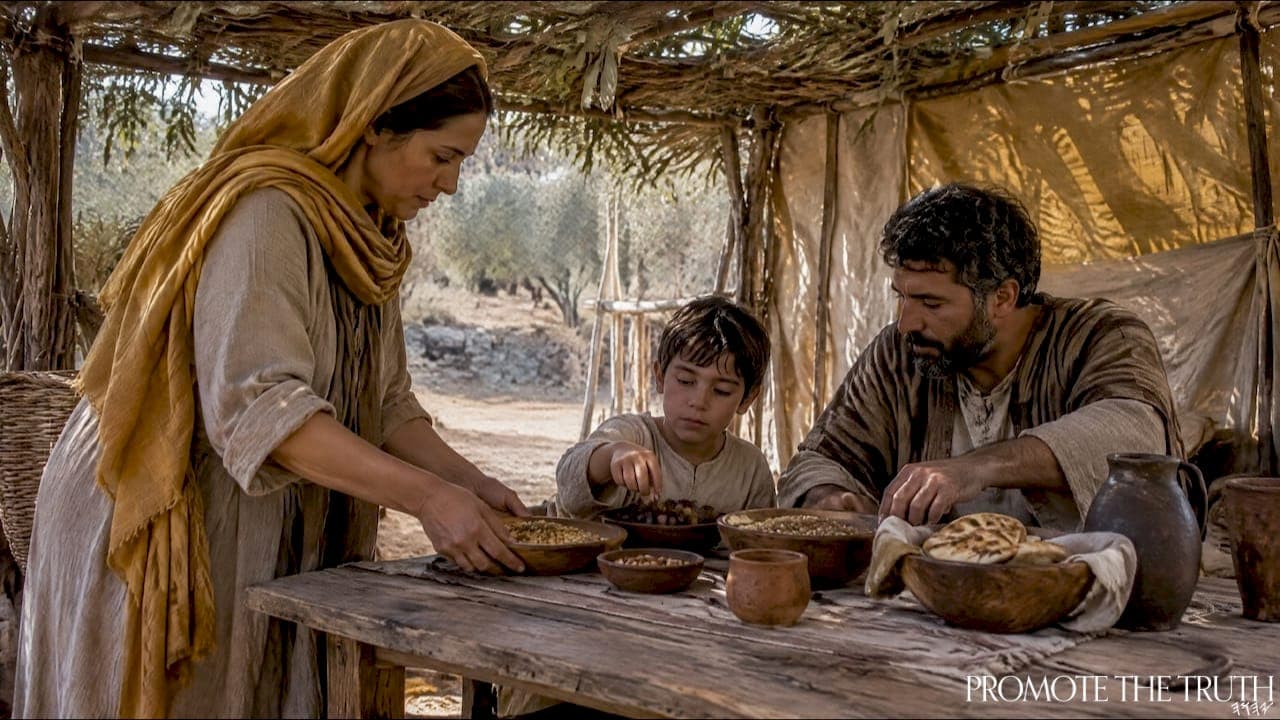
Yum Sakut (Tabernacles) closes the feast calendar with joy, as families built and dwelled in temporary shelters to remember Yisharal’s (Israel’s) wilderness journey. The feast carries an ingathering theme tied to the final harvest of the year, and deepened its association with the idea of YAHUAH tabernacling, or dwelling, among his people, a theme explored.
Pro Tip: Read Uiyqara (Leviticus) 23 straight through in one sitting before studying the feasts individually. Seeing the full calendar in sequence makes the connections between deliverance, harvest, and atonement much easier to trace.
How Believers See These Feasts Fulfilled in Yahusha (Jesus)
The common Believers reading holds that the spring feasts found their fulfillment in Yahusha’s (Jesus’) coming Who is YAHUAH, while the fall feasts are frequently understood as pointing toward events still ahead of us, a pattern summarized. This typological approach treats the feasts not as expired rituals but as prophetic pictures that find their meaning in Savior.
Guidance for Studying or Observing the Feasts Today
Believers today generally land in one of three postures toward the Scriptural (biblical) feasts, and none of them requires abandoning the freedom Shaul (Paul) describes in his letters. Choosing a posture is a matter of conscience, not a test of faithfulness.
-
Study-only: Read the Uiyqara (Leviticus) 23 passages, trace their Bariyt Hadash (New Testament) fulfillment, and let the typology deepen your understanding of Savior’s work without adopting any ritual practice.
-
Liturgical remembrance: Mark the feast dates with focused Scripture reading, a shared meal, or a teaching gathering, treating the day as a memorial rather than a legal obligation.
-
Full symbolic observance: Keep the feast’s traditional elements, a Yum Pasaha (Passover) meal, a Yum Sakut (Tabernacles) booth, a Shupar (shofar) blast on Yum Tarua’ah (Trumpets), as a worship (devotional) practice that makes the typology tangible for your household or community.
Pro Tip: Start small. Reading the Uiyqara (Leviticus) 23 passage for a single feast and pairing it with its Bariyt Hadash (New Testament) cross-reference on the actual calendar date gives you a manageable, repeatable rhythm without requiring a full liturgical overhaul.
How the Scriptural (biblical) Calendar Determines Feast Dates
The feasts run on a calendar of the Creator, not the solar Gregorian calendar most of the modern world follows, and that difference explains why the dates shift each year relative to our everyday calendar. First Month anchors the spring feasts and Seventh Month anchors the fall feasts, with each month beginning at the sighting or calculation of a new moon.
-
The first month, falls in spring and opens the feast year with Yum Pasaha (Passover) on the fourteenth day.
-
The seventh month, falls in autumn and carries the three fall feasts across its first ten to twenty one days.
-
The phrase “the morrow after the Shabat (Sabbath)” in Uiyqara (Leviticus) 23:11 determines when Yum Bakuriym (Firstfruits) falls, and different interpretive traditions read that phrase differently, which shifts the day count to Yum Shabua'aut (Weeks/Pentecost) as well.
-
Modern observant communities divide between sighted-moon calendars, which wait for a physical observation of the new moon, and calculated calendars, which use astronomical prediction instead.
These calendar questions are not merely academic. A community that calculates differently from its neighbor will land on a different Yum Pasaha (Passover) date entirely, which is why our explanation of lunar-solar versus Gregorian calendar methods and our focused piece on the biblical Passover date itself walk through the mechanics in more detail than space allows here.
Where Believers Disagree on Observing the Feasts
Three broad positions describe how Believers handle the Scriptural (biblical) feasts today. Some hold a fulfilled and closed view, treating the feasts as types that reached their complete meaning in Savior and therefore carry no ongoing obligation. Others hold a fulfilled but remembered view, agreeing the feasts are fulfilled while still finding worship (devotional) value in marking the dates. A third group emphasizes future fulfillment, particularly for the fall feasts, and treats ongoing observance as a form of anticipation.
The most common objection to any form of feast observance is the charge of legalism, the fear that keeping a feast reintroduces a works-based relationship with YAHUAH. Qulasaiym (Colossians) 2:16 answers this directly by framing the feasts as a matter of freedom rather than obligation, which means observance, when chosen, functions as remembrance and worship rather than a requirement for standing before Creator.
A second objection concerns continuity with New Covenant worship: does keeping an Ta'anak (Old Testament) feast conflict with the Qahal’s new forms of gathering, like the Master’s Supper or weekly worship? Most teachers who address this point out that remembrance and required ritual are not the same category, and an assembly or individual can decide the question based on two simple criteria: does this practice point clearly to Savior, and does it avoid becoming a source of division or judgment within the body.
Our Commitment to Manuscript-Based Scripture Research
We are dedicated to researching, restoring, publishing, and teaching the original message of the Scriptures, drawing on ancient Abariy (Hebrew) and Aramiyt (Aramaic) manuscript sources rather than later translation traditions alone. That commitment shapes every teaching we produce, including our work on the Scriptural (biblical) feasts and the calendar that governs them.
We offer a comprehensive English restoration of both the Ta’anak and the Bariyt Hadash, built directly from manuscript research rather than inherited translation choices. For readers who want to go deeper into the Yum Tarua'ah (Trumpets) specifically, our article on the prophetic significance of Yom Teruah and our study on the Feast of Weeks both extend the themes covered in this article with manuscript-level detail.
A Personal Reflection on Studying the Feasts
Studying these feasts has taught me that YAHUAH’s calendar is not a relic to admire from a distance. It is an invitation to see Savior’s work laid out across a yearly pattern that existed long before the cross. Approaching the feasts with humility, rather than certainty about every unresolved detail, keeps the study centered where it belongs: on what Savior has already done and what we still wait for in hope.
— Maria
Go Deeper With the Truth Scriptures and a Guided Retreat
Reading about the feasts is a good start, but working through the manuscript sources yourself changes how you encounter these passages. Our Truth Scriptures translation is built directly from ancient Abariy (Hebrew) and Aramiyt (Aramaic) sources, restoring original names and meanings that later translation traditions often smoothed over, so the feast passages in Uiyqara (Leviticus) read with the weight and precision the original text carries.
For readers who want a guided, communal setting rather than solo study, our “RENEWED” Virtual Retreats walk through Scripture alongside a community of fellow learners.
-
Explore the Truth Scriptures™ Digital Collection for manuscript-based translations you can study at your own pace.
-
Join the 1st or 2nd PTT “RENEWED” Virtual Retreat, a guided experience built around Scripture study and community offered for a one-off fee.
Start with either resource at Promote The Truth and see how manuscript-level clarity reshapes your reading of the feasts.
FAQ
What does the Scriptures (Bible) say about feast days?
The Scriptures (Bible) establishes seven specific appointed times in Uiyqara (Leviticus) 23, each with its own date, duration, and ceremonial instructions, rather than a general endorsement of feast days as a category.
Which generation will not pass away?
This question usually refers to Yahusha's (Jesus’) statement in the Bashurah (Gospels) about “this generation” not passing away before certain end-time events occur, a passage debated among interpreters rather than settled by a single consensus. The discussion connects to the fall feasts’ prophetic associations, since both topics touch on timing and fulfillment that many Believers hold as still future.
What are the seven feasts in Uiyqara (Leviticus)?
The seven appointed feasts in Uiyqara (Leviticus) 23 are Yum Pasaha (Passover), Yum Matsah (Unleavened Bread), Yum Bakuriym (Firstfruits), Yum Shabua’aut (Weeks/Pentecost), Yum Tarua’ah (Trumpets), Yum Kapar (Day of Atonement), and Yum Sakut (Tabernacles). Each carries its own date, ceremonial requirements, and theological theme, from Yum Pasaha's (Passover's) deliverance imagery to Yum Sakut's (Tabernacles') ingathering celebration.
Which feasts have not been fulfilled?
Many teachers hold that Yum Tarua’ah (Trumpets), Yum Kapar (Day of Atonement), and Yum Sakut (Tabernacles) remain unfulfilled, pointing toward future events tied to judgment, gathering, and Creator’s dwelling among his people. The four spring feasts, by contrast, are generally seen as fulfilled through Savior’s death, resurrection, and the giving of the Ruha (Spirit) at Yum Shabua'aut (Weeks/Pentecost).