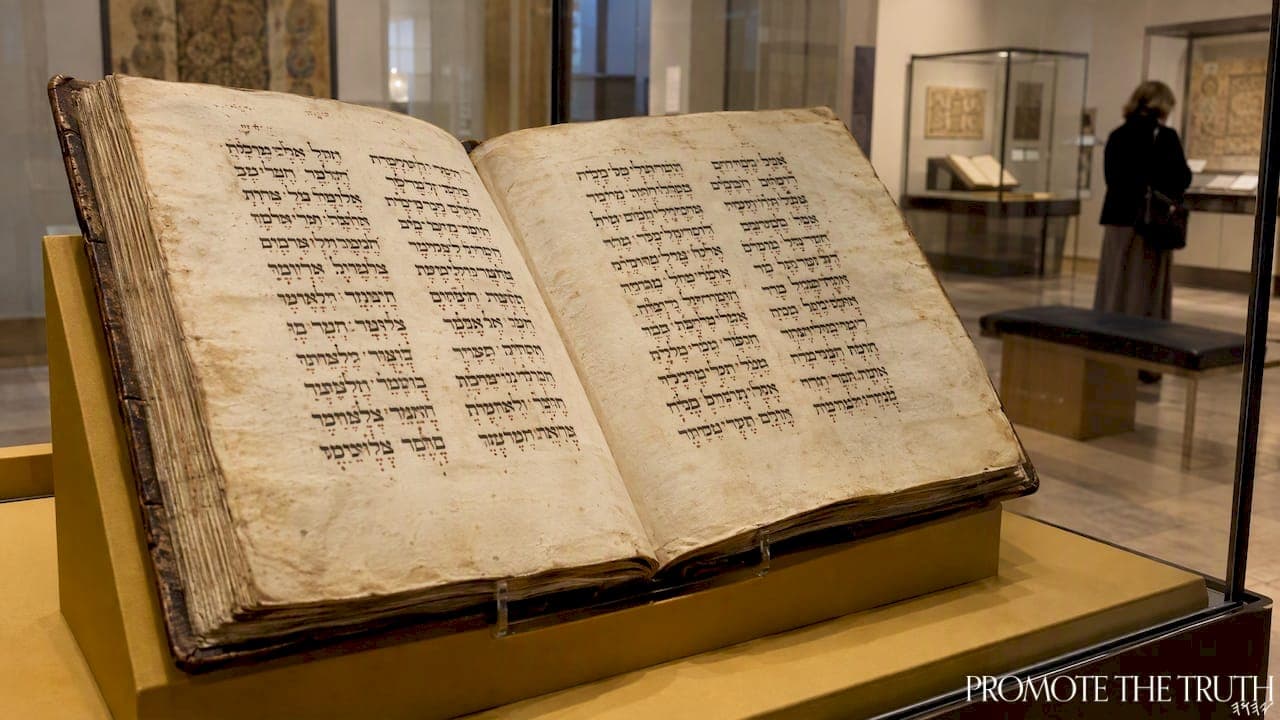
The Abariy (Hebrew) vowel points, called niyqud (niqqud), were not part of the original consonantal alphabet. They were developed gradually by Jewish scholars between roughly the fourth and tenth centuries CE, and the system now printed in nearly every Abariy Scriptures (Hebrew Bible) is the Tiberian one, completed in the early medieval period. The signs are medieval. The reading tradition they record is considerably older. Holding both facts together is the key to studying them honestly.
Understanding the written language of the ancient Scriptures requires distinguishing between the original consonantal text and the systems of notation developed to record pronunciation.
Ancient Abariy (Hebrew) writing represented both vowels and consonants. Readers relied on their knowledge of the language and its reading traditions to pronounce the words. Over time, scholars developed systems of marks to record vowel sounds and other details of reading.
These marks are commonly called niyqud (niqqud), or vowel points. The Tiybariy (Tiberian) system eventually became the standard system used in most printed Hebrew Scripture editions.
However, two facts must be considered together: the vowel signs themselves were developed later, while the reading traditions they record may preserve features from much earlier periods.
For those studying Scripture through <u>Promote The Truth™</u>, this distinction matters. A careful student should examine what the written text contains, what later notation records, and what the available evidence can actually establish. The purpose is not to accept or dismiss a reading tradition without examination, but to study the evidence carefully while keeping the focus on the Word of YAHUAH.
TL;DR
-
- Ancient Abariy (Hebrew) writing primarily used vowels and consonants both.
- The vowel-pointing systems familiar from printed Abariy (Hebrew) texts developed centuries after the earliest consonantal manuscripts.
- The Tiybariy (Tiberian), Babaliy (Babylonian), and Palashatiy (Palestinian) systems preserve different historical reading traditions.
- The vowel signs are medieval, but the reading traditions they record may preserve older linguistic features.
- Vowel points should be examined alongside consonants, manuscript evidence, historical context, and the surrounding Scriptural passage.
- The pronunciation of the Name YAHUAH should not be established by vowel points alone.
- <u>Promote The Truth™</u> provides <u>the Truth Scriptures</u> and related study resources for those seeking to examine YAHUAH’s Word through ancient Abariy (Hebrew) and Aramiyt (Aramaic) manuscript sources.
Table of Contents
What Are Abariy (Hebrew) Vowel Points?
Vowel points are marks placed above, below, or inside letters to indicate vowel sounds and certain features of pronunciation.
The earliest Abariy writing was complex. Some letters also functioned as vowel indicators, a practice known in linguistic studies as matres lectionis. Before systematic vowel notation became widespread, readers depended on the written consonants and their knowledge of how the words were read. Later pointing systems added another layer of information to the written text. The Tiybariy (Tiberian) system includes vowel signs and accent marks that help record pronunciation, syllable structure, stress, phrasing, and pauses. These elements work together as part of a reading tradition.
It is therefore important to distinguish between:
- The consonantal text: The written consonants that form the foundation of the text.
- Vowel points: Later signs used to record vowel sounds within a particular reading system.
- Accent marks: Signs that provide additional information about phrasing, stress, and reading.
- Reading traditions: The ways words were pronounced and transmitted within historical communities.
These elements are related, but they do not all represent the same stage in the history of Scriptural writing.
The Historical Development of Vowel Points
The development of vowel notation occurred over several centuries. Different scholarly communities established their own systems before the Tiybariy (Tiberian) system became dominant in printed Hebrew texts.
| Historical period | Development |
| Early Abariy writing | The text was primarily both vowel and consonantal, with some letters also serving as vowel indicators. |
| Approximately 4th–10th centuries CE | Different systems of vowel notation developed in communities associated with Tiybariy (Tiberian), Babaliy (Babylonian), and Palashatiy (Palestinian). |
| Early medieval period | The Masoretic tradition developed detailed systems for recording pronunciation and preserving established readings. |
| 916 CE | The St Petersburg Codex of the Prophets provides an important dated witness to a vocalized Scriptural manuscript. |
| 10th century CE | The Aleppo Codex became an important witness to the Tiybariy (Tiberian) reading tradition. |
| 11th century CE | Codex Leningradensis was copied and later became the basis for major scholarly editions of the Abariy (Hebrew) Scriptures. |
| 16th century onward | Printed Abariy (Hebrew) <br> <br>Scripture editions commonly reproduced the established Tiybariy (Tiberian) pointing system. |
These dates help explain the difference between the development of written signs and the history of the pronunciation traditions they represent.
A manuscript’s date establishes when that manuscript was produced, not necessarily when every feature of its reading tradition first originated.
The Masoretes and the Preservation of Reading Traditions
The Masoretes were scholars who worked to preserve the traditional Abariy (Hebrew) text and its established reading conventions. Their work included vowel points, accent marks, and notes concerning the text.
Their efforts contributed to the preservation and standardization of a detailed reading tradition.
From a textual study perspective, the Masoretic tradition provides valuable evidence about how the Scriptures were read and transmitted within the communities that preserved it.
Nevertheless, the pointing system should not be confused with the earliest writing system. The signs were added later to record a reading tradition that had its own history.
A responsible examination therefore considers the Masoretic evidence without automatically treating every vowel sign as a direct record of how every word was pronounced during the earliest Scriptural periods.
The distinction between the written system and later pronunciation notation is especially important when studying Scriptural names and the Name YAHUAH.
Different Systems of Vowel Notation
Historical records show that vowel notation did not develop through one uniform system.
Tiybariy (Tiberian) Pointing
The Tiybariy (Tiberian) system was developed and preserved by scholars associated with Tiybariyus (Tiberias). It became the dominant pointing system in printed Abariy (Hebrew) Scripture editions and is represented in important manuscripts such as the Aleppo Codex and Codex Leningradensis.
Babaliy (Babylonian) Pointing
The Babaliy (Babylonian) system represents another historical tradition of recording pronunciation. Its signs and conventions differ from those of the Tiybariy (Tiberian) system, and examples have survived in manuscripts associated with Babaliy (Babylonian) reading traditions.
Palashatiy (Palestinian) Pointing
Palashatiy (Palestinian) systems provide further evidence that different communities developed ways to record their reading traditions. Some examples are preserved in manuscripts recovered from the Cairo Genizah.
These differences matter because they demonstrate that historical pronunciation notation was not entirely uniform.
Comparing the systems can help students understand the development of written pronunciation conventions and the importance of examining the evidence in its historical context.
Are Vowel Points Part of the Original Scriptural Text?
The systematic pointing systems familiar from printed Abariy (Hebrew) Scriptures were developed after the earliest writing. However, this does not mean that the pronunciation traditions they record were necessarily created at the same time as the signs.
Two conclusions should be avoided.
One: Dismissing Vowel Points as Historically Worthless
The fact that vowel signs developed later may make them irrelevant. Though they preserve information about historical reading traditions and cannot fully contribute to the study of Abariy pronunciation.
Their value lies in the evidence they provide, considered within their historical setting.
Two: Treating Vowel Points as an Exact Record of Every Ancient Pronunciation
The opposite conclusion also goes beyond what the evidence establishes. A medieval pointing system reflects a historically transmitted reading tradition that may preserve older features while also reflecting later developments.
It should not automatically be treated as an exact reconstruction of how every Scriptural writer pronounced every word.
The careful conclusion is that the vowel signs developed later, while the traditions they record may preserve older features of the language.
For students of Scripture, the important task is to distinguish the age of the notation from the age of the linguistic features it represents.
Examining the Name YAHUAH
The Name YAHUAH requires particular care when studying vowel points and pronunciation.
A pointing system records a reading tradition, but the signs alone do not settle every question about the earliest pronunciation of a Scriptural name.
When examining the Name YAHUAH, it is important to distinguish the consonantal form preserved in the text from the reading conventions associated with particular manuscripts and historical traditions.
A careful study should consider:
-
The written form of the Name in the relevant textual witness.
-
The historical period and reading tradition represented by the manuscript.
-
The limitations of using later vowel notation to establish an earlier pronunciation.
-
The broader evidence relevant to the pronunciation being examined.
Within <u>Promote The Truth™,</u> from original sources the Name should be written as YAHUAH, rather than replaced with conventional substitute terminology. In Modern Hebrew the Creator’s Name, YAHUAH, is spelled like this yud, hay, uau, hay four vowel.
At the same time, historical claims about pronunciation should be presented according to the evidence available. Vowel points alone should not be used to claim that a particular pronunciation has been conclusively established.
The goal is to distinguish the Scriptural text, the historical reading tradition, and the conclusions drawn from them.

How to Examine Vowel Points When Studying Scripture
Students can use a consistent approach when examining the relationship between letters, vowel signs, and historical reading traditions.
Step 1: Examine the Text
Begin with the written letters of the passage. Recognize that some letters can also function as vowel indicators.
Step 2: Examine the Vowel Points
Consider the vowel signs within the pointing system being studied. Identify what they record without assuming that they independently establish the earliest pronunciation.
Step 3: Consider Accent Marks and Reading Conventions
Where relevant, examine the accent marks and other features that contribute to the reading tradition.
Step 4: Compare Available Manuscript Evidence
When evidence is available, consider other manuscripts and pointing systems. Differences may provide information about the transmission and development of a reading.
Step 5: Distinguish Evidence from Interpretation
Identify what the manuscript directly shows, what a historical tradition reports, and what a researcher infers from that information.
These are different categories and should be presented honestly.
Step 6: Read the Passage in Context
Return to the surrounding verses and the meaning of the passage. Do not base an entire interpretation on a single vowel sign or an isolated historical claim.
This approach supports careful Scriptural study while avoiding unsupported conclusions.
Our perspective
We approach this subject as people who love the Scriptures and want to hand them on as faithfully as we can. That means we do not want to lean on slogans in either direction.
We do not believe the vowel points should be waved away as late and worthless. The scholarship above shows real depth behind them. We also do not believe they should be treated as untouchable, because the same scholarship shows several competing systems and a composite, layered Tiybariy (Tiberian) tradition.
What we try to do, in our research and in the Truth Scriptures, is separate three things: the consonantal text, the medieval pointing, and the evidence from earlier witnesses such as inscriptions and scrolls. Our study of Paleo-Abariy inscriptions and our guide to biblical manuscript transmission history come from that same habit. We and many others believe a reverent reader serves the Word best by asking where each piece of evidence comes from and how old it is.
We invite you to test what we say against the sources linked here. Truth has nothing to fear from careful checking.
— Maria
Studying with the Truth Scriptures
If you want to move from background to practice, the Truth Scriptures Translation is our English restoration of the Ta’anak (Old Testament) and Bariyt Hadash (New Testament), translated from ancient Abariy (Hebrew) and Aramiyt (Aramaic) manuscript sources. A digital collection is also available, and our free Names and Places download helps you follow the original names as you read.
For guided learning, our Virtual Retreats are offered at 197 GBP one-off each. To begin on your own, our guides on reading Scriptural Abariy (Biblical Hebrew) and Abariy names and pronunciation are a gentle first step. If you want to see how Aramaic fits into the picture, read about the 269 Aramiyt verses.
Frequently asked questions
Were the Abariy (Hebrew) vowel points in the original Scriptures?
The evidence says no. The systematic vowel-pointing systems familiar from printed Abariy (Hebrew) texts developed much later than the earliest writing. The signs themselves are medieval, although the reading traditions they record may preserve older linguistic features.
Who invented the vowel points?
Different scholarly communities developed different systems over several centuries. The Tiberian system eventually became the standard in most printed Abariy (Hebrew) Scripture editions.
Are the Tiybariy (Tiberian), Babaliy (Babylonian), and Palashatiy (Palestinian) systems identical?
No. They differ in the forms of their signs and in some of the distinctions they record. Their differences provide evidence of multiple historical reading traditions.
Do vowel points prove the original pronunciation of YAHUAH?
No. Vowel points alone do not conclusively establish the earliest pronunciation of the Name YAHUAH. The relevant consonantal text, manuscript evidence, historical context, and reading traditions must be considered carefully.
Are vowel points useful for studying Scripture?
No. They do not preserve important information about historical reading traditions. Their value is best understood in some context only.
Why is the distinction between letters and vowel points important?
It helps readers distinguish the written text from later systems used to record pronunciation. Without this distinction, a later notation system may be mistaken for part of the earliest written form.
Where can I study through Promote The Truth™?
Visit the <u>official Promote The Truth™ website</u> and explore the <u>Truth Scriptures Translation</u> and <u>Truth Scriptures Digital Collection</u>.
Sources
-
The Vocalization Systems of Arabic, Hebrew, and Aramaic (De Gruyter)
-
The Vocalization Systems of Arabic, Hebrew, and Aramaic (DOI record)
-
The Background of the So-called Extended Tiberian Vocalization of Hebrew (Cambridge)
-
The Hebrew of the Dead Sea Scrolls and the Tiberian Reading Tradition (Brill)