
In Paleo-Abariy (Paleo-Hebrew) inscriptions, the Set-Apart Name of YAHUAH appears as four consonants: Yud, Hay, Uau, Hay (יהוה), commonly known as the Tetragrammaton. Many scholars reconstruct its ancient pronunciation as “Yahweh,” drawing on Yuuniy (Greek) transcriptions, personal names containing elements of the Set-Apart Name, and archaeological inscriptions. However, the surviving Paleo-Abariy (Paleo-Hebrew) inscriptions preserve the consonantal form of the Name and do not establish its original pronunciation with certainty.
Shorter forms, such as Yahu, also appear in ancient Abariy (Hebrew) names and inscriptions, providing additional evidence of how the Set-Apart Name was represented in early Abariy (Hebrew). While these shorter forms contribute valuable evidence to the study of Paleo-Abariy (Paleo-Hebrew) inscriptions, they do not, by themselves, demonstrate that the shortened form preceded the four-letter Tetragrammaton (יהוה).
Key Takeaways
-
The Paleo-Abariy (Paleo-Hebrew) form of the Tetragrammaton (יהוה) preserves the four consonants of the Set-Apart Name of YAHUAH. However, the original pronunciation is not preserved in these consonantal inscriptions and remains a subject of scholarly research and discussion.
-
Archaeological discoveries and surviving manuscripts document the use of יהוה (YHWH) across different historical periods, from ancient Paleo-Abariy (Paleo-Hebrew) inscriptions to manuscripts from the Second Ahiykal (Temple) period. These findings provide important evidence for the historical transmission and preservation of the Set-Apart Name.
-
Many scholars reconstruct the ancient pronunciation as “Yahweh” based on linguistic and historical evidence, while restoration-focused researchers who favor YAHUAH examine ancient Abariy (Hebrew) names, manuscript traditions, and inscriptional evidence in support of that pronunciation. The surviving consonantal inscriptions do not establish either pronunciation with certainty.
-
Paleo-Abariy (Paleo-Hebrew) letters are sometimes interpreted pictographically in devotional studies. However, historical linguistic research recognizes that these letters functioned primarily as phonetic characters whose forms developed over time. Pictographic interpretations should therefore be distinguished from established linguistic and archaeological evidence.
-
The four consonants יהוה (YHWH) are firmly attested in the ancient manuscript and inscriptional record, but their original vocalization remains uncertain. Truth seekers are encouraged to examine the Paleo-Abariy (Paleo-Hebrew) inscriptions, Abariy (Hebrew) manuscripts, archaeological discoveries, and historical evidence before reaching their own conclusions about the pronunciation of YAHUAH’s Set-Apart Name.
Table of Contents
-
What Is the Paleo-Abariy (Paleo-Hebrew) Script, and When Was It Used?
-
The Tetragrammaton in Paleo-Abariy (Paleo-Hebrew): Letters, Forms, and Manuscript Evidence
-
How Do Scholars Reconstruct the Pronunciation of YAHUAH (יהוה)?
-
Archaeological Evidence of the Set-Apart Name: Negev Inscriptions, Qumran, and Ancient Papyri
-
Pictographic Interpretations of YAHUAH (יהוה): Claims, Evidence, and Linguistic Analysis
-
Promote The Truth’s Manuscript-Based Approach to Restoring the Name YAHUAH
-
What Do Paleo-Abariy (Paleo-Hebrew) Inscriptions Reveal About the Name YAHUAH?
-
Continue Your Manuscript Study With Promote The Truth
-
Sources
-
Frequently Asked Questions
What Is the Paleo-Hebrew Script, and When Was It Used?
The Paleo-Abariy (Hebrew) script is the earliest known script used to write the Abariy (Hebrew) language. Descending from the Proto-Sinaitic and Phoenician alphabets, it was used by Yisharaliym (Israelite) scribes from approximately 1000 BC until it gradually fell out of common use during the early centuries of the Common Era. For well over a thousand years, it served as the script of the United Kingdom, the Divided Kingdoms, the Babaliy (Babylonian) Exile, the return from exile, and the Second Ahiykal (Temple) period. It is important to recognize that Paleo-Abariy (Hebrew) is not a different language from Abariy (Hebrew). It is simply the earlier script used to write the same language before the widespread adoption of the later square Abariy (Hebrew) script.
Unlike the block-style letters found in most modern Abariy (Hebrew) Scriptures (Bibles), Paleo-Abariy (Hebrew) characters are angular and originated from early pictographic forms. Their appearance closely resembles ancient Phoenician inscriptions rather than the square letters familiar to modern readers. Even centuries after the square script became dominant, rulers such as the Hasmoneans and leaders of the Bar Kokhba Revolt intentionally placed Paleo-Abariy (Hebrew) inscriptions on their coins to emphasize their connection with ancient Yisharaliym (Israelite) heritage and Scriptural tradition.
The surviving manuscript and archaeological evidence demonstrates that Paleo-Abariy (Hebrew) remained in use across several important contexts:
-
Kingdom-era inscriptions. Royal seals, the Siloam Inscription, and ostraca discovered at sites such as Lachish and Shamariyah (Samaria) preserve Paleo-Abariy (Hebrew) letterforms dating to the monarchic period.
-
Coinage. Hasmonean rulers and later Yahudiy (Jewish) revolt leaders deliberately used Paleo-Abariy (Hebrew) on coins, even after the square script had become the standard script for everyday writing.
-
Qumran manuscripts. Several Dead Sea Scrolls preserve Paleo-Abariy (Hebrew), either throughout an entire manuscript or specifically for the Set-Apart Name, YAHUAH (יהוה), while the surrounding text is written in the later square script.
-
Shamaruniy (Samaritan) tradition. The Shamaruniy (Samaritan) alphabet, still used today in copies of the Turah Shamaruniyt (Samaritan Pentateuch), developed directly from Paleo-Abariy (Hebrew) rather than from the square script adopted by most Yahudiy (Jewish) communities.
The transition from Paleo-Abariy (Hebrew) to the square Abariy (Hebrew) script occurred gradually during and after the Babaliy (Babylonian) Exile, as Aramiyt (Aramaic) became the dominant administrative language throughout the region. By the Second Ahiykal (Temple) period, the square script had become the standard form of writing. Paleo-Abariy (Hebrew), however, did not disappear completely. Instead, it continued to be used intentionally to emphasize antiquity, Scriptural authority, and what was considered Set-Apart.
One of the clearest examples appears among the Dead Sea Scrolls discovered at Qumran, where some scribes wrote the surrounding text in the square script but deliberately preserved the Set-Apart Name, YAHUAH (יהוה) in Paleo-Abariy (Hebrew). This distinctive scribal practice continues to receive significant attention from manuscript researchers because it demonstrates the special reverence given to the Set-Apart Name within portions of the Second Temple manuscript tradition.
The Tetragrammaton in Paleo-Abariy (Paleo-Hebrew): Letters, Forms, and Manuscript Occurrences
The Tetragrammaton is the technical term scholars use for the four-consonant Set-Apart Name, Yud–Hay–Uau–Hay (יהוה). It appears more than 6,000 times throughout the Ta’anak (Old Testament). In Paleo-Abariy (Paleo-Hebrew) script, these four letters have forms that differ significantly from their later square-script counterparts, making them difficult to recognize for readers unfamiliar with the ancient alphabet.
The Yud resembles a small arm or hand rather than the compact stroke used in modern Abariy (Hebrew). The Hay resembles a figure with raised arms, the Uau resembles a hook or peg, and the final Hay repeats the earlier letterform. These ancient letterforms preserve the written appearance of the Set-Apart Name, but they do not reveal how it was originally pronounced. Scholars distinguish between the written form of the Name and its original pronunciation.
The manuscript evidence for the use of ancient letterforms is well documented rather than hypothetical.
-
Dead Sea Scrolls. Multiple Qumran manuscripts preserve the Tetragrammaton in Paleo-Abariy (Paleo-Hebrew) characters, even when the surrounding text is written in the later square Abariy (Hebrew) script. This pattern appears across several manuscripts rather than representing an isolated scribal practice.
-
Papyrus Oxyrhynchus. Some Yuuniy (Greek) papyrus fragments discovered at Oxyrhynchus preserve the Tetragrammaton in Paleo-Abariy (Paleo-Hebrew) characters within otherwise Yuuniy (Greek) texts, demonstrating that this scribal convention extended across different languages and manuscript traditions.
-
Hasmonean and Revolt-period coins. Several ancient coins preserve Paleo-Abariy (Paleo-Hebrew) inscriptions, reflecting the continued association of the ancient script with Yisharaliym’s (Israel’s) heritage and identity.
-
Qumran manuscript diversity. Not every manuscript treated the Set-Apart Name in the same way. Some scribes preserved it in Paleo-Abariy (Paleo-Hebrew) characters, others wrote it in the later square script, while still others marked it with four dots (tetrapuncta) or other scribal symbols to distinguish it from the surrounding text.
This variety is significant. It demonstrates that scribes from different communities and periods treated the Set-Apart Name as distinct from the surrounding Scriptural text. Whether they preserved it using the ancient Paleo-Abariy (Paleo-Hebrew) script or marked it with special scribal symbols, these manuscript practices demonstrate the particular attention given to the Tetragrammaton.
At the same time, the manuscript evidence should not be confused with evidence for pronunciation. The fact that the Tetragrammaton appears more than 6,000 times throughout the Ta’anak (Old Testament) demonstrates its importance within the Scriptural text, but it does not preserve the original vowels spoken by ancient Yisharaliym (Israelites). Early Abariy (Hebrew) inscriptions and manuscripts recorded primarily consonants, leaving the full vowel sounds unrecorded. As a result, while the consonants יהוה (YHWH) are well attested throughout the manuscript tradition, the original pronunciation remains the subject of ongoing linguistic and historical research.
How Do Scholars Reconstruct the Pronunciation of YHWH?
Scholars reconstruct the pronunciation of YHWH from external transcriptions, personal names, and other historical evidence rather than from the Abariy (Hebrew) consonantal text itself, because ancient Abariy (Hebrew) writing recorded consonants almost exclusively and omitted vowels. The Masoretic vocalization system, which later added vowel points to the Abariy (Hebrew) Scriptures, was developed centuries after the consonantal text had been established. By the time the Masoretes completed their work, the Set-Apart Name had long ceased to be pronounced publicly in Yahudiy (Jewish) worship. As a result, the vowel points associated with YHWH in surviving Masoretic manuscripts reflect a traditional reading convention rather than the original pronunciation.
So, where does the commonly proposed pronunciation “Yahweh” come from? It is not derived directly from the surviving Abariy (Hebrew) manuscripts. Instead, scholars have reconstructed the pronunciation by comparing several independent lines of historical and linguistic evidence:
-
Yuuniy (Greek) transcriptions. Early Mashiyha’n (Christian) and Gnostic writings preserve forms such as Iabe and Iaō, which many scholars view as external evidence supporting a Yahweh-type pronunciation preserved outside the traditional Abariy (Hebrew) reading tradition.
-
Theophoric personal names. Abariy (Hebrew) names containing elements such as -yahu - preserve portions of the Set-Apart Name in everyday usage. Examples include Yisha'aiyahu (Isaiah) and Yahushaphat (Yahushapat), providing important evidence for reconstructing the pronunciation.
-
Shamaruniy (Samaritan) traditions. Independent Shamaruniy (Samaritan) pronunciation traditions provide an additional line of evidence that scholars compare alongside the Abariy (Hebrew) manuscript tradition.
-
Onomastic and epigraphic evidence. The study of personal names, inscriptions, and Northwest Semitic philology has led some researchers to argue that a shorter form, Yahu, may have functioned as an earlier, commonly used form of the divine Name. Studies such as Yahu before YHWH: Recovering the Earliest Attested Name-Form of the Israelite Deity through Hebrew Onomastics, Epigraphy, and Northwest Semitic Philology explore this possibility by examining the earliest available linguistic and inscriptional evidence.
This final line of evidence deserves careful attention because it broadens the discussion beyond the familiar “YHWH equals Yahweh” explanation. If Yahu appears in early personal names and inscriptions before the Tetragrammaton becomes the dominant literary form, an important historical question emerges: Which form was commonly spoken first? The surviving Abariy (Hebrew) Scriptures reflect a stabilized literary tradition, but the earliest spoken form of the Set-Apart Name may have developed through an earlier stage that is now preserved only indirectly in names, inscriptions, and comparative linguistic evidence.
Although these lines of evidence provide valuable insight, they do not produce absolute certainty. Every proposed pronunciation—including Yahweh, Yahu, and other reconstructions found in academic literature—is based on indirect historical, linguistic, and manuscript evidence rather than on a surviving Abariy (Hebrew) manuscript that records the original vowels. Consequently, responsible scholarship remains confident about the consonants יהוה (YHWH) while continuing to approach the original pronunciation with appropriate historical and linguistic caution.
Archaeological Evidence of the Set-Apart Name: Nagab (Negev) Inscriptions, Qumran, and Ancient Papyri
Some of the earliest proposed archaeological evidence for the Set-Apart Name of YAHUAH predates many surviving Scriptural manuscripts. Rather than appearing only in formal literary texts or complete scrolls, possible early references to the Name have also been identified in inscriptions from the Nagab (Negev) Desert. These findings contribute to the study of the historical use and transmission of the Set-apart (Divine) Name.
Some researchers have proposed that Nagab (Negev) rock inscriptions contain abbreviated forms associated with the Set-Apart Name, including YH and YHH, and have assigned certain inscriptions dates as early as approximately 1400 BCE. However, the readings, interpretations, and dates of these inscriptions require careful evaluation. They should not be presented as securely established evidence of the Tetragrammaton (יהוה) from that period without identifying the specific inscriptions and the archaeological research supporting those claims.
If the proposed readings and early dates are substantiated, these inscriptions could offer valuable evidence concerning the historical use of abbreviated forms of the Set-apart (Divine) Name outside formal Scriptural manuscripts. Their archaeological context is especially relevant when examining how names and religious expressions may have circulated among different communities.
Study Tip: When evaluating claims about the earliest occurrence of the Set-Apart Name, distinguish between archaeological inscriptions and literary manuscripts. Examine the proposed reading, dating method, archaeological context, and published evidence for each inscription. These distinctions are essential when studying the historical transmission of the Tetragrammaton (יהוה).
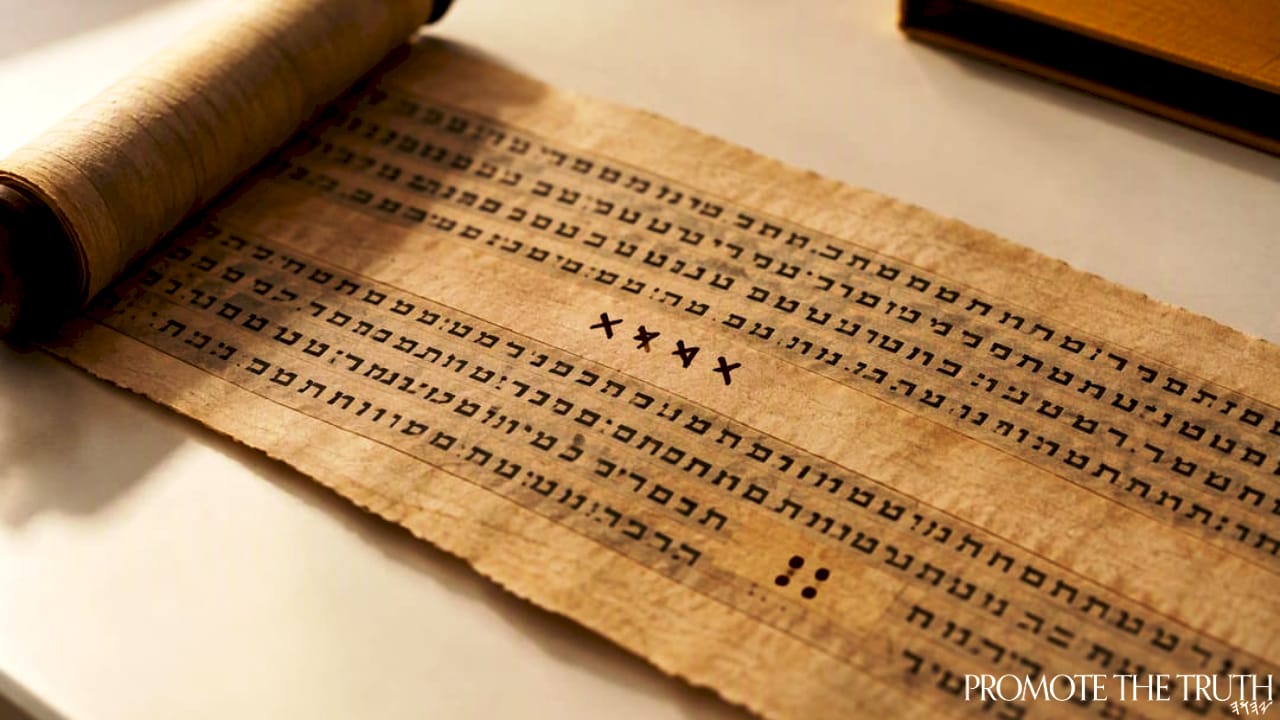
The evidence from Qumran presents a different picture. Several Dead Sea Scrolls preserve the Tetragrammaton in Paleo-Abariy (Paleo-Hebrew) characters while the surrounding text is written in the later square Abariy (Hebrew) script. This is generally understood as a deliberate scribal practice that distinguished the Set-Apart Name from the surrounding Scriptural text. Other manuscripts use four dots, commonly called tetrapuncta, or employ other scribal conventions in place of writing the Name in its usual form.
These variations demonstrate that Qumran scribes used different methods to write or mark the Set-Apart Name. They provide important manuscript evidence for the preservation and distinctive treatment of יהוה (YHWH) during the Second Ahiykal (Temple) period, while leaving the question of its original pronunciation open.
The Papyri Evidence: Preserving the Set-Apart Name Across Languages
The papyri evidence extends this pattern beyond Abariy (Hebrew) manuscripts. Among the Oxyrhynchus Papyri, discovered in Egypt and written primarily in Yuuniy (Greek), several fragments preserve the Set-Apart Name in Paleo-Abariy (Paleo-Hebrew) characters rather than transliterating it into Yuuniy (Greek) like the surrounding text. This detail is highly significant. It demonstrates that the practice of distinguishing the Set-Apart Name visually continued even as the Scriptural text was transmitted into another language. Although the surrounding document was copied in Yuuniy (Greek), scribes intentionally preserved YAHUAH in the older Paleo-Abariy (Paleo-Hebrew) script, reflecting the unique reverence associated with the Tetragrammaton.
When examined together, three major lines of manuscript evidence illustrate this long-standing scribal tradition:
-
Nagab (Negev) inscriptions (c. 1400 BCE): Abbreviated forms such as YH and YHH, representing some of the earliest known attestations of the Set-Apart Name in an informal setting.
-
Qumran manuscripts (c. third century BCE to first century CE): The Tetragrammaton (יהוה) is frequently written in Paleo-Abariy (Paleo-Hebrew) characters within manuscripts otherwise copied in square Abariy (Hebrew) script. Other manuscripts also preserve substitution practices, including dots and tetrapuncta.
-
Oxyrhynchus Papyri: The Set-Apart Name appears in Paleo-Abariy (Paleo-Hebrew) characters within otherwise Yuuniy (Greek) manuscripts, demonstrating that this scribal practice continued across both language and script.
Taken together, these manuscript witnesses span approximately 1,500 years of textual transmission. Although the writing systems and languages changed over time, the consistent treatment of the Set-Apart Name demonstrates a longstanding scribal tradition of distinguishing YAHUAH from every other word in the Scriptural text. For manuscript researchers, this continuity provides valuable evidence for understanding how the Tetragrammaton was preserved, transmitted, and regarded throughout the history of the biblical manuscripts.
Pictographic Interpretations of YHWH (יהוה): Claims, Evidence, and Linguistic Analysis
Some devotional writers interpret the individual Paleo-Abariy (Paleo-Hebrew) letters of YHWH (יהוה) as pictographs that carry symbolic meanings beyond their phonetic function. While this approach has gained popularity in some restoration and Sacred Name circles, it is important to distinguish between devotional reflection and historical manuscript evidence.
For example, the Yud is often associated with a hand or arm, the Ha with a figure with raised arms or the expression “behold,” and the Uah (Waw) with a peg or nail. By combining these symbolic associations, some writers suggest that the Tetragrammaton conveys a message such as “Behold the Hand, Behold the Nail,” interpreting the Set-Apart Name of YAHUAH as a prophetic picture embedded within the ancient script. One example of this interpretation is discussed in this article .
Although these pictographic interpretations may hold devotional value for some readers, historical linguistics and epigraphy do not establish them as the intended meaning of the Name in ancient inscriptions. Several important distinctions help explain why:
-
Chronological development. The pictorial origins of certain alphabetic letterforms belong to early stages of alphabetic writing, centuries before many surviving Paleo-Abariy (Paleo-Hebrew) inscriptions containing the Tetragrammaton. Applying proposed symbolic meanings from those early forms directly to later inscriptions assumes a continuity of meaning that has not been demonstrated by the available historical evidence.
-
Development of letterforms. The shapes of Paleo-Abariy (Paleo-Hebrew) letters changed over time. Although some letter names and early forms can be associated with recognizable objects, these associations do not establish that each letter retained an independent symbolic meaning whenever it appeared in a word or name.
-
Phonetic rather than pictographic writing. In the surviving Paleo-Abariy (Paleo-Hebrew) manuscripts and inscriptions, the letters functioned primarily as characters representing consonantal sounds. The letters of YHWH (יהוה) therefore record the consonantal form of the Set-Apart Name, rather than demonstrably communicating a sequence of pictographic images.
These distinctions do not prevent readers from finding personal spiritual meaning in ancient letter associations. However, a devotional interpretation should be distinguished from a historical claim. Saying, “This ancient letter association helps me reflect on YAHUAH’s character,” expresses a personal devotional application. Claiming that ancient scribes intentionally encoded a specific prophetic message into the spelling of the Tetragrammaton requires supporting manuscript, linguistic, and archaeological evidence.
For truth seekers studying the Name YAHUAH, the central question is what the surviving Paleo-Abariy (Paleo-Hebrew) inscriptions actually preserve. These inscriptions provide evidence for the written consonantal form of יהוה (YHWH), but pictographic interpretations alone cannot establish its original pronunciation or prove that a particular prophetic message was encoded within its letters.
Readers who wish to examine the Tetragrammaton more closely are encouraged to continue with our study of the meaning, history, and transmission of the Set-Apart Name of YAHUAH, including the available Abariy (Hebrew), Aramiyt (Aramaic), manuscript, and archaeological evidence.
Promote The Truth’s Manuscript-Based Restoration Approach
Promote The Truth examines evidence from epigraphic discoveries, Qumran scribal practices, and onomastic data through a restoration-focused perspective rather than a purely academic one. While many scholars identify “Yahweh” as a leading reconstruction of the ancient pronunciation, they also acknowledge that the original vocalization is not preserved with certainty. Promote The Truth presents research supporting the restored form YAHUAH, arguing that the available manuscript and linguistic evidence supports this reading. Within this approach, restoring the Set-Apart Name is viewed as both a matter of manuscript fidelity and an essential part of faithfully representing the original Scriptural text.
This manuscript-based research includes a detailed study documenting what Promote The Truth identifies as over 2,100 occurrences of the Divine Name in the Dead Sea Scrolls . The study presents the organization’s analysis of the manuscript evidence and its arguments for the restored form YAHUAH, giving readers a restoration-focused perspective to consider alongside the broader scholarly discussion presented throughout this article.
Several characteristics distinguish this restoration approach:
-
Manuscript-first methodology. Promote The Truth gives primary weight to inscriptional evidence, ancient manuscripts, and textual witnesses when examining the Set-Apart Name and evaluating proposed restorations of its pronunciation. The organization considers this evidence alongside historical and linguistic research.
-
Restoring the Set-Apart Name. Rather than replacing the Set-Apart Name with titles such as “LORD,” the Truth Scriptures (TST) use YAHUAH throughout the Ta’anak (Old Testament) and Bariyt Hadash (New Testament), reflecting the organization’s restoration-focused translation philosophy.
-
Bringing scholarship and faith together. The restoration of the Set-Apart Name is presented as both a manuscript-based investigation and a commitment to preserving the Scriptural record for future generations.
Readers who wish to explore this approach further can examine Examples of Divine Name Occurrences in Scripture or study the Truth Scriptures Digital Collection . These resources provide opportunities to examine the organization’s research, explore its restoration methodology, and continue studying the Abariy (Hebrew) and Aramiyt (Aramaic) Scriptural traditions.
Weighing the Evidence: Where Certainty Ends and Study Begins
If there is one key takeaway from this study, it is this: the consonantal form יהוה (YHWH) is firmly established by surviving Paleo-Abariy (Paleo-Hebrew) inscriptions and manuscript evidence. However, the original pronunciation of the Set-Apart Name of YAHUAH is not preserved with certainty. Proposed pronunciations must therefore be evaluated through historical, linguistic, and manuscript research rather than accepted solely on the basis of tradition or assumption.
Ancient inscriptions, early Abariy (Hebrew) textual witnesses, and the scribal practices preserved in the Qumran manuscripts provide valuable evidence for the historical use, written form, and transmission of the Tetragrammaton (יהוה). These sources are essential to understanding how the Set-Apart Name was preserved across different periods and writing traditions. Although they establish its consonantal form, they must be examined alongside other historical and linguistic evidence when evaluating proposed pronunciations.
For truth seekers who wish to move beyond this overview, begin with the primary manuscript and archaeological evidence rather than relying solely on secondary summaries. Study the Qumran manuscripts, examine how the Paleo-Abariy (Paleo-Hebrew) Alphabet functioned as an ancient writing system, and distinguish carefully between documented historical evidence and later devotional interpretations. While pictographic explanations of ancient letters may provide meaningful spiritual reflections, they should not be treated as linguistic or historical proof without supporting evidence.
Ultimately, careful Paleo-Abariy (Paleo-Hebrew) manuscript research requires patience, comparison, and humility. Understanding the history and pronunciation of YAHUAH’s Set-Apart Name involves examining the available Abariy (Hebrew), Aramiyt (Aramaic), archaeological, and historical evidence as a whole rather than relying on isolated claims or assumptions.
The goal is not to force the evidence to support a predetermined conclusion, but to distinguish what the surviving inscriptions establish, what historical and linguistic research suggests, and what remains uncertain. By examining the evidence carefully, readers can develop a deeper understanding of the Tetragrammaton (יהוה) and the historical transmission of the Set-Apart Name of YAHUAH.
— Maria
Continue Your Study With Promotethetruth’s Manuscript Resources
If the manuscript evidence in this article raised more questions than it answered, that is the honest reaction to have, and Promotethetruth built its resources specifically for readers at that point. Unlike a general reference work that stops at “the pronunciation remains debated,” the Truth Scriptures translation takes a position grounded in its own manuscript research and restores the divine name YAHUAH directly throughout the text rather than substituting a title in its place.
Continue Your Study With Promote The Truth’s Manuscript Resources
If the manuscript evidence presented in this article has raised new questions about the Set-Apart Name of YAHUAH, your journey into deeper Scriptural study has only begun. Promote The Truth (PTT) encourages truth seekers to move beyond inherited traditions and examine the ancient Abariy (Hebrew) and Aramiyt (Aramaic) manuscript evidence for themselves.
The Truth Scriptures™ (TST) reflects years of manuscript research, linguistic study, and Scriptural restoration. Rather than replacing the Set-Apart Name with titles such as “LORD,” the translation presents the restored Name YAHUAH throughout the Ta’anak (Old Testament) and Bariyt Hadash (New Testament), reflecting Promote The Truth’s manuscript-based restoration approach.
Explore the complete Truth Scriptures™ Translation to study the restored Ta’anak and Bariyt Hadash and examine how ancient Scriptural names and terminology are presented within their wider context. If you prefer downloadable study materials, the Truth Scriptures™ Digital Collection provides convenient access to the restored text for personal study, research, and closer examination.
For truth seekers who want guided instruction, the PTT RENEWED Virtual Retreat offers a structured opportunity to deepen their understanding of the Scriptures, explore restoration-focused research, and study alongside others who share an interest in the original Scriptural languages.
Begin your study with the Truth Scriptures™ Translation today. Examine the manuscript evidence, explore the history of the Tetragrammaton (יהוה), and discover how Promote The Truth’s restoration of the Set-Apart Name, YAHUAH, seeks to preserve the original Scriptural text.
The next step is yours: examine the evidence, study the Scriptures, and discover what the surviving manuscripts reveal about the Set-Apart Name of YAHUAH.
Sources
FAQ
How do you say “I love you” in Paleo-Hebrew?
Paleo-Hebrew is a writing system, not a separate spoken language, so it does not have its own distinct pronunciation apart from ancient Hebrew itself. Phrases like “I love you” would follow standard biblical Hebrew vocabulary and grammar, simply rendered using the older Paleo-Hebrew letterforms instead of the square script.
Is Paleo-Hebrew different from Hebrew?
Paleo-Hebrew is an earlier script used to write the Hebrew language, not a different language on its own. Israelites used it from roughly 1000 BCE until around 135 CE, after which the Aramaic-derived square script, the one printed in Hebrew Bibles today, became standard.
What is God’s real name in Paleo-Hebrew?
In Paleo-Hebrew script, the divine name is written with the four consonants Yod, He, Waw, He, commonly called the Tetragrammaton. Mainstream scholarship reconstructs the pronunciation as “Yahweh” from external transcriptions and personal-name evidence, while Promotethetruth’s manuscript-based research argues for the transliteration YAHUAH based on its own reading of the same manuscript witnesses.
What are the 12 names of Yahweh?
There is no single fixed list of names in the historical or manuscript evidence covered here. Ancient sources do preserve various descriptive titles and epithets associated with the divine name, such as El Shaddai or Adonai, but these function as titles rather than alternate forms of the Tetragrammaton itself.