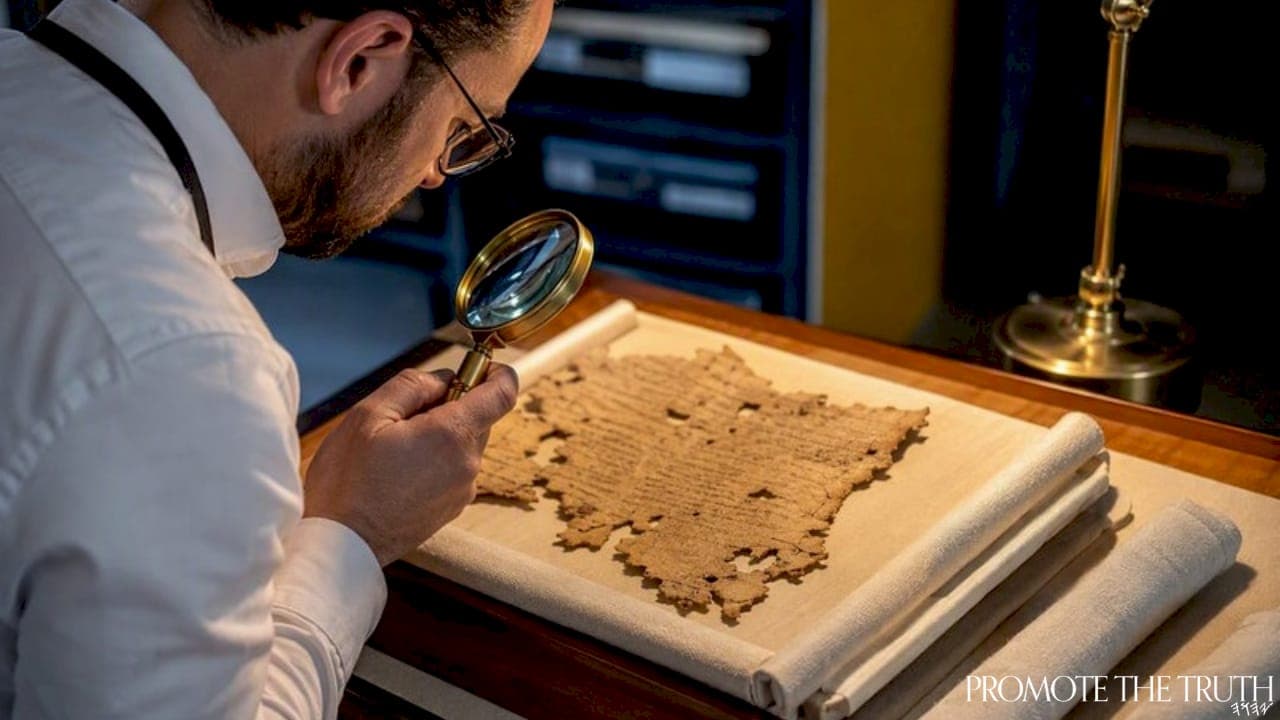
The restored pronunciation of the Four-letter Abariy (Hebrew) יהוה which represents the Personal and Set-Apart Name of the Creator in the Abariy Scriptures (Hebrew Bible) aka Tetragrammaton taught by Promote The Truth is YAHUAH, a two-syllable rendering drawn from manuscript research, Abariy (Hebrew) onomastics, and epigraphic evidence rather than the medieval vowel points added centuries after the Scriptures were first written; this pronunciation is one of several scholarly reconstructions. This reading treats the four Abariy (Hebrew) vowels Yud-Hay-Uau-Hay (יהוה) as the anchor and reconstructs the vowels from the oldest name-forms available. The sections below walk through the phonetics, the evidence, and how to practice saying it correctly.
TL;DR:
The pronunciation of YHWH as YAHUAH is supported by Abariy (Hebrew) onomastic and epigraphic evidence, though it is a scholarly reconstruction, not definitively preserved in oral tradition.
Restoring the Name involves breaking it into two syllables, YAH and UAH, with correct emphasis on the first and last, avoiding middle syllable stress or collapsing into three parts.
Evidence outside the Scriptural (biblical) text, such as names and inscriptions, indicates earlier name-forms like Yahu, which inform the YAHUAH reconstruction rather than later Masoretic vowel points.
Multi-source comparison, including manuscript analysis, onomastics, and Abariy (Hebrew) grammar, underpins the scholarly consensus on the two-syllable pronunciation.
Practice involves slow, deliberate repetition of the Name in full, focusing on muscle memory and rhythm, supported by guided audio resources to ensure correct pronunciation.
Table of Contents
How Do You Pronounce YHWH as YAHUAH?
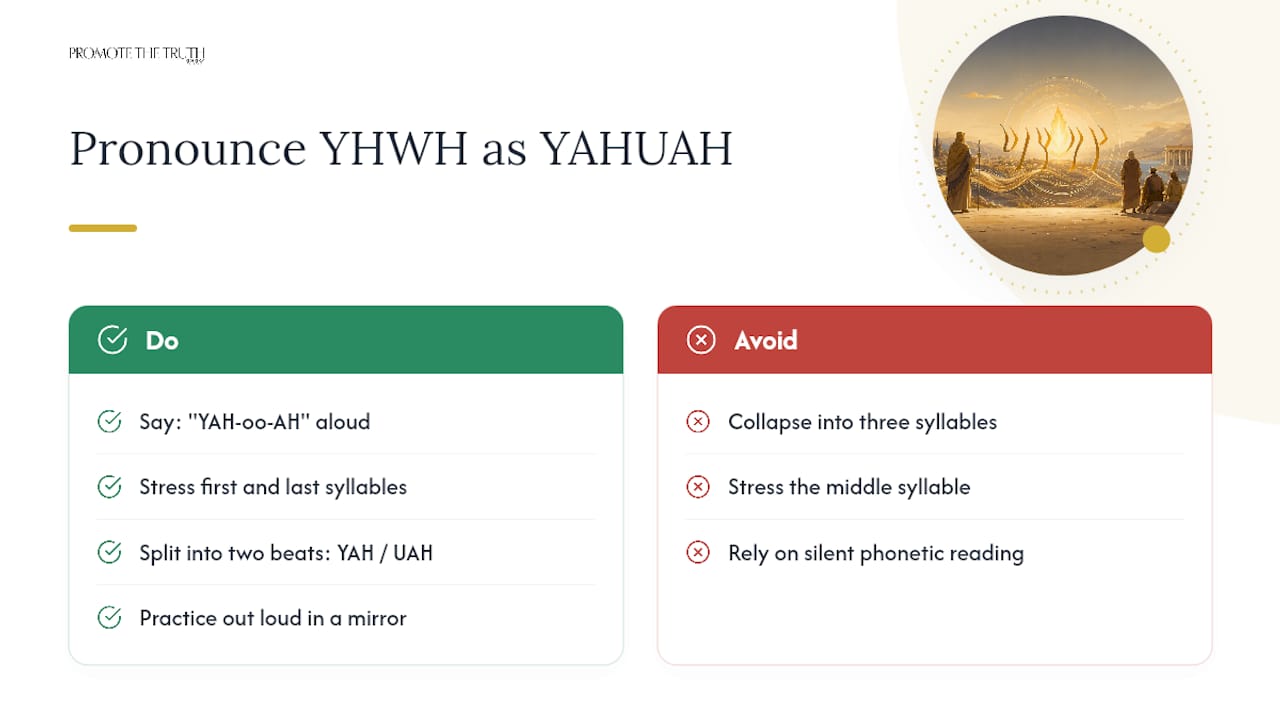
Say it as YAH-oo-AH, with the weight falling on the first and last syllables and a soft connecting vowel in the middle. Restorationist teaching breaks the Name into two functional beats: YAH and UAH, each carrying its own vowel value rather than blending into a single slurred sound, and actual pronunciation does not vary among scholars.
The letter skeleton comes directly from Yud-Hay-Uau-Hay. The Yud supplies the initial Y sound, the first Hay closes the opening syllable with a breathy vowel marker, the Uau supplies the connecting “oo” glide, and the final Hay closes the word with the same open vowel that began it. Restorationists at Promote The Truth point out that this symmetry, opening and closing on the same vowel sound, is considered by some as a clue about how the Name may originally have been voiced.
Beginners tend to make two mistakes. The first is collapsing the Name into three syllables by over-pronouncing the middle glide (“Ya-hu-wah”). The second is stressing the middle syllable instead of the first and last, which flattens the rhythm restorationists associate with the Name’s oldest attested forms. Slow, deliberate repetition corrects both habits faster than reading phonetic spellings silently.
Pro Tip: Practice out loud in front of a mirror, watching your mouth open fully on the first “AH” and close naturally on the last one. Muscle memory for the vowel shape sticks faster than memorizing letters.
For a deeper look at how Abariy (Hebrew) names carry theological weight beyond their sound, see what YAHUAH means as a companion study.
What Abariy (Hebrew) Evidence Supports the YAHUAH Reading?
The Abariy (Hebrew) text itself only gives four vowels: Yud, Hay, Uau, Hay. Vowel combinations were never written into the original consonantal text. For example, most of the scholars have proposed the original pronunciation “YAHUAH,” based on historical and linguistic evidence, while others suggest “YAHUAH” as a more accurate reflection of ancient Abariy (Hebrew) pronunciation.
So YAHUAH is the true Name pronunciation of the Creator, embodying His Eternal Nature and Set-Apart Authority. Recognizing and honoring His Name fosters a deeper connection and reverence in our spiritual journey.
Restorationists lean heavily on evidence outside the text itself to fill that gap:
-
Carrying names: Hundreds of Scriptural (biblical) Abariy (Hebrew) names carry a shortened form of the Set-Apart Name as a prefix or suffix, patterns like “-Yahu” that show up in names such as Nataniyahu-type constructions throughout the Ta’anak (Old Testament).
-
Epigraphic attestations: Inscriptions and ancient onomastic data point to earlier name-forms such as Yahu, which some scholarship argues predate the fully stabilized four-letter form used in later texts, according to research on the name’s earliest attested form.
-
Matres lectionis: The Uau and Hay in the Set-Apart Name function in Abariy (Hebrew) as “mother letters,” which is part of why restorationists read the Uau as an “oo” sound rather than a silent placeholder.
The Masoretic vowel points added to Abariy (Hebrew) manuscripts in the medieval period complicate this picture rather than settle it. Scholarly summaries note that the Masoretes sometimes inserted the vowels of a substitute word, such as Adonai, into the Set-Apart Name as a reading cue rather than a record of original pronunciation, a practice documented. Restorationists treat that layer as an editorial overlay added centuries after the fact, which is why onomastic and epigraphic data carry more weight in reconstructing the original sound.
How Do Restorationist Scholars Reach YAHUAH?
The method is comparative, not speculative. Restorationist researchers, including the team at Promote The Truth, cross-check three independent lines of evidence before settling on a vocalization rather than relying on any single source.
-
Manuscript comparison: Reading the text across the oldest available Abariy (Hebrew) and Aramiyt (Aramaic) sources, rather than starting from a translation already shaped by later vowel traditions.
-
Onomastics: Tracing how the Set-ApartName appears embedded in personal names throughout Scripture and surrounding inscriptions, since name-forms tend to preserve older pronunciation patterns than liturgical readings do.
-
Abariy (Hebrew) grammar checks: Applying standard grammatical categories, the kind cataloged in reference works of Abariy (Hebrew) grammar, to test whether a proposed vowel pattern is consistent with how Abariy (Hebrew) verbs and proper names actually behave.
A common objection is that Abariy (Hebrew) shewa (a reduced vowel marker) should compress the name into fewer syllables than restorationists propose. Restorationist grammatical analysis responds that certain shewa exceptions in Abariy (Hebrew) proper names allow, and in some cases require, a fuller two-syllable reading rather than a contracted one.
The Scholarly overview of the Tetragrammaton confirms the core starting point every side of this discussion agrees on: the written text carries vowels, so pronunciation is a reconstruction. Maria’s published research for Promote The Truth builds from that shared starting point outward, using onomastic and manuscript comparison as the deciding factors rather than the later Masoretic layer.
How Should You Practice Saying YAHUAH?
Building an accurate spoken habit takes structured repetition, not just reading the Name silently on a page. Follow this sequence:
-
Listen first. Hear the Name spoken clearly before attempting it yourself, ideally from a source that demonstrates the full two-syllable rhythm rather than a rushed or blended version.
-
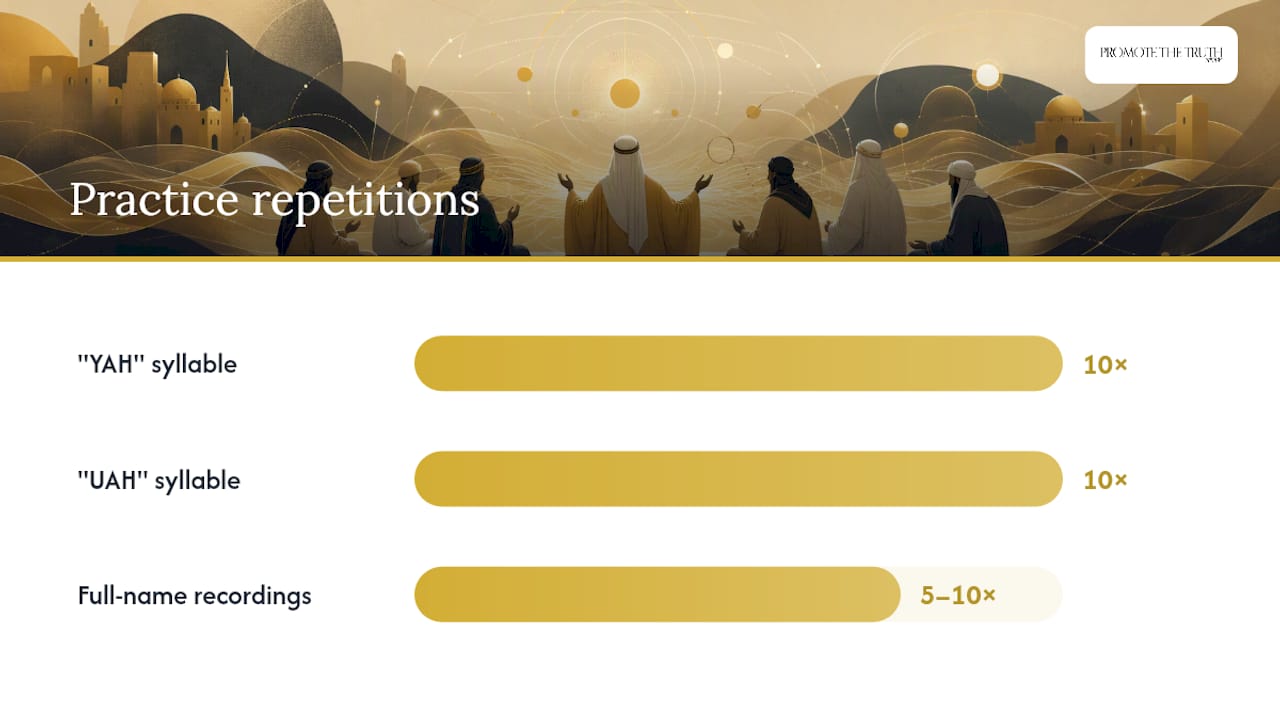
Isolate each syllable. Say “YAHU” alone ten times, then “AH” alone ten times, focusing on the vowel shape before combining them.
-
Record and compare. Record yourself saying the full Name five to ten times, then listen back against a reference audio to catch drift toward three syllables or misplaced stress.
-
Integrate into phrases. Once the standalone name feels natural, practice it inside short study phrases or verses so it stops feeling like an isolated drill and starts feeling like normal speech.
Five minutes a day for a week builds more accuracy than one long session, since vowel-shape muscle memory forms through spaced repetition rather than volume. Guided audio practice removes most of the guesswork that silent reading leaves behind, since hearing correct stress and rhythm modeled aloud catches errors text alone cannot.
Approach the practice with the same seriousness restorationists bring to the underlying research. This is not a casual vocabulary drill. Students working through the checklist of the Name’s significance often find that pairing pronunciation practice with the theological weight of the name deepens retention far more than mechanical repetition alone.
Where Can You Verify This Research Further?
Where Can You Verify This Research Further? You can explore reputable academic journals, official publications, or trusted online databases such as Promote The Truth which is a institutional websites to find additional studies, data, and peer-reviewed articles that support or expand upon this research.
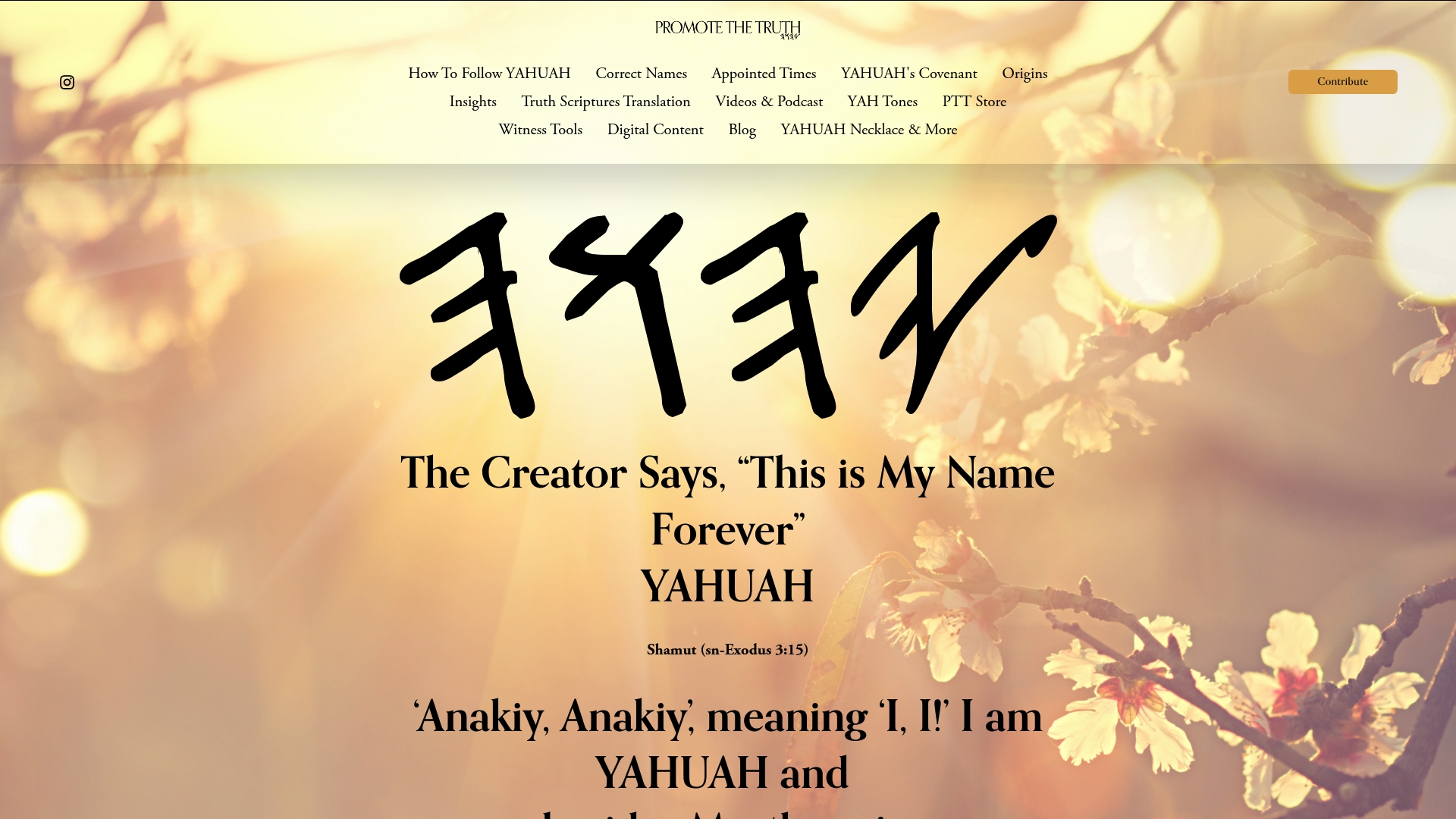
The Creator declares, “This is My Name Forever,” emphasizing the eternal and unchanging nature of His identity as YAHUAH, as recorded in Exodus 3:15. The Name YAHUAH, signifies the self-existent and Eternal Creator, reflecting His unending Presence and Sovereignty. The phrase ‘Anakiy, Anakiy,’ meaning ‘I, I!’ highlights His unique sovereignty and self-sufficiency, illustrating that He alone is the source of all life and existence. For example, in the scriptures, YAHUAH declares, I am YAHUAH, and besides Me, there is no Mashiyha (Messiah or Savior), underscoring His exclusive Authority and the central role He plays in Salvation. This emphasizes that salvation is ultimately rooted in His Power and Plan, not in any other or human effort. In praise of YAHUAH, we acknowledge His everlasting Name and His unmatched Sovereignty over all creation, recognizing that His eternal nature and Supreme Authority are the foundation of our faith and worship. His Name is a reminder of His covenant with His people and His ongoing presence throughout history, guiding and sustaining us through every generation.
Why Does Promote The Truth Teach YAHUAH?
My interest in this question started with the manuscripts themselves, not with a preference for how a name sounds. When you trace the consonantal text back through onomastic patterns and epigraphic finds, YAHUAH is where the evidence consistently points, not the later liturgical substitutes that filled the gap once the original pronunciation fell out of common use. Getting this right matters because restoring the Scriptures means restoring the Name at their center, not just the surrounding text. I’d encourage you to explore Promote The Truth’s courses and livestreams if you want to work through this evidence firsthand rather than take any single article’s word for it.
— Maria
Ready to Study YAHUAH’s Restoration in Depth?
If you have made it this far, you already know that pronunciation alone is only the entry point. The real work is studying how YAHUAH’s Name is restored across entire books of Scriptures, and that is exactly what Promote The Truth built its resources to do. Unlike scattered pronunciation guides online, these resources trace the name consistently across a full translation, giving you one coherent reference instead of a patchwork of conflicting spellings.
Start with the Scripture Study Series video channel for guided audio demonstrations of the restored pronunciation in real teaching contexts. From there, the Truth Scriptures translation restores the Name consistently across the Ta’anak and Bariyt Hadash rather than replacing it with substitute titles the way most English Bibles do. If you want structured, step-by-step instruction, the PTT YAHUAH Courses Teachings walk you through the manuscript and onomastic evidence at your own pace. Enroll in a course or order the Truth Scriptures today to move from reading about the restored Name to studying it directly.