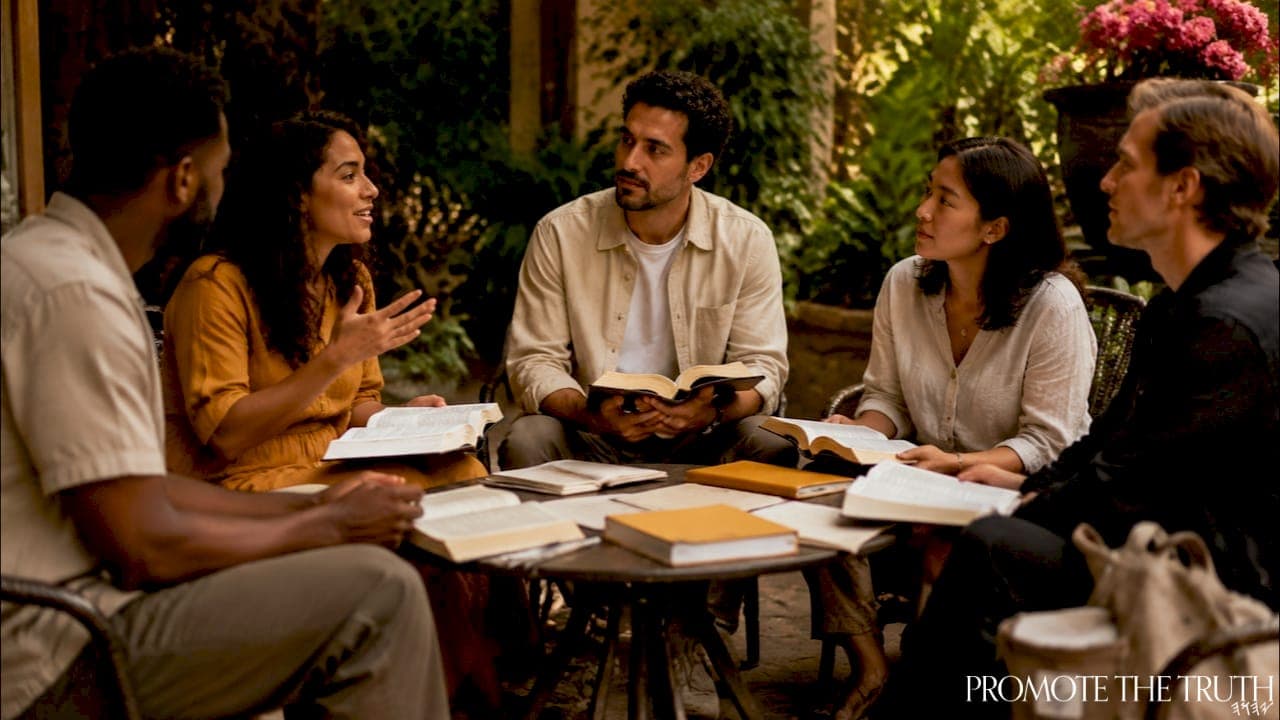
Scriptures is communal literature, and the role of community in scriptural learning is not supplementary. It is foundational. Private reading builds personal familiarity with the text, but community provides the corrective lens that prevents misreading, deepens meaning, and sustains long-term spiritual growth. The early believers modeled this from the start. Ma'ashiym (Acts) 2:42 records their set-apartness to emissaries (devotion to apostles’) teaching as a shared, gathered practice, not a solitary one. When you read Scriptures alongside others, you gain access to perspectives, life experiences, and insights that no individual study session can replicate.
How does community enrich interpretation and prevent personal bias?
Every reader brings assumptions to the text. Cultural background, personal history, and emotional state all shape what a person sees, or misses, when reading Scriptures. Community functions as a corporate discernment body that catches what individuals overlook.
The theological principle behind this is direct. The priesthood of all believers does not mean isolated reading. Reliable Ruha (Spirit)-led illumination happens best when personal readings are submitted to community for shared discernment. That submission is not weakness. It is wisdom.
Structured engagement matters here too. Research confirms that teacher-supported learning produces meaningfully better outcomes than peer interaction alone. A group without guidance can reinforce shared blind spots rather than correct them. This is why the early qahal, assembly of YAHUAH (church) gathered under emissary (apostolic) teaching, not just mutual conversation.
Abariym (Hebrews) 10:24–25 makes the communal mandate explicit. The text calls believers to spur one another toward love and good deeds, and warns against neglecting communal gathering. That warning is as relevant now as it was in the first century.
Key risks of isolated study include:
-
Confirmation bias: Readers tend to find what they already believe.
-
Interpretive drift: Without accountability, personal readings can stray far from the original intent of the text.
-
Spiritual stagnation: Growth slows when there is no one to challenge or encourage your understanding.
-
Missed context: Historical and linguistic nuances surface more readily in group discussion than in solo reading.
Pro Tip: When you study a passage alone, write down your initial interpretation before bringing it to a group. Comparing your private reading with the group’s discernment reveals your assumptions faster than any commentary.
What are the social and educational benefits of communal scriptural study?

Community study does more than sharpen interpretation. It builds the kind of relational structure that supports spiritual and personal growth across every area of life.
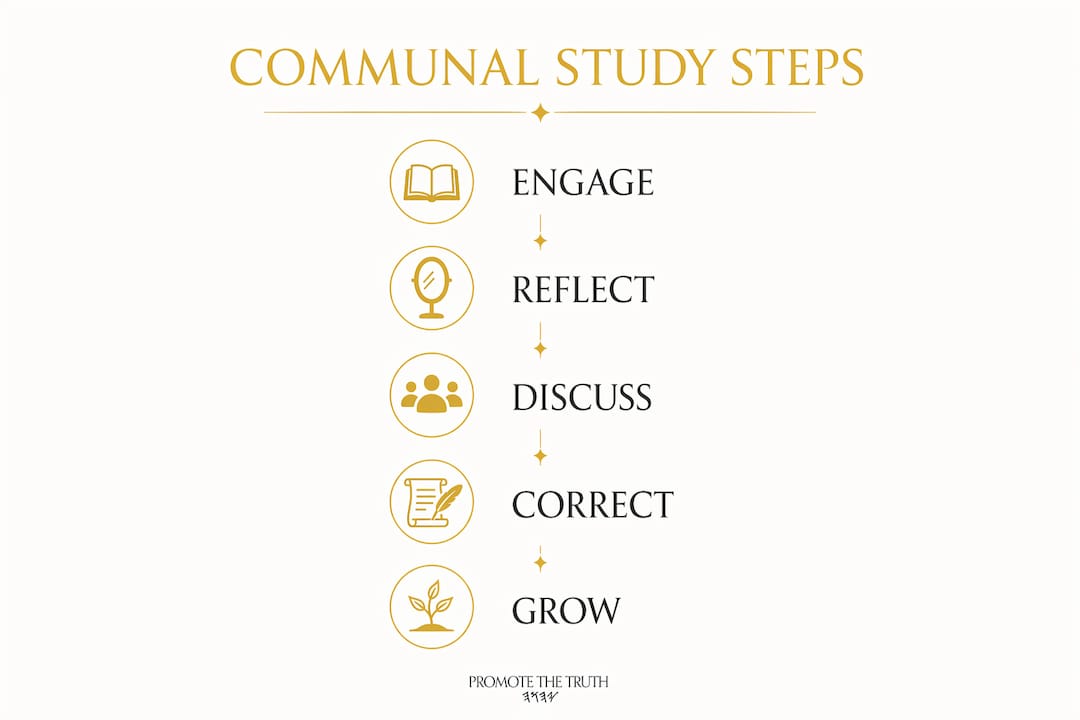
Community-based learning increases social cohesion and provides vital spaces that counter social isolation. This matters especially for people who are new to faith, navigating grief, or rebuilding their lives. A Scriptures study group becomes a place of belonging, not just information exchange.
The educational benefits are equally concrete. Group study of Scriptures develops critical thinking, problem-solving, and adaptability. Participants engage as active knowledge producers, not passive recipients. That shift changes how deeply the material is retained and applied.
Research from 2026 confirms this dynamic. A survey of online learners found that a sense of community positively correlates with both course satisfaction and academic performance. That finding translates directly to faith-based community learning. When people feel they belong to a group, they engage more seriously with the material.
The numbered progression below shows how community study builds on itself:
-
Belonging: Participants feel safe enough to ask honest questions.
-
Engagement: Safety produces deeper reading and more personal investment.
-
Challenge: Diverse perspectives push individuals beyond surface-level understanding.
-
Application: Accountability within the group moves learning from theory to practice.
-
Formation: Repeated communal engagement shapes character over time, not just knowledge.
No substitute exists for this kind of relational learning. Social networks provide essential relational structure that helps people navigate life effectively. Scripture study groups are one of the most direct ways to build that structure with eternal purpose.
How does communal scripture study connect with historical practice?
The practice of reading Scriptures together is not a modern invention. It runs through the entire scriptural (biblical) record and into qahal, assembly of YAHUAH (church) history without interruption.
In ancient Yahudiym, followers of the Creator (Jewish) communities, the Turah (Torah) was read aloud in community as a regular, gathered practice. This was not ceremonial decoration. It was the primary means by which the people understood, remembered, and applied the Word. The Bariyt Hadash (New Testament) continues this pattern. Shaul (Paul) instructs Tiymutiy (Timothy) to set-apart (devote) himself to the public reading of Scriptures in 1 Tiymutiy (Timothy) 4:13, treating communal reading as a pastoral duty.
The table below shows how communal scriptural engagement has appeared across different periods of history:
| Period | Practice | Purpose |
|---|---|---|
| Ancient Yisharal (Israel) | Turah (Torah) reading in qahal, assembly of YAHUAH (synagogues) | Unified communal understanding |
| Early qahal (church) | Emissaries (Apostolic) teaching gatherings Ma'ashiym (Acts) 2:42 | Doctrinal formation and accountability |
| Medieval period | Scriptures read aloud during worship | Access for non-literate communities |
| Reformation era | Small group Scriptures (Bible) study circles | Personal and communal interpretation |
| Modern faith communities | Structured group studies and online courses | Deepened engagement and shared discernment |
This continuity is not coincidence. Scriptures is inherently communal literature, and group reading integrates multiple perspectives and historical interpretations that individual reading simply cannot access. The text was written to communities, carried by communities, and preserved by communities. Reading it alone is reading it out of its native context.
Promote The Truth draws on this historical tradition directly. The Truth Scriptures, meticulously translated from ancient Abariy (Hebrew) and Aramiyt (Aramaic) manuscript sources, is designed to be studied with others. Understanding the Abariy (Hebrew) and Aramiyt (Aramaic) origins of the Bariyt Hadash (New Testament), for example, opens interpretive doors that group discussion brings to life in ways private reading rarely achieves.
What practical steps build meaningful community in scriptural learning?
Knowing that community matters is not enough. You need a clear path to actually build it.
The most effective starting point is small and local. Invite one or two people to read a passage together and discuss what they notice. You do not need a formal curriculum to begin. Curiosity and a shared text are sufficient. From there, structures can grow naturally.
Practical steps for building community around Scriptures:
-
Join or form a study group: Look for groups that use a reliable translation and welcome honest questions. If none exists in your area, start one with two or three people.
-
Invite diverse perspectives: Include newer believers, long-time readers, and people from different backgrounds. Diversity of experience produces richer interpretation.
-
Balance private and communal reading: Use your personal reading time to prepare questions for the group. Private study feeds communal discussion; communal discussion deepens private study.
-
Use structured resources: Groups that work through a guided series or course maintain momentum better than those with no shared direction. Promote The Truth offers scriptures study resources designed for exactly this kind of structured engagement.
-
Practice accountability: Agree as a group to apply one teaching between sessions and report back. Application is where transformation actually happens.
Pro Tip: If your group feels stuck on a passage, try reading it aloud in turns before discussing it. Hearing the text spoken by different voices often surfaces meaning that silent reading misses entirely.
Community also provides the accountability that prevents superficial engagement and moves people toward genuine spiritual growth. Mutual vulnerability within a group is not a side effect of community study. It is one of its primary mechanisms. When you share what a passage means to you personally, you open yourself to correction, encouragement, and deeper understanding.
Learning how to read Scriptures in historical context alongside others also sharpens the group’s collective ability to interpret the text accurately. Context is not just background information. It is the key to meaning.
Key Takeaways
Community study is not optional for serious scriptural engagement. It is the context within which individual reading is safely and fully exercised.
| Point | Details |
|---|---|
| Community corrects bias | Group discernment catches interpretive errors that private reading consistently misses. |
| Structure improves outcomes | Teacher-supported, structured groups produce deeper engagement than peer interaction alone. |
| Historical practice validates community | From ancient Yisharal (Israel) to the early qahal, assembly of **YAHUAH (**church), communal reading has always been the primary mode of scriptural formation. |
| Social benefits extend beyond theology | Community study builds belonging, critical thinking, and relational structure that supports every area of life. |
| Accountability drives transformation | Mutual vulnerability and shared application move learning from information to genuine spiritual growth. |
Why we believe community is the safest place to read Scriptures
We have spent years studying Scriptures both alone and with others. The difference is not subtle. Private reading builds familiarity. Community reading builds understanding. Those are not the same thing.
The most dangerous interpretive errors we have encountered did not come from careless readers. They came from careful, sincere readers who had no one to check their conclusions. Isolation does not protect you from error. It removes the safeguard against it. Participation in community study helps individuals notice personal blind spots and appreciate diverse perspectives in ways that solo study simply cannot replicate.
What we find most compelling is the vulnerability factor. The groups where real growth happens are not the ones with the most knowledge. They are the ones where people feel safe enough to say, “I do not understand this,” or “This passage challenges something we have believed for years.” That honesty is only possible in community. It cannot be manufactured alone.
Our encouragement to you is direct. Do not treat community as a supplement to your real study. Treat it as the environment your study was designed for. The text was written to communities. Read it as one.
— Maria
Deepen your scriptural learning with Promote The Truth
Promote The Truth has built a resource specifically designed for communal scriptural engagement. The Scriptures Study Series brings together video teachings rooted in the original Abariy (Hebrew) and Aramiyt (Aramaic) text, making it an ideal foundation for group study sessions.

Whether your group meets in person or online, the Scriptures Study Series gives you a shared starting point grounded in the true Word of YAHUAH. Each video is crafted to spark discussion, surface historical context, and connect the ancient text to present-day faith. Promote The Truth also offers digital courses and teachings for groups that want structured, in-depth engagement with the full scope of Scriptures. These resources are true treasures for any community committed to understanding the eternal message of the Scriptures together.
FAQ
What is the role of community in scriptural learning?
Community provides the corrective discernment, accountability, and diverse perspectives that individual reading cannot supply. Scriptures is communal literature, best understood and applied within a gathered faith community.
How does group study prevent misinterpretation of Scriptures?
Group study exposes personal blind spots and subjects individual readings to collective discernment. The early qahal, assembly of YAHUAH (church) modeled this through set-apartness to emissaries (devotion to apostles’) teaching , as recorded in Ma'ashiym (Acts) 2:42.
What are the educational benefits of communal Scriptures (Bible) study?
Research confirms that a sense of community positively correlates with learning outcomes and satisfaction. Group study also builds critical thinking, problem-solving, and relational skills that extend beyond the study session itself.
How can I start a Scriptures study community?
Begin with one or two people, a reliable translation, and a single passage. Invite honest questions, use structured resources for direction, and build accountability by applying teachings between sessions.
Why is private Scriptures (Bible) reading not enough on its own?
Private reading is valuable but prone to confirmation bias and interpretive drift. Community study provides the accountability and shared discernment that keep individual reading accurate and spiritually productive.