
A Scriptural worldview rests on several foundational convictions: the authority of the Scriptures, the sovereignty of YAHUAH, the centrality of the Mashiyha (Messiah), the grand narrative of creation, the fall, redemption, and restoration, the dignity of humanity as bearers of YAHUAH’s set-apart (divine) image, and the existence of objective moral truth. Together, these six foundational convictions shape how we interpret the Scriptures, evaluate moral questions, understand suffering, and respond to the world around us. Neglecting even one of these foundations can distort the entire Scriptural worldview.
Here is a brief overview before we examine each foundational conviction in greater detail:
-
The authority and reliability of the Scriptures — the Scriptures govern belief and practice, not the other way around.
-
YAHUAH’s sovereignty — YAHUAH rules over history, creation, and every detail of daily life.
-
The centrality of the Mashiyha (Messiah) — the entire Scriptural narrative points to and is fulfilled through the Mashiyha.
-
Creation, the fall, redemption, and restoration — the overarching Scriptural framework that explains reality, humanity, and YAHUAH’s redemptive purpose.
-
Human dignity as bearers of YAHUAH’s image — every person possesses inherent worth because humanity was created in YAHUAH’s image.
-
Objective moral truth — right and wrong are established by YAHUAH and exist independently of culture, opinion, or personal preference.
Removing even one of these foundational principles does more than create a gap in theology—it changes how the rest of the Scriptures are understood and applied.
Key Takeaways
A Scriptural worldview remains coherent only when the authority of the Scriptures, the sovereignty of YAHUAH, the centrality of the Mashiyha (Messiah), and the Scriptural narrative of creation, the fall, redemption, and restoration are embraced as foundational truths rather than optional emphases. These core convictions shape how believers interpret the Scriptures, understand history, evaluate moral questions, and live out their faith in everyday life.
| Point | Details |
|---|
| Begin with the authority of the Scriptures | Allow the Scriptures to establish the framework for interpretation before applying any theological, philosophical, or cultural perspective. |
| Hold to the Scriptural narrative | Understand creation, the fall, redemption, and restoration as one continuous Scriptural account rather than as isolated events. |
| Recognize your presuppositions | Identify your personal assumptions before reading the Scriptures, then allow the text to shape and correct them rather than interpreting the text through preconceived ideas. |
| Study in community, not in isolation | Regular Scripture study combined with thoughtful discussion helps reveal blind spots that individual study alone may overlook. |
| Study the original manuscript sources | The Truth Scriptures and the manuscript research of Promote the Truth enable readers to compare important translation decisions with the original Abariy (Hebrew) and Aramiyt (Aramaic) texts, fostering a deeper and more accurate understanding of the Scriptures. |
Further Study on Scriptural Worldview Foundations
-
The Chicago Statement on Scriptural (Biblical) Inerrancy — the confessional touchstone for Scripture’s authority
-
What Is a Scriptural (Biblical) Worldview? — the glasses metaphor explained
-
Making Sense of Your World (PDF) — a primer on worldview basics
-
Original Scriptures — the Truth Scriptures manuscript-based translation
Table of Contents
What Is a Scriptural Worldview and Why Does It Matter?
A scriptural worldview is the interpretive lens through which a believer reads Scripture, understands history, and makes moral decisions, one that begins with the A Scriptural worldview is the interpretive lens through which a believer reads the Scriptures, understands history, and makes moral decisions. It begins with the Scriptures’ own claims rather than borrowing its starting point from culture, philosophy, or personal experience. Think of it as the difference between wearing prescription glasses crafted according to the Scriptures’ own specifications and wearing a pair clouded by whatever philosophy happens to be popular in a given generation. As Calvary Chapel University explains, a Scriptural (biblical) worldview functions like a pair of glasses that shapes how a believer perceives everything. The illustration is helpful because a lens does more than bring things into focus—it also helps prevent distortion.
Getting this definition right has implications far beyond the classroom. It shapes how you interpret a disputed passage of Scripture, how you reason through complex moral questions, and how you explain your faith to someone who has never opened the Scriptures (Bible).
-
Scriptural interpretation: A Scripture-first approach helps prevent modern assumptions from being read back into the ancient text.
-
Moral reasoning: Objective moral standards established by YAHUAH replace the shifting consensus of culture as the measure of right and wrong.
-
Witness and mission: A coherent Scriptural worldview provides a stable foundation for engaging people who are navigating competing claims about truth, purpose, and morality.
One survey found that only about 4% of U.S. adults met a defined Scriptural (biblical) worldview standard in 2023. The Bible Seminary While survey methodologies vary, the finding highlights an important distinction: cultural Mashiyha’n (Christianity) is not necessarily the same as living from a Scriptural worldview.
The Core Foundational Principles of a Scriptural Worldview
Each of these foundational principles stands on its own, yet they also work together as one coherent Scriptural worldview. Remove one, and the others begin to lose their proper balance.
-
The authority and reliability of the Scriptures. The Scriptures are not merely one voice among many; they are the final authority for faith, doctrine, and daily living. The Chicago Statement on Biblical Inerrancy affirms that the Scriptures are inspired, authoritative, and trustworthy, emphasizing that a proper understanding of their nature is essential to a sound understanding of the faith. Application: Evaluate every teaching, tradition, and personal conviction by the Scriptures rather than interpreting the Scriptures through human tradition or personal opinion.
-
YAHUAH’s sovereignty. Nothing in creation exists outside YAHUAH’s rule, from the rise and fall of nations to the number of days appointed for every life (Tahliym (Psalms) 139:16). Application: Face uncertainty with confidence, knowing that YAHUAH remains sovereign over every circumstance.
-
The centrality of the Mashiyha (Messiah). The Mashiyha stands at the center of the Scriptural narrative as the promised Seed, the fulfillment of the Turah (Torah), and the perfect pattern of restored humanity. Application: Read the Ta’anak as pointing forward to the Mashiyha rather than as a disconnected collection of historical or legal writings.
-
Creation, the fall, redemption, and restoration. This fourfold Scriptural narrative explains why the world displays both beauty and brokenness while revealing YAHUAH’s ultimate purpose for creation. Application: Understand both suffering and hope within this redemptive framework rather than through despair or naïve optimism.
-
Human dignity as bearers of YAHUAH’s image. Every person possesses inherent worth because humanity was created in YAHUAH’s set-apart (divine) image (Barashiyt (Genesis) 1:27). Application: Let this truth shape how you treat every person, especially the vulnerable and the overlooked.
-
Objective moral truth. Right and wrong do not change with culture, public opinion, or the passing of generations. They are grounded in YAHUAH’s character. Application: Hold firmly to moral convictions rooted in the Scriptures, even when they differ from prevailing cultural values.
-
The reality of sin and redemption through compassion. The Scriptures speak honestly about the reality of sin while proclaiming YAHUAH’s compassion (grace) without minimizing the cost of redemption. Application: Reject both cynicism about humanity and shallow optimism by embracing the Scriptural balance of truth and compassion.
As Ligonier Ministries notes, the framers of the Chicago Statement emphasized the complete truthfulness of the Scriptures and recommended the grammatical-historical method of interpretation as an important safeguard against reading personal assumptions into the text.
Why Hermeneutics and the Authority of the Scriptures Set the Guardrails
Sound interpretation begins with the authority of the Scriptures and allows the text itself to shape the process of interpretation rather than imposing an external framework upon it. When this order is reversed, every other foundational principle of a Scriptural worldview becomes open to reinterpretation according to human opinion, culture, or personal preference.
Several foundational guardrails help preserve faithful interpretation:
-
Let Scripture interpret Scripture, allowing clearer passages to illuminate those that are more difficult.
-
Apply the grammatical-historical method of interpretation, reading each passage in light of its original Abariy (Hebrew) or Aramiyt (Aramaic) language, literary genre, historical setting, and immediate context.
-
Read every passage within its context. A verse separated from its surrounding passage rarely communicates its full intended meaning.
-
Recognize your presuppositions before reading the text. Every reader approaches the Scriptures with prior assumptions, making humility an essential part of faithful interpretation.
-
Use confessional statements, such as the Chicago Statement, as helpful theological guides rather than as substitutes for careful study of the Scriptures themselves.
Pro Tip: One of the most common interpretive mistakes is allowing personal assumptions to shape the meaning of the Scriptures instead of allowing the Scriptures to reshape those assumptions. Before deciding what a passage means, honestly examine the presuppositions you bring to the text, then allow the Scriptures to speak on their own terms.
Understanding how the original audience would have understood a passage is an essential part of faithful interpretation. Historical context, literary context, and the original languages help prevent modern assumptions from being projected onto the Scriptures. As explained in How to Read Scripture in Historical Context, studying the Scriptures within their historical setting is not merely a helpful exercise—it is an important step toward understanding what the inspired text originally communicated.
How Do You Build a Scriptural Worldview?
Developing a Scriptural worldview is a lifelong process that grows through consistent habits rather than a single moment of insight. It is strengthened through regular Scripture study, prayer, fellowship with other believers, sound doctrinal understanding, and faithful obedience. These practices reinforce one another, and none of them requires perfection before you begin.
-
Study the Scriptures consistently. Read a passage each day, taking time to understand what it meant to its original audience before asking how it applies today.
-
Pray through the Scriptures. Allow your study to become a conversation with YAHUAH, rather than treating Scripture study and prayer as separate activities.
-
Study in community. Join a group committed to careful Scripture study, because shared learning often identifies blind spots that isolated interpretation overlooks.
-
Grow in doctrinal understanding. Build a solid foundation by learning why the Assembly has historically understood key Scriptural teachings in the ways it has.
-
Put the Scriptures into practice. Apply what you learn throughout the week so that your study shapes both your beliefs and your daily life.
A practical weekly rhythm is simple. Study one Scriptural passage carefully over two or three days, discuss it with other believers at least once during the week, and identify one practical way to apply it before the week ends. Community-centered Scriptural study encourages accountability, strengthens understanding, and often reveals insights that individual study alone may miss. As discussed in Community-Centered Scriptural Living, faithful growth is strengthened when believers learn, encourage, and serve one another.
How Original-Manuscript Research Strengthens a Scriptural Worldview
Studying the original Abariy (Hebrew) and Aramiyt (Aramaic) manuscripts can reveal wording, names, and historical context that deepen a reader’s understanding of the Scriptures. In some cases, these manuscript details clarify passages in ways that influence interpretation and, consequently, theological understanding. For example, a name preserved differently in the original Abariy (Hebrew) or Aramiyt (Aramaic) manuscripts may help clarify questions of identity, meaning, or historical context that are less apparent in many English translations. This manuscript-centered approach forms the foundation of the Truth Scriptures restoration translation, which draws directly from ancient Abariy (Hebrew) and Aramiyt (Aramaic) manuscript sources rather than relying solely on later translation traditions.

Pro Tip: Always evaluate manuscript evidence alongside sound hermeneutical principles. A textual variant should refine your understanding of a passage, not overturn its meaning without careful textual, historical, and contextual support.
Why We Keep Returning to the Original Text
At Promote the Truth, we believe that a Scriptural worldview is only as sound as the text upon which it is built. That conviction drives our commitment to manuscript-based research and the Truth Scriptures translation. By returning to the earliest available Abariy (Hebrew) and Aramiyt (Aramaic) manuscript sources, we seek to present the Scriptures as faithfully and accurately as possible. Our goal is not to introduce new doctrines but to help readers understand YAHUAH’s message as it was originally communicated. Faithful worldview formation begins with a faithful understanding of the original text.
Study the Original Text for Yourself
The Promote the Truth Scripture Study Series provides guided teaching based directly on Abariy (Hebrew) and Aramiyt (Aramaic) manuscript research, allowing readers to see firsthand how the original languages, historical context, and manuscript evidence shape the interpretation of the Scriptures. Exploring how a name, phrase, or historical detail is preserved in the original manuscripts often provides insights that cannot be fully conveyed through an English translation alone.
Whether you are beginning to develop a Scriptural worldview or seeking a deeper understanding of the Scriptures, studying the original manuscript evidence will strengthen your confidence in the text and equip you to evaluate translation and interpretive decisions with greater clarity.

Unlike a general Scriptures (Bible) app or devotional blog, the Promote the Truth Scripture Study Series guides readers through the reasoning behind the text by examining the original Abariy (Hebrew) and Aramiyt (Aramaic) manuscripts step by step. Rather than simply telling you what a passage means, each study demonstrates how that conclusion is reached through careful analysis of the original languages, historical context, manuscript evidence, and sound hermeneutical principles. If you are ready to study the Scriptures at this deeper level, begin with the Scripture Study Series and explore a passage for yourself this week.
Frequently Asked Questions
What is the difference between a worldview and a set of beliefs?
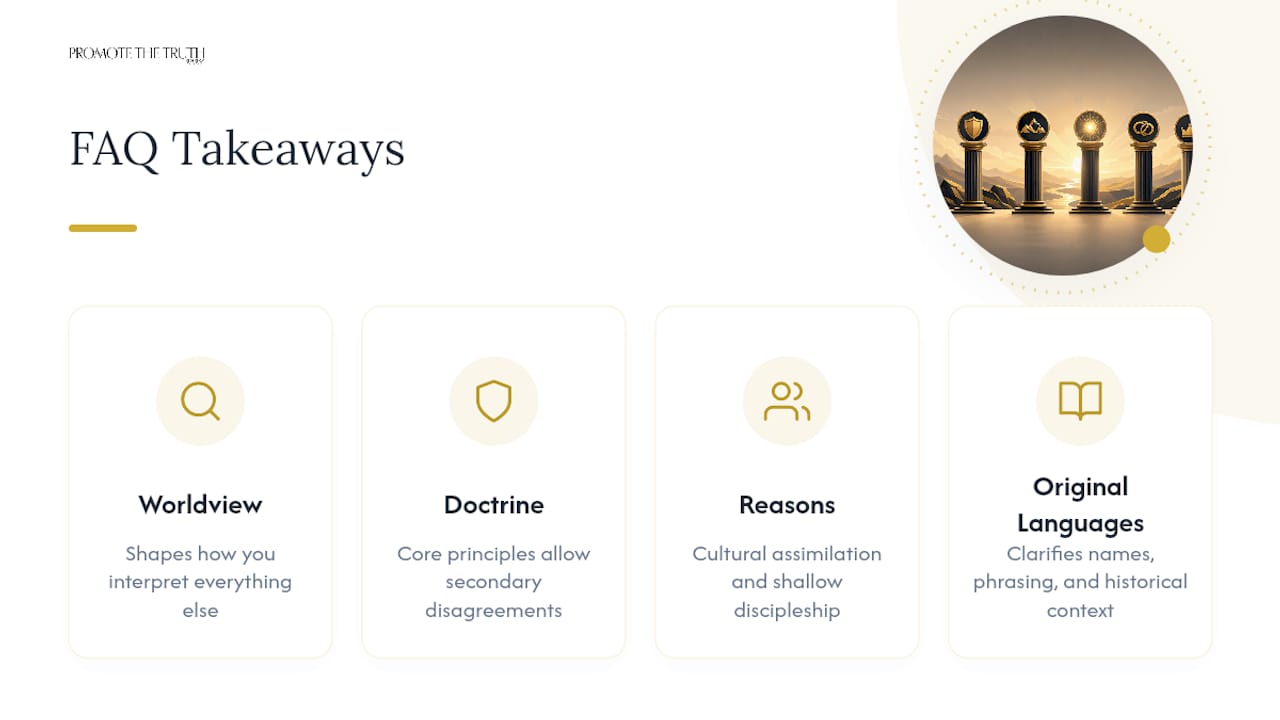
A Scriptural worldview is the interpretive framework through which you understand reality, while individual beliefs are the conclusions that emerge from that framework. Change the worldview, and the way you interpret the same facts will also change.
Can someone hold a Scriptural worldview without agreeing on every doctrinal detail?
Yes. A Scriptural worldview is built upon foundational convictions, including the authority of the Scriptures, the sovereignty of YAHUAH, the centrality of the Mashiyha (Messiah), and the overarching narrative of creation, the fall, redemption, and restoration. Believers may differ on secondary doctrines, such as Assembly governance or the timing of prophetic events, while still sharing these essential foundations.
Why do so few people who identify as Mashiyha’n (Christian) hold a Scriptural worldview?
Research cited by The Bible Seminary suggests that cultural assimilation and shallow discipleship are significant contributing factors, rather than a lack of access to the Scriptures. A Scriptural worldview is developed through consistent study, faithful interpretation, prayer, and the practical application of the Scriptures, not simply through familiarity with the Bible.
How does studying the original Abariy (Hebrew) and Aramiyt (Aramaic) manuscripts strengthen a Scriptural worldview?
Studying the original Abariy (Hebrew) and Aramiyt (Aramaic) manuscripts helps clarify names, wording, literary expressions, and historical context that may not be fully reflected in later translations. Manuscript study does not replace sound Scriptural interpretation; rather, it strengthens it by providing a clearer understanding of the original text and supporting careful, historically grounded interpretation.
Sources
-
The Chicago Statement on Biblical Inerrancy - Midwestern Baptist Theological Seminary
-
The Chicago Statement on Biblical Inerrancy – Ligonier Ministries
-
Making Sense of Your World: A Biblical Worldview - Cedarville University (PDF)