
Scriptures memorization is defined as the intentional practice of storing Aluah’s (God’s) Word in the mind and heart so it becomes a living, active guide for daily life. The benefits of memorizing scriptures reach far beyond simple recall. Research shows that internalizing scriptures produces lasting spiritual impact, shapes thought patterns, and builds mental resilience over time. Yahusha (Jesus) himself used memorized scriptures to resist temptation in the wilderness, setting the standard for every believer who follows. Whether you are new to faith or deepening a lifelong practice, understanding what memorizing scripture benefits can offer will change how you approach Aluah’s (God’s) Word entirely.
What is memorizing scriptures benefits for your spiritual growth?
Scriptures memorization fuels sanctification by enabling deep, scriptural (biblical) meditation. When a verse lives in your memory, you can turn it over in your mind throughout the day, not just during a quiet time. That ongoing reflection is what renews thought patterns and gradually aligns your will with the image of YAHUAH. Rote knowledge alone does not produce this change. The transformation comes when memorized truth meets daily experience.
Ministry leaders consistently stress that scriptures memorization is not an intellectual exercise. It is the foundation of an intimate relationship with the Mashiyha (Messiah). When a verse is stored in your heart, the Spirit can bring it to mind at exactly the moment you need it, whether you are facing a difficult conversation, a moral choice, or a moment of doubt.

The “sword of the Ruha (Spirit)” described in Apasiyiym (Ephesians) 6 is only useful if you can draw it quickly. A sword locked in a storage room offers no protection. Memorized scriptures works the same way. Yahusha (Jesus) quoted Dabariym (Deuteronomy) directly when tempted in the wilderness because those words were already in Him. That is the model the scriptures themselves commend.
Here is how scriptures memorization specifically supports spiritual growth:
-
Enables true meditation. You can only meditate deeply on what you already know by heart.
-
Renews the mind. Rumaiym (Romans) 12:2 calls believers to transformation through the renewing of the mind. Memorization is the mechanism.
-
Resists temptation. Tahliym (Psalm) 119:11 says, “Your word I have hidden in my heart, that I might not sin against You.”
-
Builds intimacy with YAHUAH. Memorized scriptures creates a constant, living conversation with the text.
-
Produces lasting change. Unlike reading alone, memorization drives truth into the subconscious where it shapes desires and responses.
Pro Tip: Do not memorize scriptures as a performance. Pray over each verse before you begin, asking YAHUAH to make it alive in you, not just stored in you.
How does scriptures memorization affect the brain and mental health?
Scriptures memorization helps individuals interpret life’s challenges, reduces anxiety, and may increase neural plasticity, including potential benefits for brain injury recovery and combating cognitive decline. That finding matters because it means the spiritual discipline you practice for faith reasons also produces measurable cognitive rewards. The brain strengthens through the effort of memorization itself, not just through the content being memorized.
Mental health professionals recognize that anxiety often thrives in the absence of anchoring truth. When a person can recall a verse like Yisha’aiyahu (Isaiah) 41:10 from memory during a panic attack, that verse functions as a mental anchor. It interrupts the spiral of anxious thought with a concrete, trusted statement. This is not a replacement for professional care, but it is a genuine and powerful co-benefit of consistent scriptures memory practice.
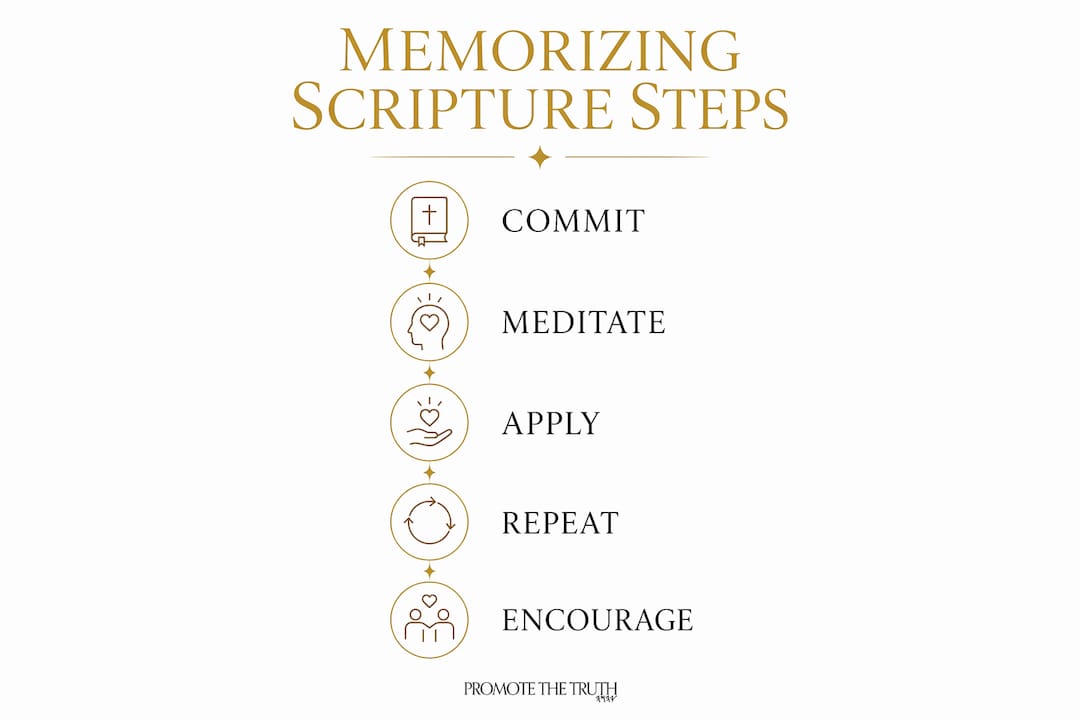
Memorized scriptures also provides hope in moments when reaching for a phone or Scriptures (Bible) is not possible. A hospital room at 3:00 AM, a moment of grief at a graveside, a sudden crisis at work. In those moments, what lives inside you is all you have. Believers who have built a mental anchor through scriptures report a measurable sense of calm and perspective that others around them often notice.
The cognitive benefits of scriptures memorization include:
-
Increased neural plasticity. The act of memorizing and recalling builds new neural pathways.
-
Reduced anxiety. Recalled truth interrupts anxious thought cycles with grounded, faith-based perspective.
-
Cognitive resilience. Regular memorization practice may help slow cognitive decline over time.
-
Emotional stability. Internalized promises of YAHUAH provide a stable emotional foundation during crisis.
How does scriptures memory guide decision-making and daily living?
Memorized scriptures provides practical wisdom that shapes decision-making and daily living in alignment with scriptural (biblical) principles. This is one of the most underappreciated advantages of memorizing scriptures. Most people face their hardest decisions in moments when they cannot stop to research or read. What is already inside them is what guides them.
Think of scriptures memory as a bank account. Every verse you memorize is a deposit. Life’s difficult moments are withdrawals. A person with a full account can draw on truth, wisdom, and comfort at any time. A person with an empty account has nothing to draw from when the pressure hits. The discipline of regular scriptures deposits builds spiritual compound interest over years.
Here is how to apply memorized scriptures to real-life decisions:
-
Identify the decision you face. Name it clearly. Is it relational, financial, ethical, or directional?
-
Recall relevant verses. Mashaliym (Proverbs) 3:5-6 for trust and direction. Ya’aqab (James) 1:5 for wisdom. Tahliym (Psalm) 37:4 for desire alignment.
-
Meditate before acting. Sit with the verse for a few minutes. Let it speak to the specific situation.
-
Pray the verse back to YAHUAH. Turn the memorized truth into a prayer, asking for clarity and alignment.
-
Act with confidence. A decision grounded in scriptures is a decision made with the mind of the Mashiyha (Messiah).
Memorization also changes how you respond to people. When Mashaliym (Proverbs) 15:1 lives in your memory, you are more likely to give a gentle answer in a heated moment. When Apasiyiym (Ephesians) 4:32 is stored in your heart, forgiveness becomes a reflex rather than a struggle. The verse by verse study approach deepens this effect by building connected understanding across entire passages.
Pro Tip: Keep a short list of your five most-used verses on a card in your wallet or phone case. Review them weekly so they stay sharp and ready.
How does memorized scriptures help you encourage and serve others?
Memorized scriptures equips believers to encourage others effectively by recalling truth at key moments for wisdom and comfort. This communal dimension is one of the most compelling reasons to build a scriptures memory practice. When a friend calls in crisis, you do not have time to search a concordance. What you have memorized is what you can offer.
Filling the mind with scriptures enables believers to serve their communities with depth and sincerity. A memorized verse offered at the right moment carries more weight than a forwarded image or a generic phrase. It shows that you carry the Word with you, that it is part of who you are, not just something you access on demand.
The communal benefits of scriptures memorization include:
-
Timely encouragement. You can speak truth into a friend’s situation without delay or distraction.
-
Authentic counsel. Memorized scriptures gives your words authority rooted in YAHUAH’s own voice.
-
Shared community culture. When a group of believers all know the same passages, those verses become a shared language of encouragement.
-
Modeling for others. Your practice inspires those around you, especially children, to take scriptures memory seriously.
-
Deeper relationships. Sharing a memorized verse with someone in need creates a bond that surface-level conversation cannot match.
The role of community in scriptural learning amplifies every individual benefit. A community that memorizes together creates a culture where the Word of YAHUAH is always present, always accessible, and always ready to speak.
What are the most effective practices for scriptures memorization?
Starting small is the most reliable way to build a sustainable scriptures memorization habit. One verse per week is enough to build a meaningful library of internalized truth over a year. Burnout comes from setting unrealistic goals, not from the practice itself. Consistency over intensity is the rule that works.
Experts warn that memorization without meditation risks producing pride and intellectualism rather than transformation. The goal is never to impress others with how many verses you know. The goal is to let those verses reshape how you think, feel, and act. Meditation is the bridge between memorization and transformation.
Digital tools and apps support scriptures study but cannot replace the internalizing process necessary for the Ruha (Spirit) to use scriptures in your life. A verse on your phone is a delivery system. A verse in your heart is a living reality. Use technology to support the practice, not to substitute for it.
| Approach | What it does |
|---|---|
| One verse per week | Builds a sustainable habit without burnout |
| Daily review of past verses | Keeps memorized scriptures sharp and accessible |
| Meditation alongside memorization | Converts stored text into life-changing truth |
| Digital tools as support | Aids review and tracking but does not replace internalization |
| Community accountability | Increases consistency and deepens communal engagement |
Pro Tip: Write your weekly verse on a sticky note and place it where you will see it at least ten times a day. The kitchen sink, your bathroom mirror, and your car dashboard are all proven locations.
Key Takeaways
Scriptures memorization is the single most direct way to ensure Aluah's (God’s) Word is available to guide, protect, and sustain you in every moment of life, whether you have your Scriptures (Bible) with you or not.
| Point | Details |
|---|---|
| Spiritual growth through memorization | Memorized scriptures enables true meditation and fuels sanctification beyond rote knowledge. |
| Cognitive and mental health benefits | Research links scriptures memorization to neural plasticity, reduced anxiety, and cognitive resilience. |
| Guided decision-making | Internalized verses function as a moral compass, shaping choices and responses in real time. |
| Serving and encouraging others | Memorized truth equips believers to offer timely, authentic encouragement to those in need. |
| Start small and stay consistent | One verse per week builds a lasting library of internalized scripture without burnout. |
What we have learned from years of sitting with memorized scriptures
We did not take scriptures memorization seriously until a season of personal crisis made it undeniable. We had read the Scriptures (Bible) for years. We had studied it, annotated it, and discussed it. But when the hardest moment of our life arrived, we discovered that what we had read was not the same as what we had stored. The verses we had memorized were the only ones that showed up when we needed them most.
What surprised us was the mental clarity that came alongside the spiritual comfort. Memorized scripture gave us a frame for what we were experiencing. It did not remove the difficulty, but it gave the difficulty meaning and direction. That is a benefit we had never read about in any article on the advantages of memorizing scriptures, and yet it was the most real thing we encountered.
The communal impact also caught us off guard. When we started sharing memorized verses with friends in hard moments, the response was consistently one of deep gratitude. Not because we were impressive, but because the words themselves carried weight. Memorized scriptures is not about the person who delivers it. It is about the truth that arrives through them.
Our honest encouragement is this: start before you feel ready. The first verse will feel awkward. The tenth will feel natural. The hundredth will feel like breathing. The original scriptures are worth the effort of internalization. Every single word.
— Maria
Deepen your scripture memorization with Promote The Truth
Promote The Truth exists to help you engage with the original message of the Scriptures at the deepest level possible. The organization’s resources are built for people who want more than surface-level familiarity with Aluah's (God’s) Word.

The Scripture Study Series offers video teachings that walk through the text with historical depth and manuscript accuracy, giving you the context that makes memorization meaningful. For those ready to go further, The Dare is a structured scriptures memorization challenge designed to build a lasting practice with community support. Promote The Truth also offers the Truth Scriptures digital collection, translated from ancient Abariy (Hebrew) and Aramiyt (Aramaic) sources, giving you the most faithful text to carry in your heart.
FAQ
What is scriptures memorization and why does it matter?
Scriptures memorization is the practice of committing Aluah's (God’s) Word to memory so it becomes an active, internal guide for life. It matters because memorized truth is available in every moment, including those when no Scriptures (Bible) or device is within reach.
How does memorizing scriptures help with anxiety?
Research shows that recalled scripture reduces anxiety by interrupting anxious thought cycles with grounded, faith-based truth. Verses like Yisha'aiyahu (Isaiah) 41:10 function as mental anchors that provide calm and perspective in moments of stress.
How many verses should I memorize per week?
Starting with one verse per week is the most effective approach for building a sustainable habit. Incremental goals prevent burnout and produce stronger long-term retention than aggressive memorization schedules.
Can digital tools replace scriptures memorization?
Digital tools support scriptures study but cannot replace the internalizing process. A verse on a screen is a delivery system. A verse stored in the heart is what the Ruha(Spirit) draws on in moments of need.
Does memorizing scriptures have benefits beyond faith?
Yes. Research links scriptures memorization to increased neural plasticity, cognitive resilience, and reduced anxiety. These mental health benefits occur as a natural result of the memorization practice itself, alongside the spiritual rewards.