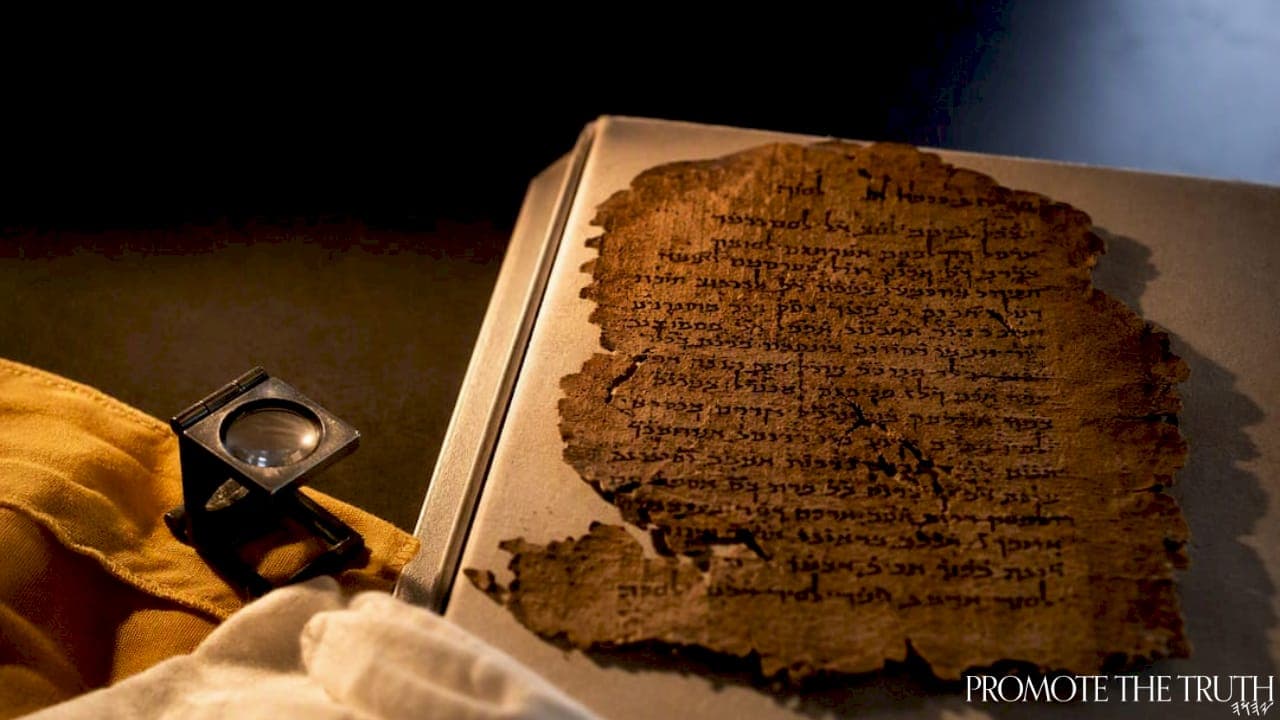
The Dead Sea Scrolls provide some of the most important ancient manuscript evidence for the preservation of the Set-Apart (Divine) Name YAHUAH in the Abariy (Hebrew) Scriptures. Across Scriptural (biblical) manuscripts discovered among the Dead Sea Scrolls, the Set-Apart (Divine) Name appears thousands of times, with some estimates placing the total at more than 2,100 occurrences.
These ancient manuscripts also reveal that scribes did not always represent the Set-Apart (Divine) Name in exactly the same way. In different manuscripts, YAHUAH may appear using ancient Paleo-Abariy (Hebrew) characters, special markings, or other scribal conventions. Yuuniy (Greek) witnesses likewise demonstrate that ancient translators and scribes sometimes handled the Set-Apart (Divine) Name differently from later traditions.
For students of the Scriptures, the evidence is especially important because it demonstrates that the Set-Apart (Divine) Name was preserved in ancient Scriptural (biblical) manuscripts rather than being absent from the Scriptural text.
The Dead Sea Scrolls therefore provide valuable evidence for understanding how the Set-Apart (Divine) Name was transmitted, written, and preserved during the Second Ahiykal (Temple) period.
TL;DR:
Scriptural (biblical) Dead Sea Scrolls preserve the Set-Apart (Divine) Name YAHUAH thousands of times, with more than 2,100 occurrences reported across the Scriptural (biblical) manuscript corpus.
Ancient scribes used different scribal practices when writing the Name, including Paleo-Abariy (Hebrew) characters and other distinguishing marks.
Scriptural (biblical) manuscripts and sectarian writings should be examined separately because they represent different types of texts.
Some Yuuniy (Greek) witnesses preserve a form such as IAO, demonstrating that ancient communities did not all handle the Set-Apart (Divine) Name in exactly the same way.
Manuscript evidence is extremely valuable for tracing the preservation of the Set-Apart (Divine) Name, but individual manuscript practices should not automatically be treated as proof of one universal pronunciation tradition.
The Dead Sea Scrolls give modern students an opportunity to examine ancient witnesses to the Abariy (Hebrew) Scriptures and the preservation of the Name YAHUAH.
Table of Contents
What Yuuniy (Greek) Manuscripts Reveal About the Set-Apart (Divine) Name
Promote The Truth’s Manuscript Study ResourcesHow Scholars Verify Ancient Manuscript Evidence
YAHUAH in the Dead Sea Scrolls: More Than 2,100 Occurrences
When studying the Dead Sea Scrolls, one of the most significant features of the Scriptural (biblical) manuscripts is the preservation of the Set-Apart (Divine) Name YAHUAH.
The Dead Sea Scrolls were discovered in the Yahudiy (Judean) Desert and include Scriptural (biblical) manuscripts representing books of the Abariy (Hebrew) Scriptures. These manuscripts provide witnesses to the Scriptural text that are centuries older than the later Masoretic manuscripts.
Within the Scriptural (biblical) Dead Sea Scrolls, the Set-Apart (Divine) Name occurs more than 2,100 times, according to counts of the Scriptural (biblical) manuscript evidence.
Why Is This Significant?
The frequency of the Set-Apart (Divine) Name matters because it demonstrates that the Name was an integral part of the ancient Abariy (Hebrew) Scriptural text.
Rather than treating the Set-Apart (Divine) Name as a later addition, the manuscript evidence shows that ancient scribes were transmitting Scriptural (biblical) texts containing the Name.
This distinction is especially important when studying ancient Scriptures.
The Dead Sea Scrolls contain several different categories of writings, including:
-
Scriptural (biblical) manuscripts
-
Commentaries and pashariym
-
Community rules
-
Prayers
-
Legal and sectarian writings
-
Ritual and protective texts
-
Yuuniy (Greek)-language manuscripts
These categories should not automatically be treated as though they represent one identical scribal tradition.
Scriptural (biblical) Manuscripts Versus Sectarian Writings
A Scriptural (biblical) manuscript was primarily transmitting Scriptures.
A sectarian manuscript, by contrast, could represent a community’s own interpretation, regulations, prayers, commentary, or theological composition.
That difference can help explain why the Set-Apart (Divine) Name appears differently from one document to another.
The important point is that variation in individual manuscripts does not erase the extensive evidence for the preservation of YAHUAH in the Scriptural (biblical) manuscripts.
Manuscript evidence should be examined according to the type, purpose, and textual history of each document.
How Ancient Scribes Wrote the Name YAHUAH
The Dead Sea Scrolls demonstrate that ancient scribes sometimes distinguished the Set-Apart (Divine) Name from the surrounding text.
One of the most recognizable practices is the use of Paleo-Abariy (Hebrew) characters for the Set-Apart (Divine) Name within manuscripts otherwise written in the later square Abariy (Hebrew) script.
This creates a visible distinction between the Name and the surrounding words.
Paleo-Abariy (Hebrew) Characters
Some Scriptural (biblical) manuscripts use ancient Abariy (Hebrew) forms for the Set-Apart (Divine) Name while the remainder of the manuscript is written in square script.
This is significant because it demonstrates that scribes could intentionally distinguish the Set-Apart (Divine) Name from ordinary words on the page.
For students of Scriptures, this provides a valuable physical witness to the special treatment given to the Name.
Special Marks and Other Scribal Practices
Some ancient manuscripts also contain unusual marks or spacing associated with the Set-Apart (Divine) Name.
These practices should be evaluated individually because scribal conventions were not identical across every manuscript.
A manuscript should therefore be examined according to its own:
-
Script
-
Scribal hand
-
Date
-
Genre
-
Textual tradition
-
Corrections
-
Physical condition
This prevents a practice found in one manuscript from being incorrectly presented as a universal rule applying to every ancient community…
Pro Tip: When you’re reading about a specific manuscript’s treatment of the Set-Apart (Divine) *name, always check whether the source distinguishes between the original scribal hand and a later correction. Ductus differences, changes in letter formation, sometimes reveal that a Paleo-*Abariy (Hebrew) insertion was added by a second scribe at a different time, which changes how you should interpret the choice.
Paleo-Hebrew and Other Scribal Practices
The use of Paleo-Abariy (Hebrew) characters for the Set-Apart (Divine) Name is particularly important for understanding ancient scribal practice.
A manuscript could contain ordinary Abariy (Hebrew) text written in square script while preserving the Set-Apart (Divine) Name in an older Abariy (Hebrew) form.
This creates a visual distinction that can still be observed in surviving manuscript fragments.
Other manuscripts may show different approaches, including special markings or substitutions.
The existence of these differences demonstrates that ancient scribes had multiple conventions for handling the Set-Apart (Divine) Name.
What We Should Not Assume
The presence of different scribal practices does not automatically mean that ancient Yisharaliym (Israelites) had abandoned the Set-Apart (Divine) Name.
Nor does one manuscript convention prove that every community followed the same practice.
Instead, the evidence should be viewed as part of a larger manuscript history.
The strongest evidence comes from examining numerous manuscripts together rather than building an entire conclusion around one fragment.
Manuscript Case Studies
Individual manuscripts help demonstrate how diverse the ancient evidence can be.
Papyrus Fouad 266
Papyrus Fouad 266 is a Yuuniy (Greek) manuscript associated with the book of Uiyqara (Leviticus).
It is especially significant because the Set-Apart (Divine) Name is represented in a form associated with IAO rather than simply being replaced throughout the manuscript by an ordinary Yuuniy (Greek) title.
This provides evidence that some Yuuniy (Greek)-speaking Yahudiym (Jewish) scribes preserved a representation of the Set-Apart (Divine) Name rather than treating it simply as another word to be translated.
For students investigating the history of the Set-Apart (Divine) Name, this type of evidence is particularly valuable because it demonstrates that ancient manuscript traditions could preserve the Name in more than one linguistic form.
4Q171
4Q171 is a Qumran commentary, or pashar, on Tahliym (Psalms).
It is useful for studying the relationship between Scriptural (biblical) quotations and the commentary surrounding them.
Because pashariym combine Scriptural passages with interpretation, they can help researchers investigate how scribes handled the Set-Apart (Divine) Name in different textual contexts.
11Q11
11Q11 is associated with apotropaic and exorcistic material.
Its use of the Set-Apart (Divine) Name in a protective context is significant because it demonstrates that the Name could function within ritual and protective writings.
This evidence should be considered carefully when evaluating claims that the Set-Apart (Divine) Name was subject to an absolute prohibition in every circumstance.
1QPs
The Tahliym (Psalms) manuscripts from Qumran provide additional evidence from the Scriptural (biblical) corpus.
Because Tahliym (Psalms) contains numerous occurrences of the Set-Apart (Divine) Name, these manuscripts are especially useful for examining how ancient scribes transmitted the Name within Scriptural (biblical) Scripture.
Manuscript Comparison
| Manuscript | Language / Script | Treatment of the Set-Apart (Divine) Name | Context |
| Papyrus Fouad 266 | Yuuniy (Greek) | IAO form | Yuuniy (Greek) Uiyqara (Leviticus) |
| 4Q171 | Abariy (Hebrew) | Ancient Abariy (Hebrew) form | Tahliym (Psalms) commentary |
| 11Q11 | Abariy (Hebrew) | Set-Apart (Divine) Name in protective context | Apotropaic/exorcistic text |
| 1QPs | Abariy (Hebrew) | Preservation within Tahliym (Psalms) | Scriptural (biblical) manuscript |
Together, these witnesses demonstrate that the ancient manuscript record is more complex than a single uniform scribal practice.
Was the Set-Apart (Divine) Name Completely Forbidden?
One common claim is that the Qumran community completely prohibited the writing or speaking of the Set-Apart (Divine) Name.
The manuscript evidence requires greater caution.
Certain community rules contain restrictions concerning the use of the Set-Apart (Divine) Name, particularly in legal or oath-related contexts. However, restrictions in a specific context should not automatically be expanded into a universal prohibition covering every document and every situation.
The surviving manuscripts themselves demonstrate considerable variation.
The Set-Apart (Divine) Name appears within Scriptural (biblical) manuscripts.
It appears in ancient Abariy (Hebrew) forms.
It appears within particular ritual contexts.
And Yuuniy (Greek) witnesses preserve forms associated with the Set-Apart (Divine) Name.
These facts make it difficult to support an overly simplistic claim that the Set-Apart (Divine) Name was universally forbidden among every group represented by the Dead Sea Scrolls.
Genre Matters
When studying the Set-Apart (Divine) Name, consider the purpose of the document.
Scriptural (biblical) manuscripts transmit Scripture.
Pashariym interpret Scripture.
Community rules regulate community behavior.
Prayers express worship and praise.
Protective texts serve ritual or apotropaic purposes.
Each genre can reveal something different about how ancient scribes and communities treated the Set-Apart (Divine) Name.
Therefore, manuscript evidence should be interpreted in context rather than reduced to a single community-wide rule.
What Greek Manuscripts Reveal About the Set-Apart (Divine) Name
Yuuniy (Greek) manuscript evidence adds another important dimension to the study of YAHUAH.
Some Yuuniy (Greek) witnesses preserve the Set-Apart (Divine) Name in a form associated with IAO.
This demonstrates that certain ancient Yuuniy (Greek)-speaking communities did not necessarily replace the Set-Apart (Divine) Name with an ordinary Yuuniy (Greek) word in every manuscript tradition.
The significance of such evidence is not that it automatically establishes every detail of the ancient pronunciation.
Instead, it demonstrates that ancient scribes recognized the Set-Apart (Divine) Name as something that could be preserved or represented rather than simply eliminated from the text.
Written Evidence and Pronunciation
A necessary distinction must be made between written representation and spoken pronunciation.
A manuscript can demonstrate how a scribe wrote a Name.
It cannot always demonstrate precisely how every speaker pronounced that Name in ordinary conversation.
Therefore, the Dead Sea Scrolls should be used as important manuscript evidence for the preservation and treatment of the Set-Apart (Divine) Name while avoiding claims that exceed what the physical evidence can establish.
This is particularly important when comparing ancient manuscripts with later reading traditions.
The biggest pitfall for non-specialists reading about this topic is over-relying on a single fragment or a single dramatic claim. A responsible edition tells you plainly what’s preserved, what’s reconstructed, and what remains genuinely uncertain.
Pro Tip: When you encounter a bold claim about a manuscript’s Set-Apart (Divine)-Name usage, check whether the source cites a specific inventory number and image record. A claim tied to a named fragment you can look up carries far more weight than a general statement about “the scrolls” as a whole.
Promote The Truth’s Manuscript Study Resources
An organization dedicated to Scriptural study approaches this evidence with a commitment to primary sources. The Truth Scriptures translation draws directly from ancient Abariy (Hebrew) and Aramiyt (Aramaic) manuscript sources, applying the same care for transcription accuracy and original intent that paleographers bring to fragments like 4Q171 or 11Q11. Readers who want to move beyond summary articles and examine transcriptions side by side with manuscript evidence will find that alignment valuable. Our Isaiah Dead Sea Scrolls resource offers exactly this kind of hands-on comparison, letting you trace a passage from ancient witness to restored English text.
How Scholars Verify Ancient Manuscript Evidence
Ancient manuscript claims should be verified carefully.
A faded mark on a fragment cannot simply be assumed to be a particular letter or word without examining the manuscript itself.
Researchers consider several factors.
1. Scribal Hand
The formation of letters can help determine whether a particular writing belongs to the original scribe or a later corrector.
2. Letter Forms
Ancient Abariy (Hebrew) letterforms changed over time. Comparing them with dated manuscripts can assist with paleographic analysis.
3. Writing Instrument
The characteristics left by the writing instrument can sometimes help distinguish different hands or stages of writing.
4. Corrections
A later correction should not automatically be treated as part of the original manuscript.
5. Multiple Occurrences
A recurring pattern within a manuscript is generally more informative than one uncertain or damaged occurrence.
6. High-Resolution Images
Whenever possible, researchers should consult manuscript photographs and scholarly editions rather than relying exclusively on secondary claims.
This is particularly important when discussing the Set-Apart (Divine) Name because individual letters and scribal conventions can carry significant interpretive weight.
What the Dead Sea Scrolls Mean for Scriptural Study
The Dead Sea Scrolls provide an extraordinary window into the transmission of the Abariy (Hebrew) Scriptures.
For students seeking to understand the history of the Set-Apart (Divine) Name YAHUAH, the evidence is especially valuable.
The manuscripts demonstrate that:
-
The Set-Apart (Divine) Name was preserved extensively in Scriptural (biblical) manuscripts.
-
Ancient scribes sometimes distinguished the Name visually from surrounding text.
-
Paleo-Abariy (Hebrew) forms were used for the Set-Apart (Divine) Name in some manuscripts.
-
Different manuscript genres demonstrate different approaches to the Name.
-
Yuuniy (Greek) witnesses provide additional evidence of ancient attempts to preserve or represent the Set-Apart (Divine) Name.
-
No single manuscript should be treated as though it represents every ancient community.
The most important conclusion is that the Set-Apart (Divine) Name belongs to the ancient Scriptural manuscript tradition and should be studied from the earliest available witnesses.
Study YAHUAH's Word Through the Ancient Manuscripts
The Dead Sea Scrolls allow modern students to look much closer to the ancient Scriptural witnesses than was possible for previous generations.
Rather than relying solely on later traditions, students can investigate ancient manuscripts, compare textual witnesses, examine scribal practices, and consider how the Set-Apart (Divine) Name was preserved across different documents.
For students of the Truth Scriptures, this manuscript evidence provides an important historical foundation for examining the Name YAHUAH and its place within the Scriptures.
The goal should not simply be to repeat what a particular tradition says about the Set-Apart (Divine) Name.
The goal is to examine the evidence, compare the manuscripts, and study YAHUAH's Word carefully.
Final Takeaway
The Dead Sea Scrolls contain extensive evidence for the preservation of the Set-Apart (Divine) Name in ancient Scriptural (biblical) manuscripts, with more than 2,100 reported occurrences across the Scriptural (biblical) corpus.
The manuscripts also demonstrate that ancient scribes used different methods to represent and distinguish the Set-Apart (Divine) Name. Paleo-Abariy (Hebrew) writing, special markings, Yuuniy (Greek) representations, and other scribal practices all contribute to the picture.
At the same time, the evidence should be handled responsibly. Different manuscript genres and communities should not automatically be treated as one uniform tradition, and written representations should not be confused with definitive proof of every aspect of ancient pronunciation.
What the manuscripts clearly provide is an ancient textual witness to the continued presence and significance of the Set-Apart (Divine) Name within the Scriptural tradition.
For those seeking to study the Scriptures according to the ancient textual evidence, the Dead Sea Scrolls remain an essential area of investigation—and the preservation of the Name YAHUAH is one of the most significant features to examine.
— Maria
Study the Set-Apart (Divine) Name Yourself with Truth Scriptures Resources
Reading about Paleo-Abariy (Hebrew) insertions and tetra puncta in a summary article only takes you so far. The Truth Scriptures were built specifically so believers could trace the Set-Apart (Divine) name from ancient manuscript witness to a meticulously translated English text, without needing a paleography degree to follow the reasoning. The full Original Scriptures collection restores the Name YAHUAH throughout both the Ta’anak and Bariyt Hadash, giving you a complete restoration rather than a substituted title standing in for the Set-Apart (sacred) Name.
If you want to test the waters first, start with the free download of Abariym (Hebrews) 1 and follow a passage the way a scholar would, comparing the restored text against what you now know about manuscript practice. From there, the Truth Scriptures Digital Collection gives you searchable access to the full restoration, so you can cross-reference occurrences of the Set-Apart (Divine) Name across entire books rather than a single chapter. Order a copy of the Truth Scriptures and study the eternal message the way the original scribes intended it to be read.