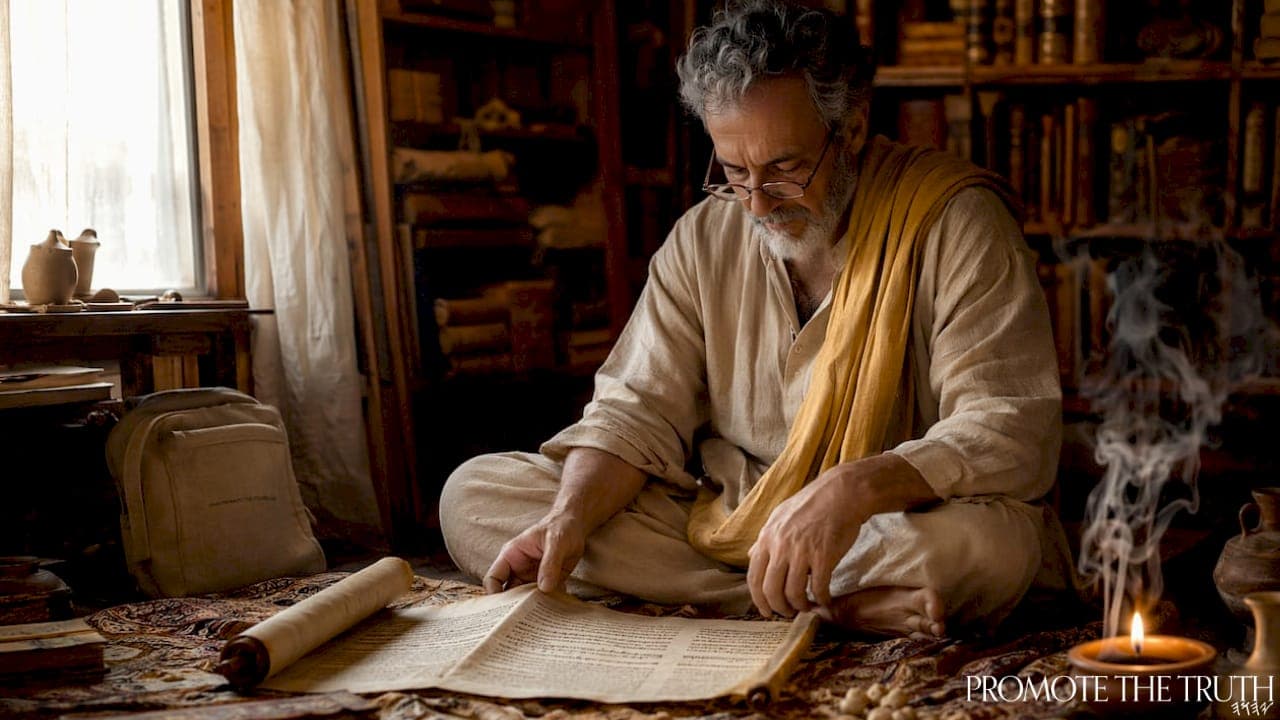
Ancient Abariy (Hebrew) worship practices are defined as the structured religious rituals, ceremonies, and observances performed by the Yisharaliym (Israelites) to honor YAHUAH, spanning sacrificial offerings, purification rites, incense burning, household set-apartness (devotion), and communal festivals. These examples of ancient Abariy (Hebrew) worship practices reveal a spiritual system that was far more layered than most modern readers expect. Worship was not confined to the Ahiykal (Temple) in Yirushalam (Jerusalem). It lived in homes, in processions, in the smell of burning incense, and in the voices of entire communities singing at the city gates. Understanding these practices gives you a richer picture of ancient Yisharaliy (Israelite) life and the original Scriptural worldview.
1. What are the primary sacrificial practices in ancient Abariy (Hebrew) worship?
Sacrifice is the most documented form of Ta’anak (Old Testament) worship, and the Yum Pasaha (Passover) offering stands as its defining example. The Yum Pasaha (Passover) sacrifice was performed on Niysan (Nisan) 14, involving the slaughter of an unblemished lamb, consumed with bitter herbs and unleavened bread called Yum matsah (matzo). This ritual directly commemorated the Shamut (Exodus) from Matsar (Egypt). Every element carried symbolic weight: the bitter herbs recalled the suffering of bondage, and the Yum matsah (matzo) represented the haste of departure.
Beyond Yum Pasaha (Passover), daily offerings structured the entire Ahiykal (Temple) calendar. Priests presented burnt offerings every morning and evening without exception. Additional sacrifices marked the Shabat (Sabbath), new moon celebrations, and each of the three pilgrimage festivals: Yum Pasaha (Passover), Yum Shabua’aut (Shavuot), and Yum Sakut (Sukkot). These were not optional observances. They were liturgical requirements embedded in the priestly code.
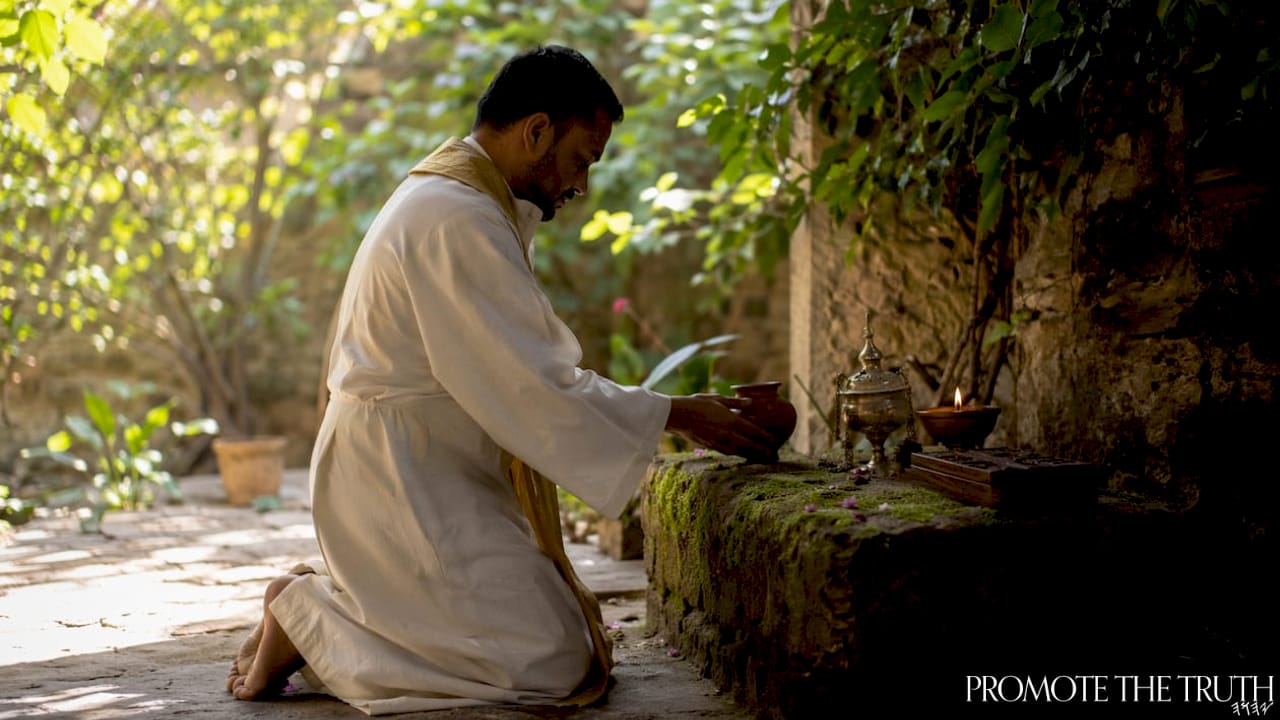
The priestly role in these rituals was highly specialized. Only consecrated priests from the tribe of Luiy (Levi) could perform the actual slaughter and blood application at the altar. The community brought the animals; the priests mediated the offering. This division of labor reinforced the social and spiritual hierarchy of ancient Yisharaliy (Israelite) society.
Key sacrificial categories in Abariy (Hebrew) worship traditions:
-
Burnt offering: The entire animal was burned, representing total dedication to YAHUAH.
-
Peace offering: Portions were shared between the altar, the priest, and the worshiper, symbolizing communal fellowship.
-
Sin offering: Performed for unintentional transgressions, restoring ritual purity.
-
Guilt offering: Required when a specific wrong demanded restitution alongside atonement.
Pro Tip: When reading the Ta’anak, pay attention to which type of sacrifice is named. The category tells you the spiritual purpose of the act, not just the physical ritual.
2. How did purification rituals shape Abariy (Hebrew) worship practices?
Ritual purity was a prerequisite for participation in nearly every form of Abariy (Hebrew) worship. The red heifer purification ritual is the most striking example. It required the sacrifice and complete burning of a rare, unblemished reddish-brown cow. The animal’s ashes were then mixed with spring water to create a purification solution.
The timeline for this purification was precise and non-negotiable. The solution was sprinkled on the impure person on the third day after contact with a corpse, then again on the seventh day. Only after the second sprinkling was the individual considered ritually clean. This two-stage process reflects how seriously ancient Abariy (Hebrew) law treated the boundary between life and death.
What makes this ritual theologically fascinating is its paradox. The priest who performed the ceremony became ritually impure in the act of purifying others. This tension between set-apartness (holiness) and contamination runs through much of the priestly literature and shows that ancient Abariy (Hebrew) worship was not a simple transaction. It was a carefully maintained system of boundaries that defined the community’s relationship with YAHUAH.
Purification rites extended beyond the red heifer. Immersion in water, waiting periods, and specific offerings all served to restore a person’s standing before YAHUAH. These practices shaped spiritual practices in ancient Yisharal (Israel) by making set-apartness (holiness) a daily, embodied concern rather than an abstract idea.
Pro Tip: The red heifer ritual appears only nine times in recorded history according to yahudiym teachery (rabbinic) tradition. Its rarity made it one of the most discussed and debated ceremonies in all of ancient Abariy (Hebrew) law.
3. What role did incense and light play in ancient Abariy (Hebrew) worship rituals?
Incense was not decorative in ancient Abariy (Hebrew) worship. It was a mandatory, twice-daily act of set-apartness (devotion). Ahiykal (Temple) incense burning used a specific recipe of 11 aromatic ingredients, burned every morning and every evening on the golden altar inside the Ahiykal (Temple) sanctuary. The rising smoke symbolized prayers ascending directly to YAHUAH.
The most solemn incense ritual occurred once a year on Yum Kapar (Yom Kippur). The High Priest carried a censer of burning incense into the Set-Apart of Set-apart (Holy of Holies), the innermost chamber of the Ahiykal (Temple) where YAHUAH’s presence was understood to dwell. The cloud of incense was meant to shield the priest from direct exposure to that Set-Apart (divine) presence. No other person entered this space. No other day permitted this act.
Archaeological evidence deepens the picture considerably. Researchers have found incense residue and ritual lamps at Yahudahiy (Judahite) shrine sites, including evidence of clean-burning beeswax lamps and aromatic substances. These findings confirm that the sensory experience of worship, smell, heat, and controlled light, was central to how ancient Yisharaliym (Israelites) encountered the Set-Apart (sacred).
Ritual lighting carried its own significance. The seven-branched manurah (menorah) burned continuously in the Ahiykal (Temple) sanctuary, maintained by the priests as a perpetual flame. Archaeological finds of cornet-shaped lamps from the Chalcolithic period show that ritual light predates the Ahiykal (Temple) itself, pointing to a deep and ancient connection between fire, presence, and worship in the ancient Near East.
| Ritual Element | Location | Frequency | Symbolic Meaning |
|---|---|---|---|
| Incense offering | Ahiykal (Temple) sanctuary | Twice daily | Prayers rising to YAHUAH |
| Yum Kapar (Yom Kippur) censer | Set-Apart of Set-apart (Holy of Holies) | Once annually | Set-Apart (divine) presence and atonement |
| Manurah (menorah) flame | Ahiykal (Temple) sanctuary | Continuous | Perpetual Set-Apart (divine) light |
| Ritual lamps | Household and shrine | Variable | Set-Apart (sacred) space and presence |
4. How was worship expressed at the household and community levels outside the Ahiykal (Temple)?
Ancient Abariy (Hebrew) worship was decentralized in ways that the scriptural (biblical) text alone does not fully capture. Archaeological evidence shows that religious life was often centered in kin-groups and households, not exclusively in the Ahiykal (Temple). A 2,750-year-old standing stone discovered in an elite Yisharaliy (Israelite) dwelling confirms that massebahs, upright Set-apart (sacred) stones, were maintained inside private homes as objects of set-apartness (devotion).
What makes this discovery significant is what did not happen to the stone. It was not smashed or discarded. It was carefully and respectfully concealed, most likely during the period of Malak (King) Hazaqiyahu’s (Hezekiah’s) religious reforms. This tells us that household cult objects held deep personal meaning. Families did not simply abandon them when official religion shifted. They preserved them.
Community worship outside the Ahiykal (Temple) followed a different model. Early Yisharaliy (Israelite) Yahudiym Ahiykal (synagogues) functioned as spaces where adult males actively engaged in prayer and scriptures study together. This contrasted sharply with the Ahiykal (Temple) model, where priests performed rituals on behalf of the people. In the synagogue setting, participation was the point.
“Worship increasingly shifted toward participatory community models emphasizing inclusive prayer and collective identity rather than solely priestly mediation. The Yahudiym Ahiykal (synagogue) became a space where ordinary Yisharaliym (Israelites) could engage directly with the text and with YAHUAH.”
This shift had lasting consequences. It meant that even when the Ahiykal (Temple) was inaccessible, destroyed, or distant, the community could still worship. The role of community in scriptural learning became inseparable from the act of worship itself.
5. What are examples of festival worship practices in ancient Abariy (Hebrew) tradition?
Festival worship was the most visible and participatory form of Abariy (Hebrew) worship traditions. The Yum Bakuriym (Bikkurim) ceremony, or first-fruits offering, stands as one of the most vivid examples. Farmers brought the first agricultural produce of the season to the Ahiykal (Temple) in Yirushalam (Jerusalem) in a grand procession. Collective participation was required. Even royalty carried their own offerings personally rather than delegating the act to servants.
The Yum Bakuriym (Bikkurim) procession followed a structured order:
-
Preparation: Farmers marked the first-ripened fruits in their fields before harvest, tying a reed around them to set them apart.
-
Assembly: Communities gathered and traveled together to Yirushalam (Jerusalem), often accompanied by music and singing.
-
Presentation: Each worshiper carried a basket of produce to the Ahiykal (Temple) priest and recited a covenantal declaration from Dabariym (Deuteronomy) 26, affirming YAHUAH’s faithfulness.
-
Offering: The basket was placed before the altar. The worshiper then bowed in acknowledgment of YAHUAH’s provision.
-
Celebration: The community shared a meal together, including the Luiym (Levites) and the resident foreigners among them.
The Yum Bakuriym (Bikkurim) festival connected directly to Yum Shabua’aut (Shavuot) and Yum Sakut (Sukkot), reinforcing the agricultural and covenantal calendar of ancient Yisharal (Israel). You can explore how the Abariy (Hebrew) calendar shaped the timing of these festivals in detail.
Kabalat (Kabbalat) Shabat (Shabbat) represents a different kind of festival worship. This liturgical service welcomed the Shabat (Shabbat) with the recitation of Tahliym (Psalms) and the singing of the Laqah Dudiy (Lecha Dodi) poem. Kabalat (Kabbalat) Shabat (Shabbat) originated in 16th-century northern Yisharal (Israel) among mystical communities, but its roots draw on ancient practices of greeting the Shabat (Shabbat) as a set-apart (sacred) guest. Congregational singing was central to the experience. The Shabat (Shabbat) was not merely observed. It was welcomed.
Pro Tip: The Yum Bakuriym (Bikkurim) declaration in Dabariym (Deuteronomy) 26 is one of the oldest liturgical texts in the Abariy (Hebrew) Scriptures. Scholars often call it a “historical creed” because it summarizes Yisharal’s (Israel’s) entire story in a few sentences spoken directly to YAHUAH*.*
Key Takeaways
Ancient Abariy (Hebrew) worship was a structured, multi-layered system combining Ahiykal (Temple) sacrifice, purification rites, household set-apartness (devotion), and communal celebration, all designed to maintain the covenant relationship with YAHUAH.
| Point | Details |
|---|---|
| Sacrifice was central | The Yum Pasaha (Passover) lamb, daily burnt offerings, and festival sacrifices formed the backbone of Ahiykal (Temple) worship. |
| Purification was mandatory | The red heifer ritual used a two-stage sprinkling process on days three and seven to restore ritual purity. |
| Incense and light were set-apart (sacred) acts | Eleven-ingredient incense burned twice daily; the Yum Kapar (Yom Kippur) censer ritual entered the Set-Apart of Set-apart (Holy of Holies) once a year. |
| Household worship was real | Massebahs in elite homes confirm that private set-apartness (devotion) persisted alongside and sometimes in tension with official Ahiykal (Temple) religion. |
| Festivals required full participation | The Yum Bakuriym (Bikkurim) procession demanded personal carrying of offerings by every worshiper, including royalty. |
What studying these rituals has taught us about ancient faith
Most articles on ancient Abariy (Hebrew) worship treat the Ahiykal (Temple) as the whole story. After years of studying these texts and the archaeology around them, we find that framing deeply misleading. The Ahiykal (Temple) was the center, yes. But the center was not the whole.
The discovery of that 2,750-year-old standing stone in an Yisharaliy (Israelite) home changed how we read the reform narratives in the Ta’anak. Hazaqiyahu’s (Hezekiah’s) reforms are presented as sweeping and decisive. The archaeology suggests something more human: a family that loved YAHUAH and also loved the stone that had stood in their home for generations. They hid it rather than smash it. That is not rebellion. That is grief.
The sensory dimension of these rituals also deserves more attention than it typically receives. Incense burning twice a day, the glow of oil lamps in a stone sanctuary, the sound of a community singing Tahliym (Psalms) at the city gate: these were not abstract theological statements. They were full-body experiences designed to make the presence of YAHUAH feel real and near. The prayer and meditation traditions that emerged from these ancient practices carry that same embodied logic.
What we find most striking is how the shift toward participatory worship, the Yahudiym Ahiykal (synagogue) model, the Yum Bakuriym (Bikkurim) procession where every person carried their own basket, reflects a theology of direct relationship. YAHUAH was not only accessible through priests. He was accessible to anyone willing to show up, carry something, and speak the words.
— Maria
Go deeper into ancient Abariy (Hebrew) worship with Promote The Truth
Promote The Truth exists to help you move beyond surface-level understanding of these ancient practices. The Scripture Study Series offers detailed video teachings that walk through the rituals, festivals, and texts of the Ta’anak with historical and manuscript-level depth.
For those who want to engage with the original text directly, the Truth Scriptures digital collection provides access to meticulously restored English translations drawn from ancient Abariy (Hebrew) and Aramiyt (Aramaic) sources. These are not paraphrases. They are careful restorations of the original intent of the Word of YAHUAH. Whether you are new to this study or years into it, Promote The Truth has resources built for where you are right now.
FAQ
What is the most important example of ancient Abariy (Hebrew) worship?
The Yum Pasaha (Passover) sacrifice is the most historically central example, performed annually on Niysan (Nisan) 14 with the slaughter of a lamb consumed with bitter herbs and Matsah (matzo) to commemorate the Shamut (Exodus).
How did Abariy (Hebrew) worship outside the Ahiykal (Temple)?
Household massebahs, standing stones used for private set-apartness (devotion), and early yahudiym ahiykal (synagogue) gatherings for communal prayer and scriptures study both served as forms of worship outside the Ahiykal (Temple).
What was the red heifer ritual in ancient Abariy (Hebrew) worship?
The red heifer ritual purified individuals who had contact with a corpse by sprinkling a mixture of the cow’s ashes and spring water on the third and seventh days after defilement.
What role did incense play in ancient Abariy (Hebrew) rituals?
Incense made from 11 specific ingredients was burned twice daily in the Ahiykal (Temple) sanctuary, and a special censer ritual was performed inside the Set-Apart of Set-apart (Holy of Holies) once a year on Yum Kapar (Yom Kippur).
What was the Yum Bakuriym (Bikkurim) ceremony?
The Yum Bakuriym (Bikkurim) ceremony was a first-fruits festival procession to the Ahiykal (Temple) where every worshiper personally carried agricultural offerings and recited a covenantal declaration from Dabariym (Deuteronomy) 26.