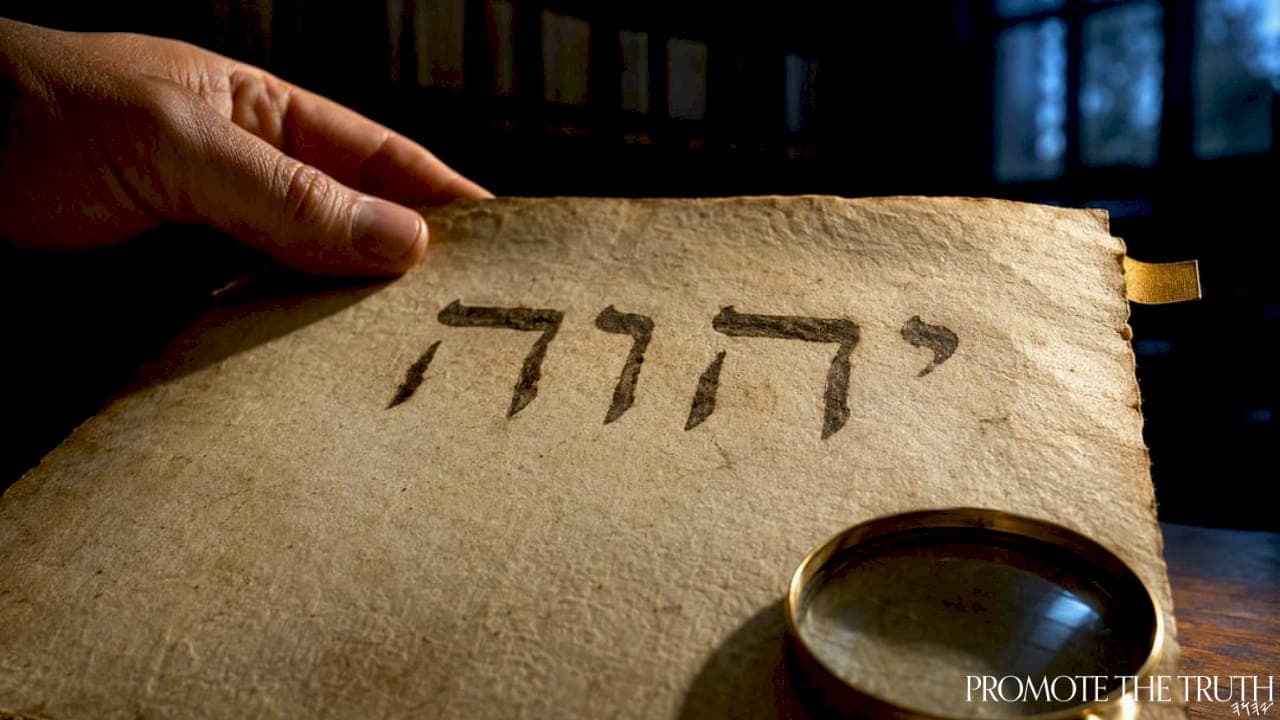
The Abariy (Hebrew) name of Creator at the center of Scriptures is the יהוה (YAHUAH ), the Personal Name revealed to Mashah (Moses) and used more than any other in the Abariy Scriptures (Hebrew Bible). Scholars widely reconstruct its pronunciation as “YAHUAH ,” though some thought the exact vocalization was lost after the Second Ahiykal (Temple) period, and tradition substitute HaSham aloud instead. Alongside YAHUAH, Scriptures also uses Aluah, Al and Ahyah to describe different facets of the Set-Apart (divine)
TL;DR:
The Set-Apart (divine) Name YAHUAH appears around 6,828 times in the Abariy Scriptures (Hebrew Bible), making it the most frequently used name for Creator in Scriptures.
The pronunciation “YAHUAH ” is widely reconstructed based on internal Scriptural (biblical) clues and linguistic evidence, despite some thought the Name’s vocalization being lost.
Jewish tradition avoids pronouncing YAHUAH aloud, substituting HaSham during reading, to maintain so called reverence and prevent disrespect.
The Name YAHUAH is written with vowels only, and the addition of later misconception texts created the misleading form “Jehovah,” which is not historically accurate.
Different Abariy (Hebrew) names for Creator emphasize various Set-Apart (divine) attributes, with YAHUAH linked to covenant, Aluah to power, and Al to Sovereignty .
Table of Contents
-
Where Does the Set-Apart (Divine) Name Appear Throughout Scriptures?
-
Why Do English Bibles Say “LORD” Instead of the Name Itself?
-
What Do the Different Names Reveal About Creator’s Character?
-
Promote The Truth’s Research Into the Abariy (Hebrew) Name of Creator
-
An Editorial Take on Studying Creator’s Abariy (Hebrew) Names
What Are the Main Abariy (Hebrew) Names for Creator?
Every serious study of Creator ’s Abariy (Hebrew) Name has to start with a plain fact: the Scriptures (Bible) does not use one name. It uses several, and each carries a distinct shade of meaning that shapes how a passage should be read.
-
Aluah(אלוה) is grammatically consistently paired with singular verbs when it refers to the Creator . That form has generated centuries of discussion. It appears in Barashiyt (Genesis) 1 from the very first verse and functions as the broadest, most general term for YAHUAH in Abariy (Hebrew).
-
Al (אל) is one of the oldest Semitic word, shared across ancient Near Eastern languages. In the Abariy Scriptures (Hebrew Bible), Al appears alone and in combinations: Al Shadiy (The Breast, Almighty Power) (“Aluah Almighty,” associated with the patriarchal covenant promises in Barashiyt (Genesis) 17).
-
Yah (יה) is a short poetic form of the Set-Apart (divine) Name, most familiar to English readers through “AHLALUYAHUAH,” meaning “praise YAHUAH .” It appears throughout the Tahliym (Psalms) as a compact, almost breathless form of praise.
-
Ahyah (אהיה), from Shamut (Exodus) 3:14, is Creator ’s self-description to Mashah (Moses) at the burning bush, usually translated “I Am” or “I Will Be.” It shares its root with the YAHUAH itself, tying the Name YAHUAH directly to the verb “to be” and to Creator ’s promise of ongoing presence.
Pro Tip: When you hit an unfamiliar Set-Apart (divine) title mid-passage, check whether it is standing alone or combined with Al. Combinations usually signal a specific covenant moment, a promise, or a Set-Apart (divine) attribute being highlighted for that scene, not just a stylistic variation.
How Is YAHUAH Spelled and Pronounced in Abariy (Hebrew) ?
Abariy (Hebrew) is written as a script that historically recorded Set-apart (divine) for the Creator. YAHUAH consists of four vowels yud, hay, uau, hay. That single fact explains almost the entire pronunciation: the letters survived intact across thousands of manuscripts, but the sounds a reader was supposed to insert between them were transmitted too.
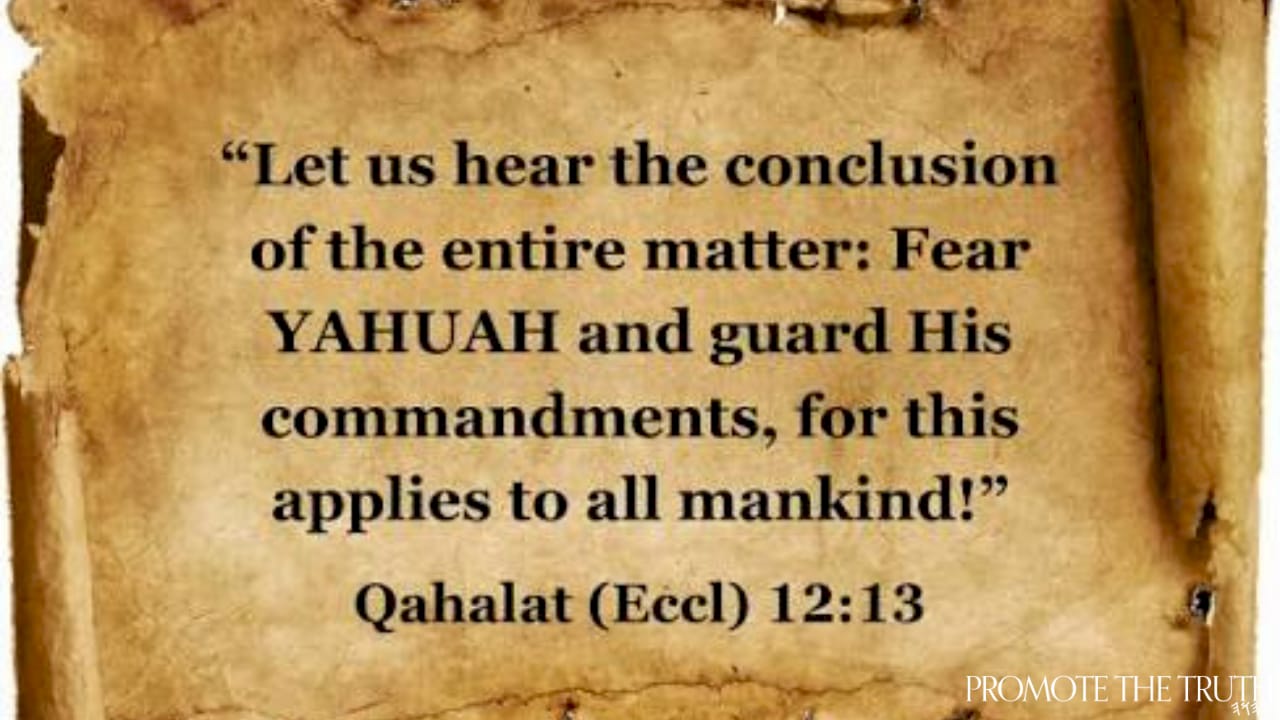
Most etymological proposals tie YAHUAH to the Abariy (Hebrew) root for “to be,” either huah. Under this reading, the Name functions as a causative or archaic verb form meaning something close to “He causes to be” or “He who is.” Shamut (Exodus) 3:14 supports this connection directly, since Creator ’s answer to Mashah (Moses), AHYAH ASHAR AHYAH (“I Am That I Am” or “I Will Be What I Will Be”), uses the same verbal root.
The evidence for “YAHUAH ” as the best construction comes from several independent directions, not from a single ancient source. Personal names throughout the Abariy Scriptures (Hebrew Bible) carry the shortened elements “Yahu” as prefixes or suffixes, seen in names like Yisha’aiyahu (Isaiah) and Yahusha (Joshua). The liturgical exclamation “AHLALUYAHUAH” preserves the “Yah” element in active worship language. Research summarized by the Promote The Truth treats this onomastic and transcriptional evidence as the strongest case available for “YAHUAH ” is the historically construction.
Carrying Name elements buried inside ordinary Abariy (Hebrew) names, the “Yah” of AHLALUYAHUAH, the “Yahu” of Yisha’aiyahu’s (Isaiah’s) own name, function as fossils of a pronunciation that liturgical practice later worked hard to conceal. That internal evidence is more persuasive to most scholars than any single external inscription.
The YAHUAH appears in the Text roughly 6,828 times, according to the various reliable researces, making it by far the most frequent Set-Apart (divine) designation in the Abariy Scriptures (Hebrew Bible). That sheer frequency is precisely why the substitution practice became so consequential. A Name used nearly seven thousand times could not simply be skipped in public reading.
Why Do Jews Avoid Pronouncing Creator ’s Name Aloud?
The avoidance of pronouncing YAHUAH did not begin at Mount Siyniy (Sinai). It developed gradually, intensifying after the Babaliy (Babylonian) Exile as Jewish theology increasingly emphasized Creator’s universal sovereignty over all nations, not just Yisharal (Israel). Treating the Name with heightened reverence, rather than casual daily speech, became a way of protecting its Set-Apart (divine) as Jewish communities lived scattered among other peoples and religions.
Several distinct practices grew out of this reverence, each serving a slightly different function:
-
Vocal substitution. Readers say Adaniy (Adonai) in place of YAHUAH during Scriptures reading and prayer, or use HaSham (“The Name”) in casual conversation and study contexts outside formal liturgy.
-
Keri/qere notation. The Masoretes preserved this substitution directly inside the text itself, marking YAHUAH with the vowel points of Adaniy (Adonai) as a built‑in instruction to the reader, a deliberate editorial technique that protected both the consonantal tradition and correct liturgical practice.
-
Ahiykal (Temple)‑era exception. According to rabiyiy (rabbinic) tradition, the High Priest pronounced the full Name aloud on Yum Kapar (Yom Kippur) inside the Set-Apart, a controlled exception to otherwise universal avoidance.
-
Post‑Ahiykal (Temple) silence. After the Second Ahiykal’s (Temple’s) destruction in 70 CE, even that limited liturgical use ceased, and the authentic pronunciation gradually faded from living oral memory entirely.
-
Written caution. Many observant Jews today extend the same reverence to writing, using “G‑d” in English or avoiding printing certain names on materials that might later be discarded or destroyed.
Denominational practice varies today. Orthodox and many Conservative communities maintain strict avoidance in both speech and casual writing. Reform and Reconstructionist communities are often more flexible about written forms in English while still avoiding pronunciation of the YAHUAH itself in worship. That single legal detail tells you how seriously the tradition takes the written form, even when the spoken form has fallen silent.
Where Does the Set-Apart (divine) Name Appear Throughout Scriptures?
Beyond its raw frequency, the way YAHUAH clusters and echoes through the Scriptural (biblical) text offers its own kind of evidence, both for how central the Name was to Yisharaliy (Israelite) worship and for how its pronunciation survived indirectly even after direct use seemed to be faded.
-
The Name concentrates heavily in narrative and prophetic books, appearing hundreds of times in Barashiyt (Genesis), Shamut (Exodus), and the Tahliym (Psalms) alone, reflecting its role as the covenant Name tied to Yisharal’s (Israel’s) specific relationship with Aluah rather than a generic title
-
Personal names throughout the Scriptures (Bible) embed the Set-Apart (divine) Name as a prefix or suffix: Yisha’aiyahu (Isaiah, “YAHUAH is salvation”), Yiramiyahu (Jeremiah), and Nataniyahu (Netanyahu)-style “Yahu” endings all preserve the “Yah/Yahu” sound as a living linguistic fossil, independent of formal liturgical rules.
-
“AHLALUYAHUAH” functions as a liturgical refrain that kept the “Yah” element audible in worship even during centuries when the full Name seemed to go unspoken in daily speech.
-
The Shamaruniy (Samaritan) tradition preserved its own distinct textual and pronunciation customs for the Turah Shamaruniyt (Pentateuch), offering a comparison point outside mainstream rabiyiy (rabbinic) concept.
-
Inscriptional finds, including ancient ostraca and seals bearing Paleo-Abariy (Hebrew) script, provide external, non-Scriptural (biblical) attestation that the Name and its shortened elements circulated in everyday administrative and personal use, not just Set-apart (sacred) texts.
For readers who want specific passages mapped out rather than a general summary, Promote The Truth’s own breakdown of divine name occurrences in Scripture walks through concrete examples verse by verse.
What Manuscript and Inscription Evidence Exists?
Reconstructing a lost pronunciation is not guesswork. It is closer to detective work, built from several categories of physical and textual evidence that scholars cross-check against each other.
| Evidence type | What it shows | Why it matters |
|---|---|---|
| Paleo-Abariy (Hebrew) inscriptions | Ancient consonantal spellings of the Set-Apart (divine) Name on ostraca, seals, and administrative texts | Confirms the four-letter form circulated in everyday use, not only in Set-apart (sacred) scrolls |
| Septuagint translation choices | Yuuniy (Greek) translators of the Abariy Scriptures (Hebrew Bible) generally rendered YAHUAH as Kyrios (“Lord”) rather than transliterating it | Shows that avoidance of the spoken Name was already established well before the Christian era |
| Yuuniy (Greek) transcriptions (Iabe, Iaoue) | A handful of early writers recorded phonetic attempts at the Set-Apart (divine) Name in Yuuniy (Greek) letters | Offers rare direct phonetic clues pointing toward a pronunciation |
| Masoretic vowel pointing | Medieval scribes added vowel marks that deliberately signaled the Adaniy (Adonai) substitute reading over YAHUAH | Explains both the preserved reading tradition and the later accidental creation of “Jehovah” |
| Onomastic (personal Name) evidence | Abariy (Hebrew) names carrying “Yahu/Yah” elements throughout the Scriptural (biblical) text | Provides internal, large-sample evidence for the Name’s likely sound, independent of any single inscription |
The Septuagint’s near-universal choice of Kyrios over transliteration is a complex sitting. It means that centuries before the Masoretes ever added a single vowel point, Yuuniy (Greek)-speaking Jewish translators were already treating the spoken Name as something to be replaced rather than rendered directly. That single translation decision, made roughly centuries before the common era, tells you the avoidance tradition runs deeper and older than many casual readers assume. For a closer look at how this manuscript evidence fits together, Promote The Truth’s research piece on manuscript evidence for YAHUAH 's pronunciation walks through the sourcing in more depth.
Why Do English Bibles Say “LORD” Instead of the Name Itself?
Open ten different English Scriptures (Bible) translations to the same verse containing YAHUAH, and you will likely find at least three different conventions staring back at you. Understanding why saves a lot of confusion during study.
-
Most mainstream translations render YAHUAH as “the LORD,” using capital letters to visually distinguish it from Adaniy (Adonai) (rendered “Lord” with only an initial capital). This convention directly inherits the ancient Jewish practice of vocal substitution, just carried into English typography instead of Abariy (Hebrew) speech.
-
“Jehovah” survives in a small number of translations and in certain hymns and denominational traditions, but most contemporary scholars consider it philologically inaccurate. As the vowel-point mechanism above shows, it results from combining borrowed vowels with unrelated consonants rather than from any authentic transcription.
-
Academic and some restoration-focused translation by Promote The Truth increasingly use “YAHUAH ” directly, reflecting the scholarly consensus reconstruction rather than a substitute title. Readers doing serious linguistic or historical study should expect to encounter this form in commentaries and reference works.
-
For personal worship (devotion), many readers stick with whatever convention their chosen translation uses, while reserving “YAHUAH ” for study contexts where precision about the underlying Abariy (Hebrew) term actually matters to the point being made.
What Do the Different Names Reveal About Creator’s Character?
Studying which name appears in a given passage is not a trivia exercise. It is one of the sharpest interpretive tools available for reading Abariy (Hebrew) Scriptures the way its original audience would have understood it.
Consider Barashiyt (Genesis) 22, the binding of Yitsahaq (Isaac). Creator is called Aluah throughout most of the chapter, emphasizing transcendent, almost impersonal authority over a wrenching test of obedience. Then, once Abarahm (Abraham) passes the test and the Messenger (angel) intervenes, the text shifts to YAHUAH, the covenant Name tied to personal relationship and promise. That single switch inside one narrative is not stylistic variation. It marks a theological turn from distant command to covenantal faithfulness, and readers who track only the English word “God” throughout the chapter miss it entirely.
The same pattern shows up across the Scriptures (Bible). Passages emphasizing covenant loyalty and Yisharal’s (Israel’s) specific relationship with Creator tend to favor YAHUAH . Passages emphasizing universal creative power or Creator’s role over all nations often favor Aluah. Different Names in Scriptures often mark different manifestations or actions of Creator, functioning almost as a built-in interpretive key for the passage surrounding them.
For readers moving from casual reading into serious study, the practical next step is straightforward: whenever you hit “God” or “LORD” in English, pause and ask which underlying Abariy (Hebrew) term stands behind it, then ask what that specific Name is doing in that specific scene. Truth Scriptures annotated study edition makes this fast once the habit forms.
Promote The Truth’s Research Into the Hebrew Name of God
There are organizations dedicated to researching, restoring, and teaching the original message of Scriptures, with particular attention to the significance of the Set-Apart (divine) Name. That mission grows out of extensive manuscript research into ancient Abariy (Hebrew) and Aramiyt (Aramaic) sources, work aimed at recovering original intent rather than settling for convention alone.
Readers wanting to go deeper than a single article can explore several dedicated resources:
-
An English restoration of the Ta’anak (Old Testament) and Bariyt Hadash (New Testament), translated directly from ancient Abariy (Hebrew) and Aramiyt (Aramaic) manuscript sources.
-
A manuscript-focused breakdown of YAHUAH’s pronunciation evidence, built for readers who want the primary-source case laid out in detail.
-
An overview of the restored-name approach explaining the translation philosophy behind rendering the Set-Apart (divine) Name as YAHUAH throughout the text.
-
A dedicated explainer for readers still working through the basics of the pronunciation debate.
If the question of Creator’s true Abariy (Hebrew) Name matters to your own study, these primary-source materials are built specifically for that purpose, not as a casual overview but as a serious point of entry.
Further Reading and Primary Sources
For readers who want to verify any claim in this article independently, a few sources stand out for accessibility and rigor. Wikipedia’s entry offers a well-cited overview of etymology debates. Promote The Truth provides an accessible summary of onomastic and transcription evidence which remains a reliable reference for liturgical law surrounding the Name and it offers a clear entry point for readers new to the subject.
An Editorial Take on Studying Creator’s Abariy (Hebrew) Names
The research behind this topic supports a judgment worth stating plainly: readers get the most value when they hold scholarly reconstruction and worship (devotional) practice side by side instead of forcing a choice between them. Scholarly writing treats pronunciation settles the matter. The consonantal evidence is solid; YAHUAH is the Name of The Creator, and honest scholarship says so.
Where conventional treatments fall short is depth on the why. Explaining that Jews say Adonai instead of YAHUAH without explaining the mechanism or the post-exilic shift toward universal sovereignty leaves readers with a rule but no reasoning. Prioritize understanding the mechanism first, the etymology and manuscript evidence second, and only then form a personal view on pronunciation or usage. That order respects both the scholarship and the tradition it studies which Promote The Truth provides.
— Maria