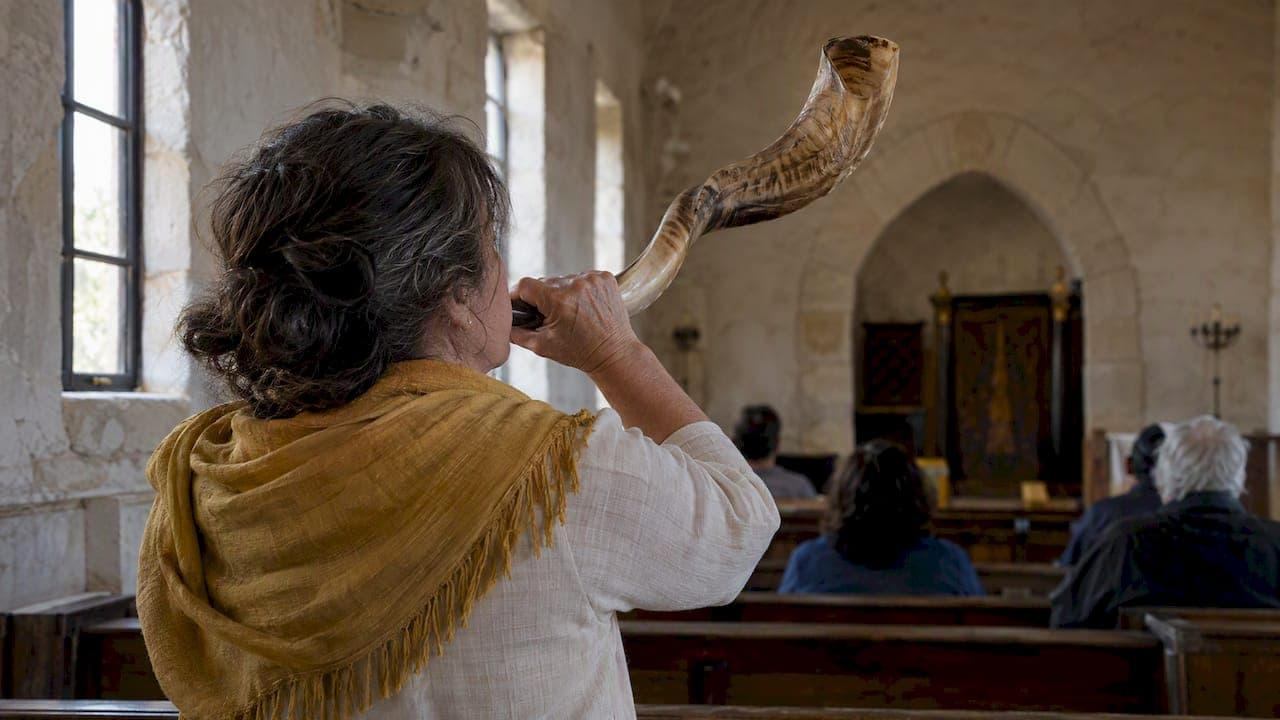
Yum Tarua’ah literally means “day of shouting” or “day of blasting,” a Scripturally (biblically) commanded observance marked by trumpet blasts and a set-apart (holy) convocation. Uiyqara (Leviticus) 23:24 and Bamadabar (Numbers) 29:1 set this day on the first of the seventh month, calling Yisharal (Israel) to rest from ordinary work and to a memorial of trumpet blasts that summons worship and repentance.
TL;DR:
The Abariy (Hebrew) words tarua’ah and rua encompass a range of sounds from shouts to trumpet blasts, with meanings shifting based on context.
Scriptural (Biblical) texts emphasize Yum Tarua’ah’s fixed date on the first of Seventh Month, including rest, a memorial blast, and a set-apart (holy) gathering, with offerings added in later scriptures.
The distinction between taqiya and tarua’ah is crucial, with taqiya being a sustained blast for gathering and tarua’ah signaling alarm or response, either vocally or instrumentally.
The festival’s association with the new year, or Rash Ahshanah, developed in later tradition; originally, it primarily marked a trumpet memorial and set-apart (sacred) rest.
Prophetic and Bariyt Hadash (New Testament) trumpet imagery often foreshadows future events, but their linking to Yum Tarua’ah varies based on interpretation and tradition.
Table of Contents
-
What do the Abariy (Hebrew) words tarua’ah and rua actually mean?
-
What Uiyqara (Leviticus), Bamadabar (Numbers), and other scriptures say about this day
-
What translation choices reveal about the meaning of this day
-
How does this festival compare to the Yubal (Jubilee) trumpet?
What do the Abariy (Hebrew) words tarua’ah and rua actually mean?
The meaning of Yum Tarua’ah rests almost entirely on two Abariy (Hebrew) words, and understanding them changes how we read the entire festival. The verb rua (Strong’s #7321) describes a piercing, arresting sound, the kind that grabs attention whether it comes from a human throat or a ram’s horn. The noun tarua’ah (Strong’s #8643) names the result: the shout, blast, or alarm that rua produces.

This root distinction matters because tarua’ah is not a single fixed sound. Hebrew Word Lessons notes that tarua’ah can signal extreme alarm or extreme joy depending entirely on context, a flexibility that English translations rarely capture in one word. The same term that announces an approaching army can also announce a king’s coronation.
Lexicon entry for tarua’ah documents this range across the Turah, Prophets, and Writings, listing meanings that include:
-
Shout: a vocal cry of the assembled people, as seen in battle narratives and worship contexts.
-
Blast: the sound of a trumpet or horn used for signaling.
-
Alarm: a warning cry calling people to attention or to arms.
-
Jubilation: a shout of joy or celebration, often tied to worship.
Concordance records tarua’ah used across the Turah, Prophets, and Writings in both ritual and military settings, which tells us the word was never confined to a single ceremonial meaning. Abariy (Hebrew) lexicon treats it as a term whose sense shifts with its setting: a war cry in one chapter, a worship cry in another.
This is why a flat translation like “feast of trumpets” can flatten the richness of the original term. tarua’ah may be a shofar blast, a human shout, or both together, and recognizing that range helps us read the festival instructions in Uiyqara (Leviticus) and Bamadabar (Numbers) with more precision rather than assuming the text describes only an instrument being played.
What Uiyqara (Leviticus), Bamadabar (Numbers), and other scriptures say about this day
The clearest starting point for understanding Yum Tarua’ah is the text that commands it. Uiyqara (Leviticus) 23:23 through 25 establishes the day in plain terms, and reading it carefully gives us the festival’s core shape before any later tradition adds to it.
-
A fixed date. The command falls on the first day of the seventh month, placing it at a specific point in the Scriptural (Biblical) calendar rather than leaving it open to local custom.
-
A day of rest. Ordinary work ceases, mirroring the rest pattern of the weekly Shabat (Sabbath) and signaling that the day carries set-apart (sacred) weight.
-
A memorial of blowing trumpets. The Abariy (Hebrew) phrasing points to a day set apart specifically to be remembered through the sound of the Shupar (shofar), not simply a day that happens to include a trumpet.
-
A set-apart (holy) convocation. The community gathers, turning an individual observance into a corporate one.
The Festival of Yum Tarua’ah (Trumpets) confirms that Uiyqara (Leviticus) 23:24 and Bamadabar (Numbers) 29:1 together establish this day as the first of seventh month, commanded as a memorial of trumpet blasts accompanied by rest and a set-apart (holy) convocation. Bamadabar (Numbers) 29:1 through 6 adds the sacrificial dimension: a burnt offering, a grain offering, and a sin offering, placed alongside the regular monthly new moon offerings already prescribed for that time. The text treats the day as both a sound event and a worship event, inseparable from each other.
Beyond the Turah, the language of tarua’ah and trumpet-sounding threads through other scriptures that illuminate the festival’s broader resonance. Yual (Joel) 2:1 calls for a trumpet to be blown in Tsiyun (Zion) as an alarm, tying the sound to the approaching “day of YAHUAH.” Nahamiyahu (Nehemiah) 8 describes a gathering on the first day of the seventh month where the people hear the reading of the Law and respond with weeping and worship, a scene many readers connect to the spirit of Yum Tarua’ah even though Nahamiyahu’s (Nehemiah’s) account centers on Scripture reading rather than trumpet-blowing itself. Tahliy (Psalm) passages that speak of shouting to Aluah with a voice of triumph echo the same vocabulary, reinforcing that tarua’ah carries both reverence and celebration in the same breath.
Taken together, these texts build toward a single function: the day works as an audible summons. It wakes the community, draws it together, and points it toward the ten days that follow, the stretch of time traditionally understood as leading into the Yum Kapar (Day of Atonement). We explore that connection further in our overview of Yom Kapar and the Day of Atonement, where the repentance theme introduced on Yum Tarua’ah finds its culmination.
How taqiya and tarua’ah differ in Shupar (shofar) blowing
Anyone studying Yum Tarua’ah eventually runs into the technical vocabulary of Shupar (shofar) blasts, and the distinctions are not just ceremonial trivia. They shape how we understand what the trumpet was actually communicating.
taqiya is a single, sustained, unbroken blast, a long steady tone that establishes presence and calls for attention. Taqiya Gadulah extends that same tone into an even longer, held note, often used to mark a close or a climax. Tarua’ah , by contrast, is a rapid series of short, staccato blasts, a broken pattern that reads almost like an alarm siren compared to taqiya’s steady call.
-
Taqiya signals gathering or arrival, a clear and singular announcement.
-
Tarua’ah signals urgency or response, a rapid pattern associated with alarm or shouting.
-
Shabariym, a related broken pattern of three medium blasts, often appears alongside tarua’ah in later liturgical sequences, though the Scriptural (Biblical) text itself does not spell out every pattern in detail.
-
Taqiya Gadulah closes a sequence, often the final and most extended sound in a set.
Scriptures gives us examples of both mechanical and vocal teruah, and the difference is instructive. In Bamadabar (Numbers) 10, trumpets are blown mechanically by the priests to signal the camps to move, a clearly instrumental use tied to practical coordination. In Yahusha (Joshua) 6, the tarua’ah at Yiriyhu (Jericho) is the people’s own voice, a great shout raised together rather than a horn blast alone. The Turah draws this exact distinction, noting that tarua’ah functions as a communal vocal shout in some narrative passages and as a mechanical trumpet signal in ritual or military contexts elsewhere, and that recognizing which is which affects how we interpret the festival’s original purpose.
This matters liturgically because different sounds carried different instructions: assemble, march, sound an alarm, or rejoice. A people attuned to these distinctions would have known, from the pattern of blasts alone, what kind of response was expected of them.
Pro Tip: When reading festival texts, pay attention to whether tarua’ah appears alongside a trumpet (instrumental) or alongside a crowd’s response (vocal); the distinction often unlocks the verse’s intent.
How Yum Tarua’ah came to be linked with Rash Ahshanah
The Scriptural (Biblical) text itself never calls this day a new year. Uiyqara (Leviticus) 23 and Bamadabar (Numbers) 29 describe a memorial of trumpet blasts on the first of the seventh month, full stop. The association with a civil new year developed later, through rabiyiy (rabbinic) tradition, and understanding that timeline helps us separate the original command from what tradition built on top of it.
Liturgical development eventually attached the title “Rash Ahshanah (Rosh Hashanah),” meaning “head of the year,” to this date, tying it to the start of a civil and agricultural calendar cycle distinct from the religious calendar that begins in the spring with first month. This shift reflects a broader rabiyiy (rabbinic) practice of assigning multiple new years for different purposes: one for kings and festivals, one for tithing produce, one for the civil year. The first of seventh month became the anchor for that civil reckoning.
Discussion of tarua’ah points to scholarly work, including analysis attributed, arguing that the primary characteristic of the day in the Scriptural (Biblical) period was the blast itself, not a new year meaning. Scholars have proposed several explanations for why later tradition reinterpreted the day:
-
Remembrance: the blast as a call for Aluah to remember the people, drawn from the Abariy (Hebrew) sense of tarua’ah as something that demands attention.
-
Kingship: the sound as an acclamation of set-apart (divine) rule, paralleling ancient coronation customs where trumpets announced a king’s reign.
-
Compassion or alarm: the blast as a plea for favor (mercy), tied to the day’s later role opening the Ten Days of Repentance.
These proposals are not mutually exclusive, and the same lexicon analysis treats the day’s function as genuinely debated among scholars rather than settled.
For modern readers, this history carries a practical implication: different traditions emphasize different layers of the same text. Liturgical practice today foregrounds the new year and judgment themes tied to Rash Ahshanah (Rosh Hashanah). Other interpretive communities read the day more narrowly through its original Uiyqara (Leviticus) and Bamadabar (Numbers) wording, emphasizing the trumpet blast and convocation without necessarily adopting the new year framing. Both approaches engage the same scripture, but they draw different weight from its layers of development.
Do trumpet blasts in prophecy point to Yum Tarua’ah?
Trumpet imagery does not stay confined to Uiyqara (Leviticus) and Bamadabar (Numbers). It runs through prophetic literature and resurfaces in the Bariyt Hadash (New Testament), and that thread is a large part of why Yum Tarua’ah draws attention from readers interested in prophecy and eschatology.
Yual (Joel) 2:1 commands a trumpet blown in Tsiyun (Zion) as a warning, directly linking the sound to the coming “day of YAHUAH,” a day of darkness and gloom that calls the people to urgent repentance. This usage echoes the alarm sense of tarua’ah discussed earlier, where the blast warns rather than celebrates. Some notes that prophetic literature, including Yual (Joel) and Tsapaniyahu (Zephaniah), links trumpet blasts to this day of the YAHUAH theme and future judgment.
The Bariyt Hadash (New Testament) carries forward similar trumpet language in passages that many readers connect to Yum Tarua’ah typologically:
-
1 Qaranatiym (Corinthians) 15:52 describes a resurrection happening “at the last trumpet,” a moment of sudden transformation.
-
1 Tashalaniyqiym (Thessalonians) 4:16 describes the YAHUAH descending with a trumpet call of Aluah, gathering believers together.
-
Matatiyahu (Matthew) 24:31 describes messengers (angels) sent out with a great trumpet sound to gather the elect.
Some note that these passages lead many interpreters to read the Feast of Trumpets as a type or shadow pointing toward a future trumpet event tied to the return of the Mashiyha (Messiah), rather than as a direct prophecy naming Yum Tarua’ah by that title.
It is worth being careful here about the kind of claim being made. A typological reading treats Yum Tarua’ah as a pattern that foreshadows a later fulfillment, the way Yum Pasaha (Passover) foreshadows deliverance accomplished through the Mashiyha (Messiah) in theology. That is different from a claim that the Bariyt Hadash (New Testament) commands believers to observe the feast itself. It frames the connection in terms of foreshadowing rather than obligation, and readers should hold that distinction clearly: the trumpet imagery is widely discussed, but how it binds on present-day practice varies considerably across traditions.
How is Yum Tarua’ah observed in practice today?
Living observance of this day splits along two broad paths, one rooted in liturgical practice and one shaped by commemorative or typological interest, and naming both honestly helps readers see where description ends and personal conviction begins.
In contemporary practice, the day centers on the synagogue service, where the Shupar (shofar) is blown in a structured sequence that includes taqiya, shabariym, and tarua’ah patterns, each repeated multiple times through the liturgy. The day opens the period known as the Days of Awe, the span leading to Yum Kapar, during which themes of self-examination and repentance dominate both private reflection and communal prayer.
Among communities that engage with Yum Tarua’ah, observance tends to look different:
-
Teaching gatherings that walk through the Scriptural (Biblical) texts and their prophetic resonance rather than reenacting ahiykal (temple)-era sacrifices.
-
Commemorative worship that incorporates Shupar (shofar) blowing as a symbolic act rather than a legally binding command.
-
Repentance-focused teaching, drawing on the same themes of self-examination found in the Days of Awe tradition.
-
Study of trumpet prophecy, connecting the day’s sound imagery to the eschatological passages discussed above.
A related worship (devotional) thread worth noting: some writers encourage building rhythms of rest and reflection modeled loosely on Shabat (Sabbath) and festival patterns, even where full ceremonial observance is not practiced. One such reflection on Shabat (Sabbath) rest frames this as starting small, a few set hours a week, rather than an all-or-nothing commitment.
The key distinction to hold onto is descriptive versus prescriptive. Scriptures describes what Yisharal (Israel) was commanded to do on this day. How various communities today choose to engage that command, whether through full liturgical observance, symbolic commemoration, or scholarly study alone, is a separate question that each tradition answers differently.
What translation choices reveal about the meaning of this day
Working directly from ancient Abariy (Hebrew) and Aramiyt (Aramaic) manuscripts changes small but meaningful details in how a festival text reads. When we translate Uiyqara (Leviticus) 23:24 and Bamadabar (Numbers) 29:1 with close attention to the Abariy (Hebrew) root behind tarua’ah, the sense of an arresting, attention-demanding sound comes through more clearly than it does in translations that settle on a single word like “trumpets” throughout.
This same manuscript-first approach shapes how we handle the Set-apart (sacred) Name throughout our work. Restoring the Name YAHUAH where later translation traditions substituted titles affects more than individual verses. It affects how a reader understands who is summoning Yisharal (Israel) to this day of shouting and why the response called for is worship rather than mere ceremony.
For readers who want to see these translation choices applied across an entire festival text rather than isolated verses, our overview of Yom Teruah’s spiritual and prophetic significance walks through the passage in fuller context, and our article on Hebrew-to-English translation choices explains the manuscript research behind decisions like these.
What agricultural and calendar context shaped this festival
Yum Tarua’ah falls at a specific point in the Scriptural (Biblical) agricultural year, and that placement is not incidental. The seventh month, arrives after the main grain harvests of summer and as the early autumn rains begin, marking a seasonal hinge between the dry harvest months and the wet planting season ahead.
Bamadabar (Numbers) 29 places the festival’s sacrifices alongside the regular monthly new moon offerings already required at the start of every month, layering the day’s special trumpet memorial on top of a recurring calendar rhythm. This timing situates Yum Tarua’ah within a sequence of autumn observances, Yum Tarua’ah, then the Yum Kapar (Day of Atonement) ten days later, then the Yum Sakut (Feast of Tabernacles) shortly after, all clustered in the same month.
That clustering suggests the festival functioned as more than an isolated ritual. It opened a season of gathering, reflection, and celebration tied to the agricultural calendar’s turn from harvest to renewal. The trumpet blast marking the start of this month gave the community an audible signal that the year’s productive labor was giving way to a season of worship and self-examination, a rhythm embedded directly into the Scriptural (Biblical) calendar’s structure rather than added as an afterthought.
How does this festival compare to the Yubal (Jubilee) trumpet?
Yum Tarua’ah is not the only Scriptural (Biblical) occasion marked by a trumpet blast, and comparing it to the Yubal (Jubilee) clarifies what makes each one distinct.
Uiyqara (Leviticus) 25:9 commands that the Shupar (shofar) be sounded throughout the land on the Yum Kapar (Day of Atonement) in the fiftieth year, announcing the Yubal (Jubilee), a year of release in which debts were forgiven, slaves freed, and ancestral land returned to its original family. That blast shares the same instrument and much of the same vocabulary as the Yum Tarua’ah command, but its function differs sharply. The Yubal (Jubilee) trumpet announces a one-time-per-fifty-years release, a structural reset of economic and social obligations across the land.
Yum Tarua’ah’s blast, by contrast, repeats annually and carries no legal release function attached to it. Its purpose, per Uiyqara (Leviticus) 23 and Bamadabar (Numbers) 29, is a memorial convocation calling the community to rest and attention, not a mechanism for canceling debts or restoring land. Both festivals use the Shupar’s (shofar’s) piercing sound to mark set-apart (sacred) time, but Yum Tarua’ah functions as an annual summons while the Yubal (Jubilee) functions as a rare, structural reordering of society. The shared sound underscores a shared vocabulary of sacred announcement even as the two observances serve entirely different purposes within the calendar.
What prayers and readings mark this day in tradition
Liturgical tradition assigns specific scripture readings and prayer themes to this day that developed well beyond the bare text of Uiyqara (Leviticus) and Bamadabar (Numbers). The Turah reading traditionally includes Barashiyt (Genesis) 21, the account of Yitsahaq’s (Isaac’s) birth and Ahgar’s (Hagar’s) departure, paired with the Bamadabar (Numbers) 29 passage describing the day’s sacrificial requirements.
Three core liturgical themes structure the traditional prayer service: Malakuiyut, affirming Aluah’s kingship over creation; Zakarunut, calling on remembrance, the idea that the blast prompts Aluah to remember the covenant with the people; and Shuparut, gathering scriptural references to trumpet and Shupar (shofar) sounds throughout the Ta'anak into a single liturgical unit. Each theme is accompanied by its own set of Shupar (shofar) blasts woven through the prayer service.
This liturgical structure represents centuries of rabiyiy (rabbinic) development layered onto the original Scriptural (Biblical) command, and it is worth recognizing as a distinct historical stage rather than reading it back into the plain text of Uiyqara (Leviticus) 23. The prayers reflect later theological synthesis; the Turah text itself simply commands the blast, the rest, and the convocation, leaving the detailed liturgical content for tradition to build afterward.
Why careful word study changes how we read this festival
Studying Yum Tarua’ah closely taught us something we think applies far beyond this one festival: translation choices are never neutral. Rendering tarua'ah as simply “trumpets” flattens a word that can mean a vocal shout, a battle cry, or a joyful outburst depending entirely on its setting. Readers who only ever encounter the flattened version miss the layered alarm-and-celebration tension built into the Abariy (Hebrew) itself.
Our practical takeaway for anyone studying this day is simple: before accepting a single-word gloss for a Abariy (Hebrew) term, look at how that word behaves across several passages. Tarua'ah in Bamadabar (Numbers) 10 is not doing the same work as tarua'ah in Yahusha (Joshua) 6, and noticing that difference opens up what the festival instructions are actually asking of the reader.
For those who want to take this kind of study further, our translation work on Abariy (Hebrew) names and terms walks through similar word-level decisions across the broader text, offering a starting point for readers ready to dig into the manuscripts themselves rather than relying on secondhand summaries.
— Maria
Study resources for going deeper into Yum Tarua’ah
If this close look at tarua'ah’s Abariy (Hebrew) roots has sparked a hunger to study the full text for yourself, we built our resources with exactly that kind of reader in mind. Our Truth Scriptures™ Translation restores original Abariy (Hebrew) and Aramiyt (Aramaic) nuance across the entire text, including festival language like tarua'ah that other English translations often compress into a single word.
-
The Truth Scriptures™ Digital Collection gives you searchable access to this restoration translation, useful for comparing festival passages like Uiyqara (Leviticus) 23 side by side with their Abariy (Hebrew) roots.
-
Our virtual retreats offer guided study sessions for readers who want structured teaching rather than solo research.
-
Our free download of Truth Scriptures names and places is a low-commitment starting point for readers curious about restored naming conventions before committing to a full translation.
Whether you start with a free download or step into a full retreat, every resource we offer is built on the same manuscript-first conviction: the original language carries meaning worth recovering.
FAQ
Do believers celebrate Yum Tarua’ah?
Some believers commemorate Yum Tarua’ah through teaching gatherings and symbolic Shupar (shofar) blowing, often reading its trumpet imagery as pointing toward future prophetic events like those described in 1 Qaranatiym (Corinthians) 15:52. This practice is generally a command binding on believers observance as a feast of YAHUAH according to Uiyqara (Leviticus) 23:24 and Bamadabar (Numbers) 29:1.
What is the difference between Rash Ahshanah and Yum Tarua’ah?
Yum Tarua’ah is the name scripture itself uses, describing a memorial of trumpet blasts commanded in Uiyqara (Leviticus) 23:24 and Bamadabar (Numbers) 29:1. Rash Ahshanah, meaning “head of the year,” is a later rabiyiy (rabbinic) title for the same date that added new year and civil calendar associations the Scriptural (Biblical) text does not state outright.
Which generation will not pass away?
This question usually references Matatiyahu (Matthew), where a statement about “this generation” follows a passage describing trumpet imagery and the gathering of the elect. Interpretations of which generation is meant vary significantly across theological traditions, and the article above does not establish a single definitive answer to that separate prophetic debate.
How do you celebrate Yum Tarua’ah?
Traditional observance centers on hearing the Shupar (shofar) blown in a synagogue service following structured taqiya, shabariym, and tarua'ah patterns leading to Yum Kapar (Yom Kippur). True community mark the day through teaching, communal worship, and themes of self-examination as per YAHUAH's direction in Uiyqara (sn-Lev) 23:23 - Then YAHUAH spoke to Mashah, saying, Uiyqara (sn-Lev) 23:24 - “Speak to the children of Yisharal, saying, ‘In the seventh New Moon, on the first day of the New Moon, you shall have a rest, a remembrance of Yum Tarua’ah, also known as the Feast of Trumpets, and a Set-Apart Gathering.
Uiyqara (sn-Lev) 23:25 - You shall do no servile work, and you shall bring an offering made by fire to YAHUAH.’”.
Sources
Recommended
-
How Abariy (Hebrew) Roots Connect the Bariyt Hadash (New Testament) to Its Origins
-
Understanding the Spiritual and Prophetic Significance of Yom Teruah (Feast of Trumpets) per YAHUAH
-
The Ancient Abariy (Hebrew) Concept of Turah (Torah): Root, Meaning, and Context
-
The Role of Yum Shabua’aut (Shavuot) Scripture in Scriptural (Biblical) Tradition