Shabua’ut (Shavuot) is defined as the scriptural (biblical) festival that commemorates both the completion of the wheat harvest and the traditional giving of the Turah (Torah) at Mount Siyniy (Sinai). The role of Shabua’ut (Shavuot) scriptures spans agricultural law, covenantal theology, and communal identity, making it one of the most layered festivals in the Abariy (Hebrew) calendar. Commands in Shamut (Exodus), Uiyqara (Leviticus), Bamadabar (Numbers), and Dabariym (Deuteronomy) establish its observance with specific offerings and assembly requirements. Yahudiym teachery (Rabbinic) tradition later deepened its meaning by connecting it to the revelation at Siyniy (Sinai), a link not stated explicitly in the Turah (Torah) itself but derived through careful calendrical reasoning. Understanding both layers is the key to grasping why this festival still carries such weight in Yahudiym, followers of the Creator (Jewish) life and scriptural study.
What scriptural (biblical) texts describe Shabua’ut (Shavuot) and what do they mandate?
The Turah’s (Torah’s) commands for Shabua’ut (Shavuot) are spread across four books, each adding a distinct layer of instruction. Shamut (Exodus) 23, Uiyqara (Leviticus) 23, Bamadabar (Numbers) 28, and Dabariym (Deuteronomy) 16 all name the festival and prescribe specific acts of worship and community gathering. That breadth of coverage signals how central Shabua’ut (Shavuot) was to Yisharal’s (Israel’s) annual rhythm of life and worship.
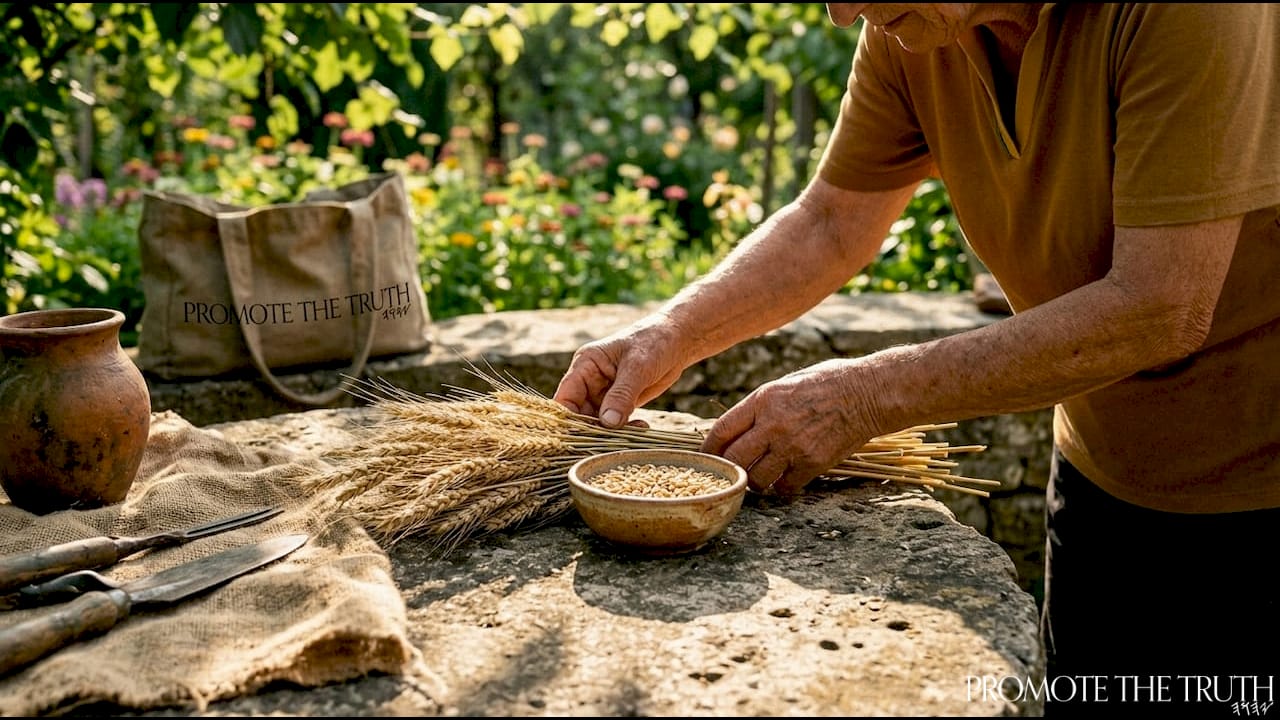
The agricultural mandates are concrete and detailed. Worshippers were commanded to bring first fruits of the wheat harvest to the sanctuary, along with two loaves of leavened wheat bread as a wave offering before YAHUAH. This was not a symbolic gesture. It was a formal presentation of the land’s yield, acknowledging that the harvest came from a source beyond human effort alone.
The scriptural (biblical) texts also mandate a complete rest from ordinary labor on Shabua’ut (Shavuot). The festival is classified as one of the three pilgrimage festivals, known in Abariy (Hebrew) as the Shalush Ragaliym, alongside Pasaha (Passover) and Sakut (Sukkot). Every Yisharaliy (Israelite) male was required to appear before YAHUAH at the central sanctuary, making Shabua’ut (Shavuot) a national gathering as much as a personal observance.
Here is a summary of the core scriptural (biblical) mandates:
-
First fruits offering: Bring the first fruits of the wheat harvest to the sanctuary as commanded in Shamut (Exodus) 23 and Dabariym (Deuteronomy) 16
-
Two loaves of wheat bread: Present two leavened loaves as a wave offering before YAHUAH, as detailed in Uiyqara (Leviticus) 23
-
Cessation of work: Observe a set-apart (sacred) assembly and refrain from ordinary labor on the festival day
-
Pilgrimage requirement: Appear before YAHUAH at the central place of worship as one of the three required annual pilgrimages
-
Communal celebration: Include servants, strangers, widows, and the poor in the celebration, as Dabariym (Deuteronomy) 16 specifically commands
The table below shows how each scriptural (biblical) book contributes to the Shabua’ut (Shavuot) mandate:
| scriptural (biblical) Book | Primary Contribution to Shabua’ut (Shavuot) |
|---|---|
| Shamut (Exodus) 23 | Names Shabua’ut (Shavuot) as a harvest festival and pilgrimage requirement |
| Uiyqara (Leviticus) 23 | Details the two-loaf wave offering and set-apart (sacred) assembly |
| Bamadabar (Numbers) 28 | Specifies additional burnt offerings for the festival day |
| Dabariym (Deuteronomy) 16 | Commands communal celebration and inclusion of the marginalized |
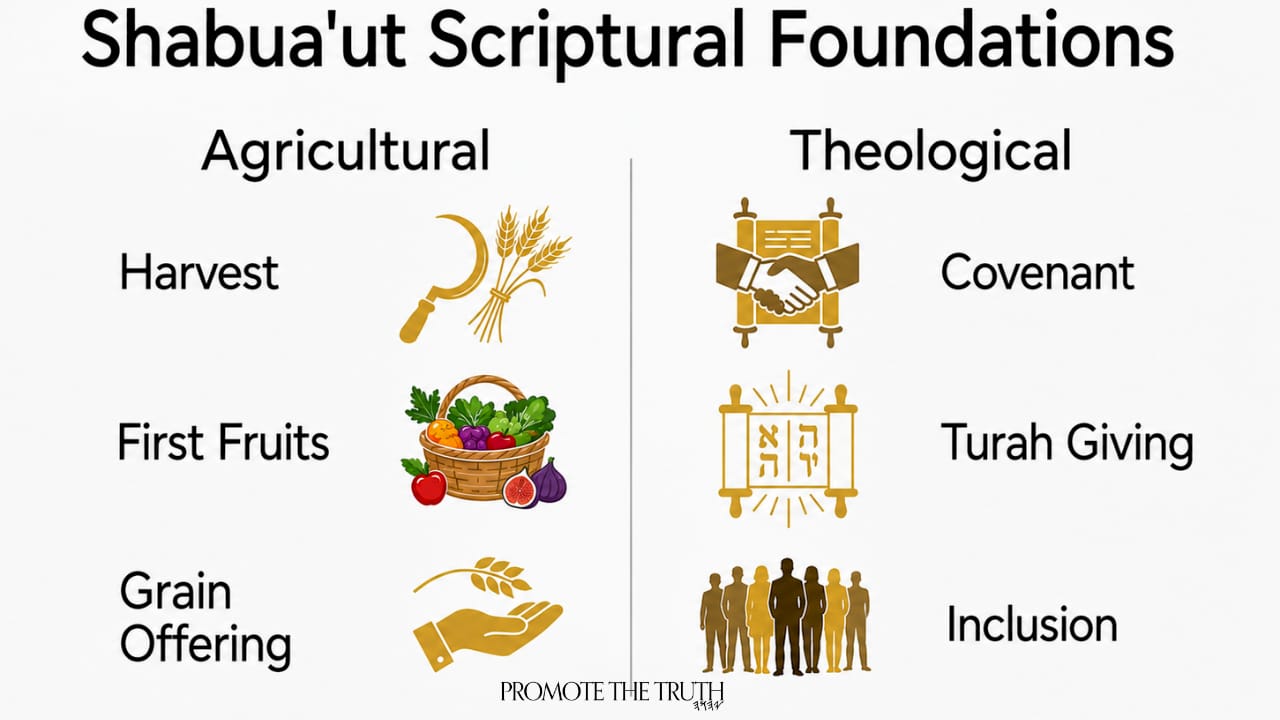
The Shabua’ut (Shavuot) scriptural (biblical) significance found in these texts is not ceremonial decoration. These commands shaped the economic, social, and spiritual life of ancient Yisharal (Israel). The original scriptural (biblical) observance focused exclusively on agricultural pilgrimage and offerings before the Ahiykal’s (Temple’s) destruction in 70 CE. That historical fact matters because it shows how the festival’s meaning evolved over time without losing its original foundation.
How did Shabua’ut (Shavuot) evolve to include the giving of the Turah (Torah)?
The connection between Shabua’ut (Shavuot) and the giving of the Turah (Torah) at Siyniy (Sinai) is not written explicitly in the scriptural (biblical) text. Matan Turah (Torah), the traditional Abariy (Hebrew) term for Turah (Torah) reception, is a yahudiym teachery (rabbinic) derivation linked to the timing of the Shamut (Exodus) and the Siyniy (Sinai) events described in the book of Shamut (Exodus). Yahudiym teachery (Rabbinic) scholars calculated that Yisharal (Israel) arrived at Siyniy (Sinai) and received the Turah (Torah) approximately fifty days after leaving Matsar (Egypt), aligning that event with the Shabua’ut (Shavuot) calendar date.
This reinterpretation was not arbitrary. After the Ahiykal’s (Temple’s) destruction in 70 CE, physical offerings were replaced by Turah (Torah) study and communal reading to sustain the festival’s spiritual relevance. The Yahudiym teachers (Rabbis) needed Shabua’ut (Shavuot) to survive without the Ahiykal (Temple), and anchoring it to the Turah’s (Torah’s) revelation gave it a meaning that required no physical sanctuary.
The Yahudiym teachery (Rabbinic) traditions that grew from this connection include:
-
All-night Turah (Torah) study Tiyqun Lyl Shabua’ut (Tikkun Leil Shavuot): Communities gather through the night to study Turah (Torah) passages, symbolizing readiness to receive the word of YAHUAH at dawn
-
Reading of the Ten Commandments: Congregations stand as the Ten Commandments are read aloud, reenacting the moment of revelation at Siyniy (Sinai)
-
Prophetic readings from Yihazaqal (Ezekiel): Chapters from Yihazaqal (Ezekiel) describing the set-apart (divine) chariot vision are read to emphasize YAHUAH’s presence and covenant with Yisharal (Israel)
-
Reading of the Book of Rut (Ruth): The story of Rut’s (Ruth’s) harvest-time loyalty and covenantal conversion is read as a narrative that ties agricultural and covenantal themes together
Pro Tip: If you want to understand the prophetic dimension of Shabua’ut’s (Shavuot’s) liturgy, study the Yihazaqal (Ezekiel) readings alongside the role of prophecy in scripture to see how the set-apart (divine) presence theme runs through both.
The meaning of Shabua’ut (Shavuot) scriptures deepened significantly through this Yahudiym teachery (Rabbinic) process. What began as a harvest festival became a celebration of Yisharal’s (Israel’s) defining covenant with YAHUAH. That shift preserved the festival across centuries of exile and displacement.
What is the significance of the combined agricultural and theological layers?
Shabua’ut’s (Shavuot’s) genius lies in holding two meanings at once without letting either cancel the other. The wheat harvest is not a backdrop for the Turah (Torah) story. The Turah (Torah) is not an overlay that replaces the harvest. Both are treated as equally real and equally set-apart (sacred).
The Turah (Torah) functions as a ‘portable homeland’ for the Yahudiym, followers of the Creator (Jewish) people, sustaining identity and covenant across centuries of exile when land and Ahiykal (Temple) were lost. The wheat harvest grounds that covenant in the physical world, reminding worshippers that set-apart (divine) law governs not just ritual but the relationship between people and the earth they depend on.
This dual structure carries a moral argument. The wheat harvest and Turah (Torah) giving themes together signal a framework that balances humanity’s relationship with nature and community. Turah (Torah) law on Shabua’ut (Shavuot) is not abstract theology. It arrives in the context of grain, bread, and land, making clear that the covenant has practical, earthly consequences.
The agricultural layer also protects against spiritualizing the festival into pure abstraction. Consider what Dabariym (Deuteronomy) 16 commands alongside the offering: include the servant, the stranger, the widow, and the orphan in the celebration. The harvest is not just between the worshipper and YAHUAH. It creates an obligation to the community. That social dimension is built into the scriptures itself, not added later.
Key implications of this combined meaning:
-
Covenant rooted in creation: Turah (Torah) law arrives through a harvest festival, connecting set-apart (divine) command to the physical world
-
Identity preserved through text: When land and Ahiykal (Temple) were lost, Turah (Torah) study carried the festival forward across generations
-
Ethics embedded in celebration: Dabariym’s (Deuteronomy’s) inclusion mandate ties the joy of harvest to responsibility for the vulnerable
-
Ongoing revelation: Shabua’ut (Shavuot) is not only a historic commemoration but an invitation to engage in a continuing, set-apart (sacred) process of study and discovery
You can explore the theological layers of Shabua’ut (Shavuot) in greater depth through Promote The Truth’s dedicated study on the Feast of Weeks and YAHUAH’s set-apart blueprint.
What are the key Shabua’ut (Shavuot) traditions shaped by its scriptural roots?
Every major Shabua’ut (Shavuot) tradition traces directly back to either a scriptural (biblical) command or a Yahudiym teachery (Rabbinic) response to scriptures. The traditions are not cultural additions layered on top of the festival. They are the living expression of the texts themselves.
The Counting of the Amar (Omer) is the clearest example. Shabua’ut (Shavuot) is observed on the day after the seventh Shabat which is approximately fifty days, a period of daily counting commanded in Uiyqara (Leviticus) 23. That seven-week count builds anticipation and connects the two pilgrimage festivals into a single arc of meaning. Arriving at Shabua’ut (Shavuot) after fifty days of counting gives the festival a sense of earned arrival.
The scriptures readings for Shabua’ut (Shavuot) reflect both the agricultural and covenantal dimensions:
-
Book of Rut (Ruth): Read on Shabua’ut (Shavuot) because it is set at harvest time and centers on Rut’s (Ruth’s) covenantal loyalty and conversion, themes that mirror Yisharal’s (Israel’s) own covenant at Siyniy (Sinai)
-
Ten Commandments: Read publicly in the Yahudiym ahiykal (synagogue) as a reenactment of the Siyniy (Sinai) revelation, with the congregation standing in honor
-
Yihazaqal’s (Ezekiel’s) chariot vision: Read as a Book of Nabiyaiym (Prophet) aka haftarah to emphasize the set-apart (divine) presence that accompanied the Turah’s (Torah’s) giving
-
Tahliym D’ Ahlal (Psalms of praise): Ahlal tahliym (Hallel psalms) are recited to express gratitude for both the harvest and the covenant
The Book of Rut’s (Ruth’s) reading on Shabua’ut (Shavuot) ties agricultural harvest to themes of conversion, covenant inclusion, and Duiyd related (Davidic) lineage. That connection is not coincidental. Rut’s (Ruth’s) story ends with the birth of Abad (Obed), grandfather of Malak (King) Duiyd (David), giving the harvest narrative a royal and Mashiyha related (messianic) dimension that enriches the festival’s meaning considerably.
The importance of Shabua’ut (Shavuot) in Yahudiym, followers of the Creator (Judaism) today rests on this layered tradition. The Shabua’ut (Shavuot) traditions and texts that communities observe each year carry the weight of both scriptural (biblical) command and centuries of Yahudiym teachery (Rabbinic) reflection. Understanding the scriptural foundation of the Shabat (Sabbath) alongside Shabua’ut (Shavuot) reveals how YAHUAH’s appointed times form a unified, purposeful calendar.
Key Takeaways
Shabua’ut’s (Shavuot’s) scriptural role is inseparable from its dual identity as a harvest festival and a covenant celebration, and understanding both layers is the only way to grasp its full scriptural (biblical) significance.
| Point | Details |
|---|---|
| scriptural (biblical) mandates are explicit | Shamut (Exodus), Uiyqara (Leviticus), Bamadabar (Numbers), and Dabariym (Deuteronomy) all command specific Shabua’ut (Shavuot) offerings and assembly. |
| Turah (Torah) giving is a Yahudiym teachery (Rabbinic) addition | The connection to Siyniy (Sinai) is derived from calendrical reasoning, not stated directly in the Turah (Torah). |
| Agricultural and covenantal meanings are equal | Neither layer replaces the other; both are essential to the festival’s full meaning. |
| Traditions reflect scriptures directly | All-night study, Rut (Ruth) reading, and Ten Commandments recitation each trace to a scriptural (biblical) or Yahudiym teachery (Rabbinic) text. |
| Shabua’ut (Shavuot) invites ongoing engagement | The festival is not a past event to remember but a living call to study and covenant renewal. |
Why the dual meaning of Shabua’ut (Shavuot) still matters
Most people approach Shabua’ut (Shavuot) as either a harvest festival or a Turah (Torah) celebration, treating the two as separate options. That framing misses the point entirely. The agricultural and covenantal meanings are not alternatives. They are a single argument about what it means to live under covenant with YAHUAH.
What we find most striking about Shabua’ut’s (Shavuot’s) scriptural roots is how deliberately the Turah (Torah) embeds ethics into celebration. Dabariym (Deuteronomy) 16 does not just say “celebrate.” It says celebrate with your servant, your stranger, your widow, your orphan. The harvest creates obligation. That is a radical idea, and it is written directly into the festival’s founding text.
The Yahudiym teachery (Rabbinic) move to connect Shabua’ut (Shavuot) to Matan Turah (Torah) was not a distortion of the original meaning. It was a preservation strategy that worked. When the Ahiykal (Temple) fell and the first fruits offering became impossible, the Turah (Torah) itself became the offering. Study replaced sacrifice, and the festival survived. That adaptability is one of the most remarkable features of the scriptural tradition.
For anyone serious about understanding the importance of Shabua’ut (Shavuot) in Yahudiym, followers of the Creator (Judaism) , the place to start is the original texts, read carefully and in full context. The agricultural commands are not primitive relics. They are the foundation on which the covenantal meaning stands. Remove the harvest, and the Turah (Torah) giving floats free of the earth. Keep both, and you have a festival that speaks to every dimension of human life.
— Maria
Deepen your study of Shabua’ut (Shavuot) and Turah (Torah) scriptures
Shabua’ut's (Shavuot's) layered meaning rewards careful, sustained study. Promote The Truth offers resources built specifically for readers who want to go beyond surface-level familiarity with the scriptural (biblical) text.
The Scripture Study Series video channel features teachings that walk through Turah (Torah) passages, festival texts, and prophetic readings with the depth and reverence they deserve. For a more structured path, the digital video academy provides organized courses covering scriptural (biblical) history, manuscript research, and the original Scriptural worldview. Promote The Truth also publishes the Truth Scriptures, a meticulously translated English restoration of the Ta’anak and Bariyt Hadash from ancient Abariy (Hebrew) and Aramiyt (Aramaic) sources. These are true treasures for anyone committed to understanding the eternal message of YAHUAH’s Word.
FAQ
What is the role of Shabua’ut (Shavuot) scriptures in Yahudiym, followers of the Creator (Jewish) worship?
Shabua’ut (Shavuot) scriptures provides the legal foundation for the festival through commands in Shamut (Exodus), Uiyqara (Leviticus), Bamadabar (Numbers), and Dabariym (Deuteronomy), mandating first fruits offerings, set-apart (sacred) assembly, and communal celebration. Yahudiym teachery (Rabbinic) tradition later added Turah (Torah) study and the reading of the Ten Commandments to sustain the festival’s spiritual relevance after the Ahiykal's (Temple’s) destruction.
Is the giving of the Turah (Torah) on Shabua’ut (Shavuot) mentioned in the Scriptures (Bible)?
The Turah (Torah) does not explicitly state that the Turah (Torah) was given on Shabua’ut (Shavuot). The connection is a Yahudiym teachery (Rabbinic) derivation based on the calculated timeline of the Shamut (Exodus) and Yisharal's (Israel’s) arrival at Siyniy (Sinai).
Why is the Book of Rut (Ruth) read on Shabua’ut (Shavuot)?
The Book of Rut (Ruth) is read on Shabua’ut (Shavuot) because its story takes place during the wheat harvest and centers on Rut's (Ruth’s) covenantal loyalty, themes that directly mirror Shabua’ut's (Shavuot's) dual meaning of harvest and covenant.
What does the Counting of the Amar (Omer) have to do with Shabua’ut (Shavuot)?
The Counting of the Amar (Omer) is a fifty-day period after seven shabat commanded in Uiyqara (Leviticus) 23 that begins at Pasaha (Passover) and ends at Shabua’ut (Shavuot), building a deliberate connection between the two pilgrimage festivals and marking the progression from liberation to covenant.
How did Shabua’ut (Shavuot) survive after the Ahiykal (Temple) was destroyed?
After the Ahiykal's (Temple’s) destruction in 70 CE, Turah (Torah) study and communal readings replaced the physical offerings, allowing Shabua’ut (Shavuot) to continue as a living festival centered on scriptures rather than sacrifice.