
Azazal (Azazel) is not identified as Shatan (Satan) in the Abariy Scriptures (Hebrew Bible), although later religious traditions sometimes treated them as the same figure. The Abariy Scriptures mention Azazal (Azazel) three times in Leviticus 16, yet the text never identifies Azazal as Shatan (Satan) or as any other named demonic being. The association developed later through Second Ahiykal (Temple) literature, patristic interpretation, and medieval commentary rather than from the original Scriptural text itself.
Three key facts frame the discussion:
-
Uiyqara (Leviticus) 16 presents Azazal (Azazel) within the two-goat Yum Kapar (Yom Kippur) ritual. The passage treats Azazal as the destination of the live goat rather than identifying it as a named adversary.
-
1 Hanuk (1 Enoch), a Second Ahiykal (Temple) period work, transforms Azazal (Azazel) into a named fallen messenger (angel) who teaches humanity forbidden knowledge, weapon-making, and cosmetics, giving the figure a developed identity that Uiyqara (Leviticus) never assigns.
-
Origen, Nachmanides, and other patristic and medieval commentators sometimes identified Azazal (Azazel) with Shatan (Satan). However, that identification reflects their interpretive traditions rather than the plain reading of the Abariy (Hebrew) Scriptural text.
If you want to examine the evidence for yourself, begin with Uiyqara (Leviticus) (TST) 16:8–10:
Aahran shall cast Pur, meaning cast lots, over the two male goats. One lot is labeled for YAHUAH, and the other lot is labeled for the Azazal, meaning the scapegoat. Aahran shall present the goat, which was selected as the lot for YAHUAH, as a sin offering.But the goat that was selected for the Azazal shall be left standing alive before YAHUAH and used for making atonement, by sending it into the wilderness to Azazal, as a scapegoat.” — Uiyqara (Leviticus) TST -16:8–10
Then compare it with 1 Hanuk (1 Enoch), chapters 8–10, in the Book of the Watchers. These two texts form the foundation of the entire discussion and reveal where later interpretations concerning Azazal (Azazel) first began to develop.
Key Takeaways
Azazal (Azazel) is not identified as Shatan (Satan) in the Abariy Scriptures (Hebrew Bible). The association developed through Second Ahiykal (Temple) literature, patristic interpretation, and medieval demonology rather than from the original Scriptural text.
| Point | Details |
|---|---|
| Uiyqara (Leviticus) 16 is the foundational text | The name Azazal (Azazel) appears three times in Uiyqara (Leviticus) 16 and is never identified as Shatan (Satan) or any other named demonic being. |
| 1 Hanuk (1 Enoch) developed the narrative | Second Ahiykal (Temple) literature portrays Azazal (Azazel) as a fallen messenger (angel), attributing to him forbidden knowledge and judgment that the Abariy Scriptures never assign. |
| Patristic and medieval writers expanded the interpretation | Origen, Nachmanides, and other patristic and medieval commentators associated Azazal (Azazel) with Shatan (Satan) through allegorical and theological interpretation rather than through an explicit Scriptural identification. |
| Modern scholarship distinguishes the text from later tradition | Contemporary scholars, including James L. Kugel, David P. Wright, Andrei A. Orlov, and John D. Helm, generally distinguish the wording of Uiyqara (Leviticus) 16 from later interpretive traditions, recognizing that the identification of Azazal (Azazel) with Shatan (Satan) is interpretive rather than explicit in the Abariy text. |
| Promote the Truth resources | The Truth Scriptures restoration translation and the Digital Video Academy provide manuscript-grounded resources for studying Uiyqara (Leviticus) 16, 1 Hanuk (1 Enoch), and the historical development of the Azazal (Azazel) tradition. |
Table of Contents
-
What Does Uiyqara (Leviticus) 16 Actually Say About Azazal (Azazel)?
-
How 1 Hanuk (1 Enoch) Reimagines Azazal (Azazel) as a Fallen Messenger (Angel)
-
How Rabbinic and Medieval Yahudiym (Jewish) Commentators Interpreted Azazal (Azazel)
-
How Early Mashiyha’n (Christian) Writers Interpreted Azazal (Azazel), from Origen Onward
-
What Islamic Tradition Says About Azazil, and Why the Names Can Be Misleading
-
Why Some Writers Equate Azazal (Azazel) with Shatan (Satan): A Close Comparison
-
What Modern Scholarship Concludes About Azazal (Azazel) and Shatan (Satan))
-
Promote The Truth Resources for Deeper Study of Azazal (Azazel) and Scripture
What Does Uiyqara (Leviticus) 16 Actually Say About Azazal (Azazel)?
The passage at the center of every discussion about the relationship between Azazal (Azazel) and Shatan (Satan) is Uiyqara (Leviticus) (TST) 16:8–10. During Yum Kapar (Yom Kippur), Aahran cast Pur, meaning lots, over two male goats. One lot was designated for YAHUAH, and the other for Azazal. The goat designated for YAHUAH was offered as a sin offering, while the goat designated for Azazal was not sacrificed. Instead, it was presented alive before YAHUAH, used in the atonement ritual, and then sent into the wilderness to Azazal as the scapegoat.
As Uiyqara (Leviticus) (TST) 16:10 states:
But the goat that was selected for the Azazal shall be left standing alive before YAHUAH and used for making atonement, by sending it into the wilderness to Azazal, as a scapegoat.
This is the full extent of what the Abariy Scriptures explicitly say about Azazal. The passage neither identifies Azazal as Shatan (Satan) nor explains whether the name refers to a place, a symbolic destination, or another figure. Those interpretations arise from later Yahudiym (Jewish) and Mashiyha’n (Christian) traditions rather than from the wording of Uiyqara (Leviticus) 16 itself.
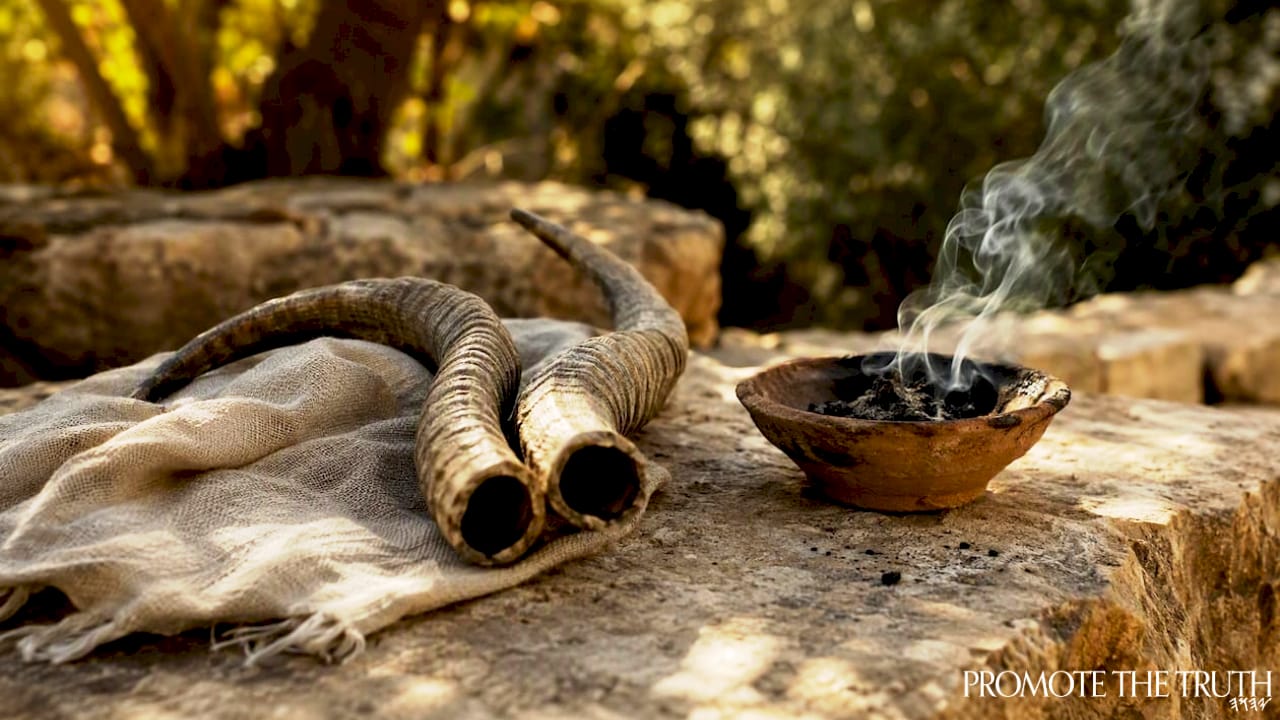
The Abariy (Hebrew) term עֲזָאזֵל (ʿAzāʾzēl) appears only in Uiyqara (Leviticus) 16, making it one of the rarest words in the entire Abariy Scriptures (Hebrew Bible). That lexical rarity is precisely why interpreters have debated its meaning for centuries. Because the term appears nowhere else in the Ta’anak (Old Testament), its meaning must be understood primarily through its immediate literary and ritual context, making its etymology and the details of the Yum Kapar (Yom Kippur) ceremony central to its interpretation.
Scholars have proposed three primary interpretations of Azazal (Azazel):
-
A place name: Azazal refers to a rocky cliff or wilderness location where the live goat was sent. The Mishnah (Yoma 6:6) describes a specific cliff called Tzuk, lending support to this interpretation.
-
A ritual designation or descriptive term: Some scholars understand the word to mean “the goat that goes away,” deriving it from ʿez (“goat”) and ʾazal (“to go away”). This interpretation gave rise to the English word “scapegoat,” introduced by William Tyndale in his 1530 English translation.
-
A supernatural being: Others interpret Azazal as a supernatural being associated with the wilderness. According to this view, the ritual symbolically sends the sins of Yisharal (Israel) away to Azazal, rather than presenting the goat as a sacrifice to YAHUAH.
Scholarly opinion remains divided regarding these interpretations, and no single view has achieved universal acceptance. The wording of Uiyqara (Leviticus) 16 itself does not explicitly define Azazal, which is why the discussion has continued for centuries.
Pro Tip: When reading Uiyqara (Leviticus) 16 in translation, pay close attention to how the translator renders the Abariy (Hebrew) term Azazal. Some translations retain “Azazel” as a proper name, others translate it as “the scapegoat” (following William Tyndale’s interpretive rendering), while others use expressions such as “for removal,” influenced by the Septuagint (LXX) tradition. Each rendering reflects a different interpretive approach and may shape how readers understand the passage.
How 1 Hanuk (1 Enoch) Reimagines Azazal (Azazel) as a Fallen Messenger (Angel)
The Book of the Watchers (1 Hanuk (1 Enoch) 1–36), composed during the Second Ahiykal (Temple) period, is where the portrayal of Azazal (Azazel) changes most dramatically. In this work, Azazal is no longer presented as the ambiguous figure found in Uiyqara (Leviticus) 16. Instead, he is portrayed as one of the leading Watchers—the fallen messengers (angels) who descended to the earth and corrupted humanity by revealing forbidden knowledge.
According to 1 Hanuk (1 Enoch), chapters 8–10, Azazal is specifically blamed for:
-
Teaching men to make swords, shields, breastplates, and other weapons of war.
-
Revealing to women the use of cosmetics, jewelry, ornaments, and beautification.
-
Disclosing forbidden knowledge concerning metals, precious stones, and other secret arts.
-
Corrupting the earth so extensively that the text declares “all sin was ascribed to him.”
The account of Azazal’s punishment is equally vivid. YAHUAH commands the messenger (angel) Raphael to bind Azazal hand and foot and cast him into the darkness of the wilderness, covering him with rough and jagged rocks until the Day of Judgment.
This Enochic portrait gives Azazal a detailed biography that Uiyqara (Leviticus) 16 never provides—a prehistory, specific transgressions, named participants, and a future judgment. It is this expanded narrative that led many later Yahudiym (Jewish) and Mashiyha’n (Christian) interpreters to associate Azazal with Shatan (Satan), even though Uiyqara (Leviticus) itself never makes that identification.
It is also important to distinguish between the authority of these two texts. 1 Hanuk (1 Enoch) is noncanonical for most Yahudiym (Jewish) and Mashiyha’n (Christian) communities. The principal exception is the Ethiopian Orthodox Tewahedo Assembly (Church), which recognizes it as Scripture. Consequently, most scholars of the Second Ahiykal (Temple) period study 1 Hanuk (1 Enoch) primarily for what it reveals about the theological ideas and interpretive traditions of its time rather than as part of the canonical Abariy Scriptures.
How Rabbinic and Medieval Yahudiym (Jewish) Commentators Interpreted Azazal (Azazel)
Rabbinic literature generally resisted interpreting Azazal (Azazel) as a demonic being. Instead, the Talmud and early Midrash commonly understood **Azazal (Azazel)**as either a place name or a ritual designation rather than as a supernatural being receiving an offering or tribute. This approach reflected a theological commitment to strict monotheism, since interpreting the Yum Kapar (Yom Kippur) ritual as an offering to a demon could imply a form of dualism or polytheism that is incompatible with the worship of YAHUAH alone.
The Septuagint (LXX), the ancient Yuuniy (Greek) translation of the Abariy Scriptures, renders the term in a way that emphasizes the idea of “sending away” rather than identifying Azazal (Azazel) as a named recipient. This translation led many readers to understand the passage as describing the removal of sin rather than identifying the destination of the live goat. By contrast, Targum Pseudo-Jonathan, an Aramiyt (Aramaic) paraphrase, introduces a more explicit supernatural element by portraying Azazal (Azazel) as a powerful spirit associated with the wilderness. This demonstrates that a demonic interpretation existed within some Yahudiym (Jewish) - A term referring to the followers of Judaism, one of the world’s oldest monotheistic religions. Judaism encompasses a wide range of cultural, religious, and historical traditions that have been passed down through generations. Examples of Jewish practices include observing the Sabbath, celebrating holidays such as Passover and Hanukkah, and following dietary laws known as kashrut. The Jewish community has a rich history that includes significant contributions to fields like science, literature, and philosophy, as well as periods of persecution and resilience. interpretive traditions, even though it did not become the dominant rabbinic understanding.
The contrast between the two principal Yahudiym (Jewish) interpretations is worth keeping clearly in view:
-
Symbolic or ritual interpretation: Azazal (Azazel) is understood as a place name, a rocky cliff, or a descriptive term referring to the destiny of the live goat. Under this interpretation, the Yum Kapar (Yom Kippur) ritual is entirely concerned with the atonement of Yisharal (Israel), and no supernatural recipient is involved.
-
Demonic or personified interpretation: Azazal (Azazel) is understood as a wilderness spirit or a fallen messenger (angel), and the ritual symbolically returns the sins of Yisharal (Israel) to their source. Nachmanides (Rabbi Moses ben Nahman), the influential thirteenth-century Yahudiym (Jewish) scholar from Spain, engaged seriously with this interpretation. He argued that the Azazal (Azazel) ritual was not an offering to a demon but rather a symbolic act that acknowledged the existence of the demonic realm without endorsing or worshipping it. This careful theological distinction allowed him to preserve strict monotheism while explaining the unusual structure of the ritual described in Uiyqara (Leviticus) 16.
Medieval commentators such as Nachmanides adopted this interpretation, in part, to avoid reading the Uiyqara (Leviticus) 16 ritual as polytheistic. By presenting Azazal (Azazel) as a symbolic recipient rather than as a deity receiving worship, they were able to acknowledge the tradition’s demonic associations while preserving the Scriptural doctrine of the exclusive worship of YAHUAH.
How Early Mashiyha’n (Christian) Writers Interpreted Azazal (Azazel), from Origen Onward
Early Mashiyha’n (Christian) engagement with Azazal (Azazel) was shaped significantly by familiarity with Hanukiak (Enochic) traditions. 1 Hanuk (1 Enoch) circulated widely among many early Mashiyha’n (Christian) communities before its canonical status became disputed. Its portrayal of Azazal (Azazel) as a corrupting fallen messenger (angel) profoundly influenced the development of patristic interpretations of demons and spiritual evil.
Origen, writing in Contra Celsum (6.43), explicitly identified Azazal (Azazel) with Shatan (Satan). He interpreted the Yum Kapar (Yom Kippur) ritual as foreshadowing the work of the Mashiyah, who bore the sins of the world, while Shatan (Satan) received his due judgment. Although influential, Origen’s interpretation did not become the universal Mashiyha’n (Christian) understanding. Early Mashiyha’n (Christian) writers adopted several different approaches to Azazal (Azazel):
-
Literal demonic interpretation: Azazal (Azazel) is identified with Shatan (Satan) or another chief demon, and the scapegoat ritual foreshadows the Mashiyah’s victory over the adversary.
-
Allegorical or typological interpretation: The two goats symbolize two complementary aspects of the Mashiyah’s atoning work—one sacrificed, representing His death, and the other released, representing His resurrection, ascension, or the complete removal of sin. Under this interpretation, Azazal (Azazel) functions symbolically rather than as a literal supernatural being.
-
Cautious or restrained interpretation: Some commentators observed that the Bariyt Hadash (New Testament) never explicitly identifies Azazal (Azazel) with Shatan (Satan). Consequently, they treated Azazal (Azazel) primarily as part of the Yum Kapar (Yom Kippur) ritual without extending the passage into a developed doctrine concerning demons.
The widespread circulation of Hanukiak (Enochic) traditions among early Mashiyha’n (Christian) communities helps explain why the identification of Azazal (Azazel) with Shatan (Satan) remained influential for centuries. Once readers accepted 1 Hanuk (1 Enoch) as portraying Azazal (Azazel) as a fallen messenger (angel) responsible for widespread corruption, many regarded the further identification with Shatan (Satan) as theologically coherent, even though Uiyqara (Leviticus) 16 itself never makes that connection.
What Islamic Tradition Says About Azazil, and Why the Names Can Be Misleading
Islamic tradition includes a figure called Azazil, whom some later Islamic commentators identify as the name Iblis bore before his fall. Because the names Azazil and Azazal (Azazel) sound similar, many popular sources have treated them as referring to the same figure. However, that identification should be approached with caution.
Several important distinctions should be kept in mind when sources equate these names across religious traditions:
-
Different textual origins: Azazal (Azazel) originates in the Abariy Scriptures (Hebrew Bible) and later Second Ahiykal (Temple) Yahudiym (Jewish) literature. Azazil, by contrast, appears in later Islamic exegetical (tafsir) and traditional literature rather than in the Qur’an itself.
-
Different roles: In Hanukiak (Enochic) tradition, Azazal (Azazel) is portrayed as one of the Watchers, a fallen messenger (angel) who descended to the earth and corrupted humanity. In Islamic tradition, Azazil (Iblis) is the being who refused Aluah’s command to bow before Adam and was consequently cast out from the set-apart (divine) presence.
-
Different destinies: In 1 Hanuk (1 Enoch), Azazal (Azazel) is bound and confined in the wilderness until the Day of Judgment. In Islamic tradition, Iblis is granted respite until the Day of Resurrection and continues to tempt humanity during that period.
-
No shared textual lineage: The similarity between the names does not demonstrate a common origin. Most scholars regard the relationship, if any exists, as the result of later interpretive development or cross-cultural borrowing rather than a shared Scriptural tradition.
Similar names do not establish identical identities, origins, or roles. Readers who encounter popular summaries equating Azazal (Azazel), Azazil, Iblis, and Shatan (Satan) should recognize that these identifications reflect later interpretive traditions rather than explicit statements found in the original Abariy Scriptures.
Why Some Writers Equate Azazal (Azazel) with Shatan (Satan): A Close Comparison
The identification of Azazal (Azazel) with Shatan (Satan) did not arise from a single text or historical event. Rather, it developed gradually over several centuries through a variety of interpretive traditions. In Dark Mirrors: Azazel and Satanael in Early Jewish Demonology, Andrei A. Orlov argues that Azazal and Shatan function as “symmetrical correspondences” in apocalyptic literature. In other words, they share similar themes and motifs—not because they are the same figure, but because apocalyptic writers drew upon both traditions when developing their portrayals of cosmic evil.
The principal factors that contributed to this identification include:
-
Hanukiak (Enochic) expansion: 1 Hanuk (1 Enoch) gave Azazal (Azazel) a developed biography, including specific transgressions, judgment, and cosmic significance, making the figure resemble later portrayals of Shatan (Satan).
-
Patristic interpretation: Early Mashiyha’n (Christian) writers, such as Origen, interpreted the Yum Kapar (Yom Kippur) ritual through the lens of the Mashiyah’s victory over the adversary, naturally associating Azazal with Shatan.
-
Medieval demonology: Medieval lists of demons often merged figures with similar characteristics. Azazal’s association with the wilderness, judgment, and corruption made comparison with Shatan appear plausible within those traditions.
-
Translation choices: When translators treated Azazal as a proper name rather than as a place name or ritual designation, readers naturally asked who this figure was, and many later interpreters identified the figure with Shatan (Satan).
A Comparison of Azazal (Azazel) and Shatan (Satan)
| Dimension | Azazal (Azazel) | Shatan (Satan) |
|---|---|---|
| Origins | Uiyqara (Leviticus) 16 in the Abariy Scriptures (Hebrew Bible); later expanded in 1 Hanuk (1 Enoch) | Appears in books such as Aiyub (Job) and Zakariyahu (Zechariah) in the Abariy Scriptures, with further development in later literature. |
| Role | Associated with the Yum Kapar (Yom Kippur) ritual; portrayed as a fallen Watcher in Hanukiak (Enochic) tradition. | The adversary or accuser; later portrayed as the tempter and opponent of YAHUAH’s purposes. |
| Associated figures | The Watchers and the Napiyliym (Nephilim) in 1 Hanuk (1 Enoch). | Figures such as Samael and Belial in various later traditions. |
| Theological function | Associated with the symbolic removal of sin in Uiyqara (Leviticus) 16 and with cosmic corruption in Hanukiak (Enochic) literature. | Represents opposition to YAHUAH, temptation, and accusation in later Yahudiym (Jewish) and Mashiyha’n (Christian) traditions. |
| Textual attestation | Mentioned three times in Uiyqara (Leviticus) 16; extensively developed in 1 Hanuk (1 Enoch). | Appears in several books of the Abariy Scriptures and is further developed throughout the Bariyt Hadash (New Testament). |
The evidence leads to a clear conclusion: Azazal (Azazel) and Shatan (Satan) are distinct figures who share certain overlapping characteristics in later interpretive traditions. The Abariy Scriptures never identify them as the same being. Their association developed through Second Ahiykal (Temple) literature, patristic interpretation, and medieval demonology, rather than from the original wording of Uiyqara (Leviticus) 16.
What Modern Scholarship Concludes About Azazal (Azazel) and Shatan (Satan)
Modern scholarship has reached broad agreement on some aspects of the relationship between Azazal (Azazel) and Shatan (Satan), while other questions remain the subject of ongoing debate.
Points of Broad Scholarly Agreement
-
The Abariy text of Uiyqara (Leviticus) 16 does not identify Azazal (Azazel) as Shatan (Satan). The passage is fundamentally a ritual text, and the precise meaning of Azazal remains uncertain.
-
1 Hanuk (1 Enoch) develops Azazal into a named fallen messenger (angel) with a detailed biography, and this expanded portrayal became the primary source of later demonizing interpretations.
-
The identification of Azazal (Azazel) with Shatan (Satan) developed through later interpretive traditions rather than from the original intent of the Abariy Scriptures.
Questions That Remain the Subject of Scholarly Debate
-
The etymology of עֲזָאזֵל (ʿAzāʾzēl) remains uncertain. Proposed explanations include “strong one of Aluah,” “Aluah strengthens,” a compound of ʿez (“goat”) and ʾazal (“to go away”), or a proper name of uncertain origin.
-
Whether Azazal originally referred to a pre-Yisharaliym (Israelite) deity that was later reinterpreted, or whether it always functioned as a ritual designation without referring to a personal being.
-
How widely the Hanukiak (Enochic) identification of Azazal as a chief fallen messenger (angel) was accepted within early Yahudiym (Jewish) communities, or whether it remained a more limited interpretive tradition.
Robert Helm’s article, “Azazel in Early Jewish Tradition,” published in Andrews University Seminary Studies, remains one of the most important modern surveys of Azazal’s (Azazel's) development across Hanukiak (Enochic), apocalyptic, and rabbinic literature. Helm carefully documents how the identification of Azazal (Azazel) with Shatan (Satan) emerged in extrascriptural (extrabiblical) sources known to early Mashiyha’n (Christian) communities, making his study one of the most valuable secondary resources for readers seeking a careful historical analysis.
Pro Tip: When evaluating popular online claims about Azazal (Azazel)**, ask one important question: Does the source clearly distinguish between what the Abariy text of Uiyqara (Leviticus) 16 actually says and what later interpreters added? If a source treats 1 Hanuk (1 Enoch) as having the same authority as Uiyqara (Leviticus)**, or presents Origen’s interpretation as though it were the original Scriptural meaning, it is blending later interpretive tradition with the text itself.
How to Weigh the Evidence and Read Primary Texts Fairly
The most honest way to evaluate the evidence begins with a simple discipline: read Uiyqara (Leviticus) 16 before consulting any later interpretations. The Abariy text is brief, the ritual context is clear, and the name Azazal (Azazel) appears without any narrative elaboration. That simplicity provides the essential starting point for understanding the passage. Everything that follows—whether in 1 Hanuk (1 Enoch), the Targums, Origen, or Nachmanides—represents an interpretation built upon that concise Scriptural foundation.

After reading Uiyqara (Leviticus) 16, continue with 1 Hanuk (1 Enoch), chapters 8–10. The contrast is striking. Whereas Uiyqara (Leviticus) presents Azazal (Azazel) only within the context of a ritual, 1 Hanuk (1 Enoch) gives him a developed biography, specific transgressions, and a detailed account of his judgment. Recognizing that contrast is one of the most important steps in evaluating the evidence because it shows where the personification of Azazal first emerges and why it became so influential.
From there, consult a modern scholarly study such as Robert Helm’s Azazel in Early Jewish Tradition or Andrei A. Orlov’s Dark Mirrors. These works help explain how the Uiyqara (Leviticus) and Hanukiak (Enochic) traditions were brought together by later interpreters. For non-specialists, comparing two or three English translations of Uiyqara (Leviticus) 16 side by side—especially one that preserves Azazal as a proper name and another that translates it as “the scapegoat”—makes the interpretive differences immediately apparent. Examining the Septuagint (LXX) and Targum traditions is a natural next step for readers who wish to study the subject more deeply.
Many popular online summaries present the demonized portrayal of Azazal (Azazel) as though it were the original Scriptural portrait. The evidence does not support that conclusion. The Abariy Scriptures present Azazal only within the Yum Kapar (Yom Kippur) ritual of Uiyqara (Leviticus) 16. The later biographical and demonic portrayals develop through Hanukiak (Enochic) literature and subsequent interpretive traditions.
Promote The Truth Resources for Deeper Study of Azazal (Azazel) and Scripture
Serious study of Azazal (Azazel) within its original Scriptural context requires direct access to the primary texts, not merely summaries or secondary interpretations. Promote the Truth publishes the Truth Scriptures, a restored English translation of the Ta’anak (Old Testament) and the Bariyt Hadash (New Testament) based on ancient Abariy (Hebrew) and Aramiyt (Aramaic) manuscript sources. This restoration translation provides readers with a reliable foundation for studying the passages at the heart of this discussion and comparing later interpretive traditions with the original Scriptural text.

For readers who want a more guided approach, the Scripture Study Series video channel explores key Scriptural passages through manuscript-based commentary, while the Digital Video Academy offers structured courses on Scriptural history, Abariy (Hebrew) roots, and the Second Ahiykal (Temple) period. The Promote the Truth blog also features a dedicated study of Azazal (Azazel) in Uiyqara (Leviticus) 16, examining the passage through the same manuscript-focused approach used throughout this article. For readers who are ready to study the complete restoration translation, the Truth Scriptures Digital Collection provides access to the full Ta’anak (Old Testament) and Bariyt Hadash (New Testament) in the Truth Scriptures translation.
Sources
Primary sources:
-
Azazel in the Pseudepigrapha — Andrews University Seminary Studies (excerpt)
-
Dark Mirrors: Azazel and Satanael in Early Jewish Demonology — DOI
Secondary literature:
For readers interested in how popular faith-based education shapes perceptions of Scriptural (biblical) figures, comparing how Azazal (Azazel) is presented across different traditions reveals just how far interpretive traditions can diverge from the original Scriptural text.