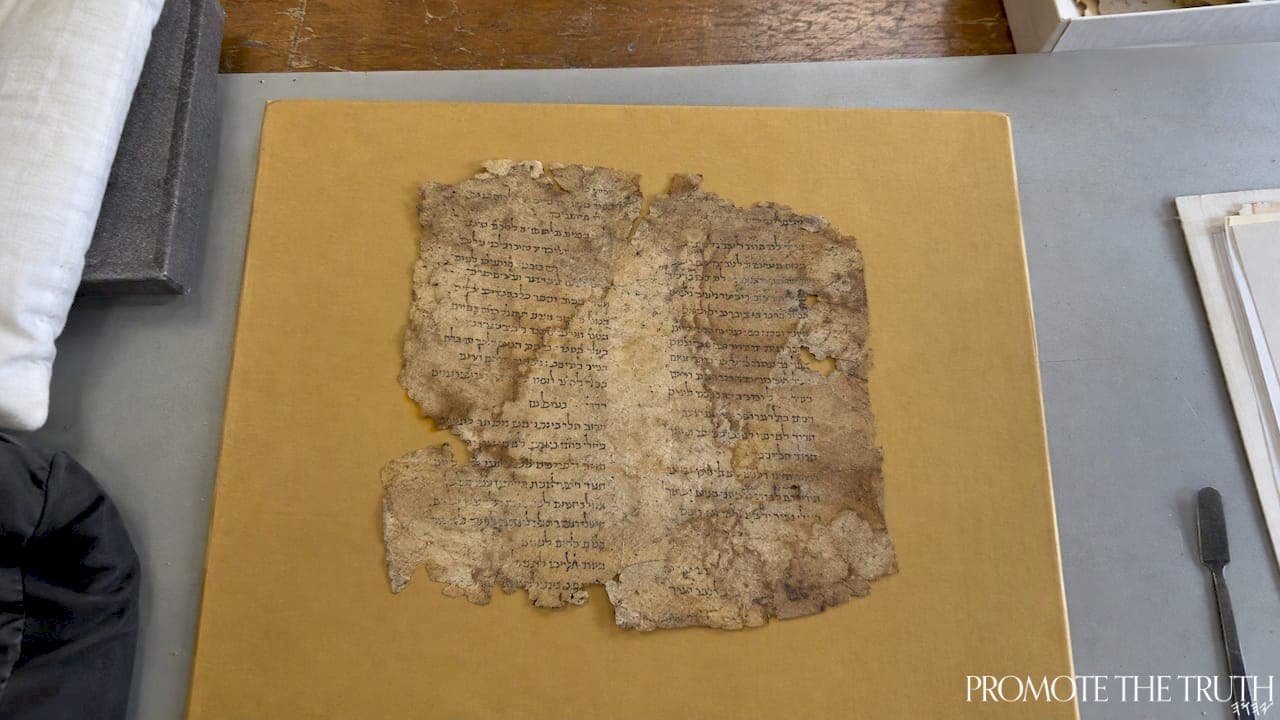
The term Tiykun Supariym (Tikkun Soferim) is associated with a rabbinic tradition concerning certain passages in the Scriptures that were believed to have undergone changes in wording. According to this tradition, some expressions were adjusted because they were considered unsuitable or disrespectful when referring to the Creator.
The subject raises important questions about the history of Scriptural transmission. What do these traditions actually claim? How should readers understand the differences between historical interpretations and the wording preserved in manuscripts? And how can these questions be examined without confusing a later explanation with the Scriptural text itself?
These questions require careful attention to the available evidence.
<u>Promote The Truth™</u> provides the <u>Truth Scriptures</u>, an English restoration from ancient Abariy (Hebrew) and Aramiyt (Aramaic) sources, alongside resources for studying the Scriptures. Readers can use these resources to examine Scriptural passages in context and develop a more informed understanding of the text.
TL;DR:
Tiykun Supariym (Tikkun Soferim) is a rabbinic term associated with claims that certain Scriptural passages were adjusted to avoid wording considered disrespectful toward the Creator.
Historical lists differ in their number of examples. The traditional count is eighteen, while some medieval manuscript lists reportedly contain approximately twenty-two.
Two major interpretations exist: some readers understand these traditions as reports of scribal changes, while others understand the wording as an original expression or euphemism.
Manuscript notes and historical lists provide information about how earlier readers understood the text, but they do not automatically establish what the earliest wording was.
A careful study should distinguish the received text, historical claims, manuscript evidence, and interpretations.
Promote The Truth™ encourages readers to examine Scripture through its Truth Scriptures resources and to approach Scriptural study with care and a commitment to truth.
Table of Contents
-
Which Scriptural Passages Are Associated with Tiykun Supariym (Tikkun Soferim)?
-
Tiykun Supariym (Tikkun Soferim) and the Study of Scripture Today
What Does Tiykun Supariym (Tikkun Soferim) Mean?
Tiykun Supariym (Tikkun Soferim) is commonly translated as “correction of the scribes.” The expression appears in discussions of a traditional list of Scriptural passages in which the wording was believed to have been altered or interpreted as a substitute expression.
The term should be understood in its historical context. It refers to a particular tradition about the wording of certain passages, rather than establishing by itself that a change definitely occurred.
Three distinctions are important:
-
The Scriptural text: The wording preserved in the text being examined.
-
The historical tradition: Claims made by later readers or interpreters about the wording.
-
The proposed original reading: An alternative expression that the tradition suggests may have existed earlier.
These categories should not be treated as interchangeable. A claim about an earlier reading requires evidence, and an interpretation should not automatically be presented as the original wording of Scripture.
Which Scriptural Passages Are Associated with Tiykun Supariym (Tikkun Soferim)?
Historical discussions of Tiykun Supariym (Tikkun Soferim) identify several passages in which a word, pronoun, or sentence structure is said to have been adjusted. The interpretations generally concern how an action or description relates to the Creator or to a person mentioned in the passage.
Examples discussed in the supplied historical material include the following:
1. Barashiyt (Genesis) 18:22
This passage describes Abarahm (Abraham) standing before YAHUAH. The Tiykun Supariym (Tikkun Soferim) tradition claims that an earlier expression may have described the positions of Abarahm (Abraham) and YAHUAH in the reverse order.
The central question is whether the traditional wording reflects a later change or whether the passage was expressed that way from the beginning.
2. Bamadabar (Numbers) 11:15
This passage contains Mashah’s (Moses’) appeal concerning his distress. The tradition associates it with a proposed change involving the expression “my wretchedness” and an alternative referring to “your wretchedness.”
The difference matters because changing a pronoun can alter the meaning of a statement. However, a proposed alternative should not be treated as the established original reading without sufficient evidence.
3. Bamadabar (Numbers) 12:12
This passage is also included in discussions of disputed wording. The claim concerns an expression associated with Mariym’s (Miriam’s) condition.
As with the other examples, the existence of a traditional explanation does not, by itself, establish that the text was changed.
4. Bamadabar (Numbers) 14:10
This passage appears in some expanded historical lists associated with Tiykun Supariym (Tikkun Soferim). Its inclusion illustrates that the lists have not always been identical.
The difference between lists is relevant when evaluating claims about the number and identity of the alleged corrections.
5. Habaquq (Habakkuk) 1:12
This passage is discussed because of a proposed difference between the expressions “You do not die” and “We do not die.”
The suggested difference changes the subject of the statement and therefore affects how the verse is interpreted. A responsible examination should distinguish the wording of the text from the historical explanation attached to it.
6. Zakariyahu (Zechariah) 2:12
This passage is associated with a proposed difference between “his eye” and “my eye.”
The distinction concerns the pronoun used in the passage. Readers should examine the wording in its context before accepting an explanation about why one expression may have been used instead of another.
Other passages have also been included in historical discussions of Tiykun Supariym (Tikkun Soferim). Because the lists vary, it is important not to assume that every source identifies precisely the same passages.
Why Do the Traditional Lists Differ?
Were the Passages Changed by Scribes?
Two broad interpretations are commonly discussed.
Interpretation One: Later Scribal Changes
According to this interpretation, the tradition describes actual changes made to earlier wording. Those who accept this explanation understand the historical reports as claims that scribes altered certain expressions.
If this interpretation is proposed, the next question is whether available manuscript evidence supports the suggested earlier wording.
A historical report about an alteration is relevant evidence for the history of interpretation, but it does not independently establish the exact wording that preceded the alleged change.
Interpretation Two: Original Euphemistic Wording
Another interpretation holds that the wording was chosen from the beginning as a respectful or indirect expression. Under this view, the tradition describes how a passage speaks rather than reporting a later alteration by a scribe.
This interpretation distinguishes the literary meaning of a passage from the claim that its text was changed.
The two explanations should not be combined as though they establish the same conclusion. One proposes a change in the wording; the other allows for the wording to have been original.
The important principle is to distinguish what a historical source claims from what the available evidence demonstrates.
What Can Manuscripts and Marginal Notes Tell Us?
Manuscripts and textual notes are important resources for examining the transmission and interpretation of Scripture. They can preserve information about how readers identified unusual wording, recorded alternative readings, and organized disputed passages.
The historical material discussed in connection with Tiykun Supariym (Tikkun Soferim) includes medieval Genizah fragments and Masoretic notes.
These records can help readers understand the development of the tradition, but their evidentiary value must be assessed carefully.
Manuscript Lists
Lists of alleged corrections show which passages particular historical communities associated with the tradition. Differences between lists can reveal changes in classification and interpretation over time.
However, a list is not the same thing as an ancient manuscript containing the proposed original reading.
Masoretic Notes
Masoretic notes record information about the text and its transmission. Such notes can direct readers toward unusual readings or established textual traditions.
A note identifying a disputed expression does not necessarily explain when the expression originated or prove that a change occurred.
Alternative Readings
When an alternative reading is proposed, the reader should ask what evidence supports it, where the reading is recorded, and whether it can be connected to an earlier textual witness.
These questions help prevent an interpretation from being mistaken for direct manuscript evidence.

How Should Readers Examine These Claims?
A careful examination of Tiykun Supariym (Tikkun Soferim) requires more than accepting or rejecting a historical claim based on its age or popularity.
Readers can follow a consistent study process.
-
Read the passage in context. Examine the surrounding verses rather than relying on an isolated phrase.
-
Identify the wording under discussion. Determine exactly which word, pronoun, or sentence structure is disputed.
-
Separate the text from the interpretation. Identify what the passage says and what a later explanation claims about it.
-
Examine the evidence. Distinguish manuscript readings from historical lists, marginal notes, and proposed reconstructions.
-
Avoid unsupported conclusions. Do not describe an alleged alteration as an established fact unless the available evidence supports that conclusion.
-
Continue studying the passage. Consider its immediate context and its relationship to the wider Scriptural message.
This method encourages careful study without assuming that every traditional explanation is correct or that every disputed reading demonstrates corruption.

Tiykun Supariym (Tikkun Soferim) and the Study of Scripture Today
Tiykun Supariym (Tikkun Soferim) illustrates why readers should distinguish the wording of Scripture from the historical explanations attached to it.
When a historical tradition proposes that a passage was altered, the claim should be examined rather than accepted automatically. At the same time, differences in interpretation should not be used to make conclusions that the evidence cannot support.
For translators and students, transparency is essential. If an alternative reading is discussed, it should be identified as an alternative or a historical claim rather than silently substituted for the wording being studied.
This approach helps readers recognize the difference between a preserved reading, an interpretation, and a proposed reconstruction.
For those studying Scripture through <u>Promote The Truth™</u>, the focus should remain on examining the Scriptural text carefully and using appropriate study resources to understand the passages in context.
Studying Through the Truth Scriptures
<u>Promote The Truth™</u> provides resources intended to help readers study Scripture through the Truth Scriptures restoration and related study materials.
<u>The Truth Scriptures</u> offer an English restoration from ancient Abariy (Hebrew) and Aramiyt (Aramaic) sources. Readers interested in questions of wording and transmission can use these resources to examine passages and continue their study.
Explore the following official resources:
-
<u>Truth Scriptures Translation</u> — Explore the Truth Scriptures restoration.
-
<u>Truth Scriptures Digital Collection</u> — Access the digital Scripture collection.
-
<u>Promote The Truth™</u> — Explore the official website and its Scripture study resources.
These resources provide a starting point for continued study. When examining a disputed passage, read the surrounding text, consider the wording carefully, and distinguish historical claims from conclusions supported by the evidence.
Conclusion
Tiykun Supariym (Tikkun Soferim) raises important questions about historical interpretations of Scriptural wording and the transmission of the text. Its traditional lists, disputed passages, and competing explanations provide material for careful examination, but they should not be treated as automatic proof that specific words were altered.
The distinction between a Scriptural reading, a historical tradition, and a proposed earlier wording is essential. By examining passages in context, considering the nature of the evidence, and avoiding unsupported conclusions, readers can approach these questions with greater clarity.
Promote The Truth™ encourages continued study through its Truth Scriptures resources. The goal is to examine Scripture carefully, distinguish evidence from interpretation, and pursue a more informed understanding of YAHUAH’s Word.
— Maria
FAQ
What is Tiykun Supariym (Tikkun Soferim)?
Tiykun Supariym (Tikkun Soferim) is a rabbinic term associated with a tradition claiming that certain Scriptural passages contain wording that was changed or expressed indirectly to avoid language considered disrespectful toward the Creator.
How many Tiykun Supariym (Tikkun Soferim) passages are there?
The traditional count is eighteen. Some historical manuscript lists reportedly contain approximately twenty-two entries. The totals differ because the inventories are not entirely uniform.
Were the passages definitely changed by scribes?
The claim is disputed. One interpretation understands the tradition as reporting actual scribal changes, while another understands the wording as an original euphemism. The existence of the tradition alone does not settle the question.
Do Masoretic notes prove that a passage was changed?
No. Such notes can document a textual tradition or identify an unusual reading, but their presence does not independently establish that a later alteration occurred.
Why are pronouns important in these discussions?
A change in a pronoun can alter who performs an action, who is being addressed, or whose condition is described. This can affect how a passage is interpreted, making the exact wording important to examine.
How should I study a passage associated with Tiykun Supariym (Tikkun Soferim)?
Read the passage in context, identify the disputed wording, distinguish the Scriptural text from the historical explanation, and evaluate what the available evidence actually supports. <u>The Truth Scriptures</u> and other official <u>Promote The Truth™</u> study resources can serve as starting points for further examination.