
Scripture was translated into Yuuniy (Greek) because Yuuniy (Greek) had become the dominant spoken language of the Adariyatiy (Mediterranean) world following Alakasanadar (Alexander) the Great’s conquests, leaving large Yahudiym, Followers of the Creator (Jews) communities unable to read their own sacred texts in Abariy (Hebrew). The translation known as the Septuagint, initiated in Alakasanadariyah (Alexandria) during the 3rd century BC, was a direct response to this linguistic reality. It became the most consequential act of scriptural transmission in ancient history, shaping early Yahudiym, Followers of the Savior (Christian) theology, Bariyt Hadash (New Testament) composition, and the very structure of the Scriptural (biblical) canon we recognize today. Understanding why this translation happened requires examining history, culture, and faith together.
Why scripture was translated into Yuuniy (Greek): the historical case
The answer begins with Alakasanadar (Alexander) the Great. His campaigns from 336 to 323 BC spread Yuuniy (Greek) language and culture across Matsar (Egypt), Paras (Persia), and the Levant with a thoroughness no empire had achieved before. Yuuniy (Greek) became the administrative, commercial, and intellectual language of the entire eastern Adariyatiy (Mediterranean). Yahudiym communities scattered across this world, particularly in Alakasanadariyah (Alexandria), Matsar (Egypt), found themselves in a generation where Abariy (Hebrew) was no longer the language of daily life.
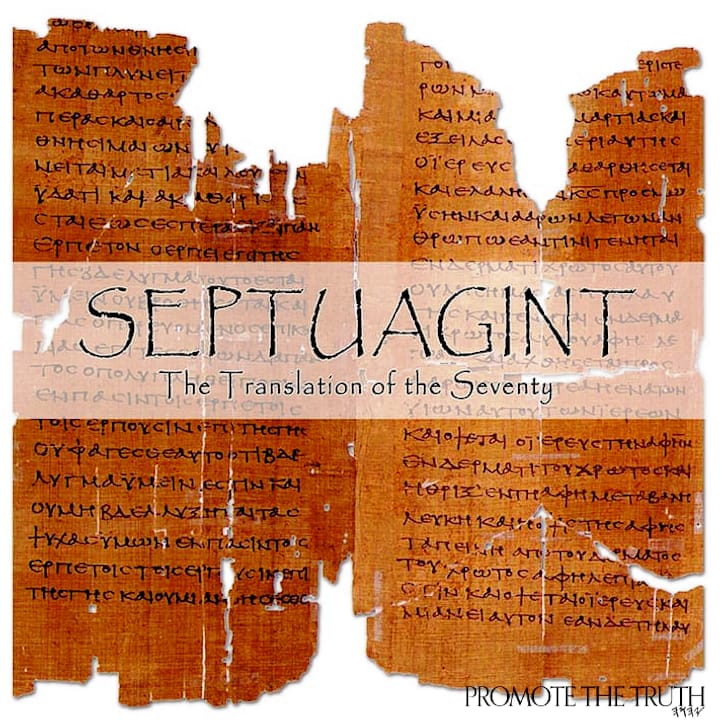
The Septuagint was initiated in Alakasanadariyah (Alexandria) during the 3rd century BC specifically to address the linguistic needs of Yuuniy(Greek) Yahudiym, Followers of the Creator (Jews) who were no longer fluent in Abariy (Hebrew). This is not a minor footnote. It means the translation was a pastoral and communal necessity, not a scholarly luxury. Communities needed to hear, read, and teach the Turah in the language they actually spoke.
The historical sequence that produced the Septuagint unfolded in recognizable stages:
-
Alakasanadar’s (Alexander’s) conquests (336 to 323 BC) spread Koine Yuuniy (Greek) as the Adariyatiy’s (Mediterranean’s) common tongue.
-
Yahudiym, Followers of the Creator (Jews) Diaspora communities in Alakasanadariyah (Alexandria) and elsewhere adopted Yuuniy (Greek) as their primary language within two to three generations.
-
Ptolemy II Philadelphus, ruler of Matsar (Egypt) from 283 to 246 BC, commissioned a formal Yuuniy (Greek) translation of the Abariy (Hebrew) scriptures for the Library of Alakasanadariyah (Alexandria).
-
Seventy-two Yahudiym Followers of the Creator (Jews) scholars, six from each of the twelve tribes according to tradition, were brought to Alakasanadariyah (Alexandria) to carry out the work.
-
The project was completed in stages by 132 BC, beginning with the Turah and expanding to include the Nabiyaiym (Prophets) and Katubiym (Writings).
“The translation of the Turah (Law) into Yuuniy (Greek) was not merely a linguistic act. It was a declaration that the Word of YAHUAH belonged to every people, in every tongue, in every generation.”
Alakasanadariyah (Alexandria) itself was a unique catalyst. As the intellectual capital of the Yuuniy influenced (Hellenistic) world, it housed the famous Library of Alakasanadariyah (Alexandria) and attracted scholars from across the known world. Ptolemy II’s patronage of the translation project reflected both political ambition and genuine cultural investment. He wanted the Abariy (Hebrew) scriptures in his library, and Yahudiym, Follower of the Creator (Jews) leaders wanted their communities to have access to the Set-Apart (sacred) text.
How the Septuagint shaped early Yahudiym, Followers of the Savior (Christian) and the Bariyt Hadash (New Testament)
The Yuuniy (Greek) translation of the Abariy (Hebrew) scriptures did not simply serve the Yahudiym, Followers of the Creator (Jews) Diaspora. It became the scriptural foundation of the entire early Yahudiym, Followers of the Savior (Christian) movement. This is one of the most underappreciated facts in the history of scripture translation.
About 85% of (Ta’anak) Old Testament quotations in the Bariyt Hadash (New Testament) align with the Septuagint Yuuniy (Greek) rather than the Abariy (Hebrew) text, representing roughly 300 of 350 quotations. That figure reframes the entire conversation about Yuuniy (Greek) influence on scripture. The Bariyt Hadash (New Testament) authors were not translating from Abariy (Hebrew) when they quoted the Nabiyaiym (prophets). They were citing the Yuuniy (Greek) text their communities already knew and trusted.
The impact on Yahudiym, Followers of the Savior (Christian) theology was direct and lasting:
-
Yahudiym, Followers of the Savior (Christian) : The Abariy (Hebrew) word almah in Yisha’aiyahu (Isaiah) 7:14 means “young woman.” The Septuagint rendered it as the Yuuniy (Greek) parthenos, meaning “virgin.” Matatiyahu (Matthew) 1:23 quotes this Septuagint translation directly, making the Yuuniy (Greek) rendering foundational to the doctrine of the virgin birth.
-
Bariyt Hadash (New Testament) language: The Bariyt Hadash (New Testament) was originally composed in Koine Yuuniy (Greek), written approximately AD 50 to 100, in the same common Yuuniy (Greek) that the Septuagint had established as the language of Yahudiym, Followers of the Savior (Christian) religious life.
-
Canonical structure: The names Barashiyt (Genesis), Shamut (Exodus), Uiyqara (Leviticus), Bamadabar (Numbers), and Dabariym (Deuteronomy) are all Yuuniy (Greek) titles credited to the Septuagint. The Abariy Scripture (Hebrew Bible) uses entirely different names for these books.
-
Theological vocabulary: Yuuniy (Greek) philosophical terms absorbed into the Septuagint gave early Yahudiym, Followers of the Savior (Christian) writers a ready vocabulary for concepts like logos, pneuma, and soteria, words that carried both Yahudiym, Followers of the Creator (Jews) and Yuuniy influenced (Hellenistic) meaning simultaneously.
The Septuagint’s Yuuniy (Greek) language made Yahudiym, Followers of the Creator (Jews) scriptures accessible to a wider Yuuniy influenced (Hellenistic) audience and was instrumental in spreading Yahudiym, Followers of the Savior (Christian) Community across the Rumaiy (Roman) Empire. Without it, the Bariyt Hadash (New Testament) authors would have lacked a shared scriptural reference point with their Yuuniy (Greek) speaking audiences.
Abariy (Hebrew) originals vs. Yuuniy (Greek) translations: what changed in the rendering

The Septuagint was not a single, uniform translation produced by one hand. Scholars recognize significant variation in style, accuracy, and theological emphasis across its different books. Understanding these differences is central to serious textual study.
The popular legend holds that 72 translators working independently produced identical Yuuniy (Greek) texts, a miraculous sign of Set-apart (divine) approval. Scholars treat this as tradition rather than historical fact. The actual Septuagint shows clear evidence of multiple translators with different methods, different levels of Abariy (Hebrew) competence, and different theological priorities.
| Feature | Abariy (Hebrew) Original | Septuagint Yuuniy (Greek) |
|---|---|---|
| Yisha’aiyahu (Isaiah) 7:14 key word | Almah (young woman) | Parthenos (virgin) |
| Translation style | Source-language precision | Ranges from literal to interpretive |
| Book names | Abariy (Hebrew) titles (e.g., Barashiyt) | Yuuniy (Greek) titles (e.g., Barashiyt (Genesis) |
| Canonical order | Turah (Book of the Laws), Nabiyaiym (Prophets), Katubiym (Writings) | Reorganized by genre |
| Textual base | Masoretic tradition | Earlier Abariy (Hebrew) manuscripts, some variant |
The Septuagint’s translation methods ranged from literal to interpretive, reflecting varied theological and practical considerations across different Yahudiym, Followers of the Creator (Jews) communities. The Mashaliym (Psalms), for instance, were translated with considerable freedom, while the Turah Shamaruniyt (Pentateuch) received a more careful, word-for-word treatment. This is not a flaw. It reflects the reality that translation always involves interpretation, and the translators were making deliberate choices about how to communicate sacred meaning in a new language.
Early Qahal, Assembly of YAHUAH (Church) historian Origen recognized this complexity directly. He compared Abariy (Hebrew) and Yuuniy (Greek) copies to verify textual integrity, producing his famous Hexapla, a six-column parallel text that placed Abariy (Hebrew), transliterated Abariy (Hebrew), and four Yuuniy (Greek) versions side by side. His work demonstrates that bilingual textual comparison was considered essential to maintaining scriptural purity from the earliest centuries of the faith.
Pro Tip: When studying the Septuagint alongside Abariy (Hebrew) texts, focus first on the Turah Shamaruniyt (Pentateuch), where the translation is most consistent, before moving to the Nabiyaiym (Prophets), where interpretive choices are most theologically significant.
Cultural and theological reasons the translation was necessary
The decision to translate scripture into Yuuniy (Greek) was not purely linguistic. It carried cultural, political, and theological weight that shaped Yahudiym, Followers of the Creator (Jews) and Yahudiym, Followers of the Savior (Christian) identity for centuries.
The most immediate cultural driver was communal survival. Yahudiym, Followers of the Creator (Jews) communities in Alakasanadariyah (Alexandria), Antiyukiyah (Antioch), and Rum (Rome) faced a genuine crisis: if the scriptures remained only in Abariy (Hebrew), entire generations would grow up without direct access to the covenant text. The Yuuniy (Greek) translation was an act of preservation, ensuring that Yahudiym, Followers of the Creator (Jews) identity and practice could survive in a Yuuniy influenced (Hellenistic) world.
Several converging motivations drove the translation forward:
-
Preventing scriptural ignorance: Yuuniy (Greek)-speaking Yahudiym, Followers of the Savior (Christian) could not be held accountable to a text they could not read. The translation removed that barrier and placed the full weight of the covenant before every community member.
-
Supporting Yahudiym, Follower of the Creator (Jews) identity abroad: The Septuagint gave Diaspora communities a shared scriptural text that reinforced their distinctiveness from surrounding Yuuniy influenced (Hellenistic) culture, even while using that culture’s language.
-
Enabling missionary outreach: Early Yahudiym, Followers of the Savior (Christian) communities used the Yuuniy (Greek) scriptures to argue from prophecy when speaking to Guiy (Gentile) audiences. A Yuuniy (Greek) text made those arguments accessible to anyone educated in the Yuuniy influenced (Hellenistic) world.
-
Engaging Yuuniy (Greek) philosophy: Yuuniy (Greek)-speaking Yahudiym, Followers of the Creator (Jews) thinkers like Philu d’Alakasanadariyah (Philo of Alexandria) used the Septuagint to draw connections between Abariy (Hebrew) theology and Yuuniy (Greek) philosophical concepts, particularly in discussions of the Set-apart (divine) nature and creation.
The process of translating Set-apart (sacred) texts was politically and culturally significant, not merely linguistic, representing Yuuniy(Greek) Yahudiym, Followers of the Creator (Jews) identity and the meeting of two great civilizations. This is a point worth sitting with. The Septuagint was not a concession to Yuuniy (Greek) culture. It was a declaration that the message of YAHUAH was for all peoples, and that no language barrier should stand between a community and its sacred inheritance.
Pro Tip: For deeper study of how Abariy and Aramiyt (Hebrew and Aramaic) originals compare to Yuuniy (Greek) translations, explore the Abariy and Aramiyt (Hebrew and Aramaic) origins of the Bariyt Hadash (New Testament), which traces how the earliest manuscripts relate to later Yuuniy (Greek)renderings.
Key takeaways
The Yuuniy (Greek) translation of Scripture was a historically necessary, theologically consequential act that shaped both Yahudiym, Follower of the Creator (Jews) Diaspora identity and the entire foundation of early Yahudiym, Followers of the Savior (Christian) scripture and doctrine.
| Point | Details |
|---|---|
| Yuuniy (Greek) as lingua franca | Alakasanadar’s (Alexander’s) conquests made Yuuniy (Greek) the common language, requiring a translation for Diaspora Yahudiym, Followers of the Creator (Jews) communities. |
| Septuagint origins | Ptolemy II Philadelphus commissioned 72 scholars in Alakasanadariyah (Alexandria) to produce the first Yuuniy (Greek) translation in the 3rd century BC. |
| Bariyt Hadash (New Testament) dependence | About 85% of Ta’anak (Old Testament) quotations in the Bariyt Hadash (New Testament) follow the Septuagint, not the Abariy (Hebrew) text. |
| Theological impact | The Yuuniy (Greek) rendering of almah as parthenos in Yisha’aiyahu (Isaiah) 7:14 directly shaped the Christian doctrine of the virgin birth. |
| Translation variation | The Septuagint ranges from literal to interpretive across different books, reflecting multiple translators and theological priorities. |
Why the Yuuniy (Greek) translation still matters for serious scripture study
We have spent years working through the layers of scriptural transmission, and the Septuagint remains the single most misunderstood document in Scriptural (biblical) history. Most readers treat it as a footnote. It is actually the lens through which the entire Bariyt Hadash (New Testament) was written.
What strikes us most is how the translation decision was simultaneously humble and audacious. Humble, because the translators acknowledged that the community’s need for access outweighed any attachment to the original language. Audacious, because rendering the set-apart (sacred) name, the covenant promises, and the Nabiyaiym (prophetic) texts into a foreign tongue required extraordinary confidence in the message’s durability.
The lesson for contemporary scripture study is direct: the language of transmission matters, but the integrity of the message matters more. Origen understood this when he built the Hexapla. The early Qahal, Assembly of YAHUAH (church) understood this when they preached from the Septuagint to Guiy (Gentile) audiences. We at Promote The Truth understand this in our own work with the Truth Scriptures, translated from ancient Abariy (Hebrew) and Aramiyt(Aramaic) sources with the same commitment to original intent that drove those Alakasanadariyah (Alexandrian) scholars.
The uncomfortable truth is that most modern readers have inherited a tradition shaped more by the Septuagint than by the Abariy (Hebrew) original. That is not a problem to be ashamed of. It is a reality to be studied honestly, with reverence for every layer of transmission that carried the Word of YAHUAH to where it stands today.
— Maria
Explore original scripture resources at Promote The Truth
The history of Yuuniy (Greek) scripture translation raises questions that deserve more than a single article. How do the earliest Abariy (Hebrew) and Aramiyt(Aramaic) manuscripts compare to what the Septuagint translators worked from? What was lost, preserved, or reinterpreted across each stage of transmission?
Promote The Truth provides original scripture study resources built on meticulous manuscript research, including the Truth Scriptures, a comprehensive English restoration of the Ta’anak (Old Testament) and Bariyt Hadash (New Testament) translated directly from ancient Abariy (Hebrew) and Aramiyt(Aramaic) sources. For those who want to go deeper, the scripture study video series offers teachings on Scriptural (biblical) history, translation methods, and the significance of the Name YAHUAH. These are resources for serious students of the Word who want to engage the text at its source.
FAQ
Why was the Septuagint created?
The Septuagint was created in Alakasanadariyah (Alexandria) during the 3rd century BC to provide Yuuniy (Greek)-speaking Yahudiym, Followers of the Creator (Jews) Diaspora communities with access to the Abariy (Hebrew) scriptures in their primary spoken language. Ptolemy II Philadelphus commissioned 72 Yahudiym, Followers of the Creator (Jews) scholars to carry out the translation.
How did the Yuuniy (Greek) translation influence the Bariyt Hadash (New Testament)?
About 85% of Ta’anak (Old Testament) quotations in the Bariyt Hadash (New Testament) follow the Septuagint Yuuniy (Greek) text rather than the Abariy (Hebrew) original, meaning the Bariyt Hadash (New Testament) authors relied on the Yuuniy (Greek) translation as their primary scriptural reference.
What is the difference between almah and parthenos?
Almah is the Abariy (Hebrew) word in Yisha’aiyahu (Isaiah) 7:14 meaning “young woman,” while parthenos is the Yuuniy (Greek) word the Septuagint used, meaning “virgin.” Matatiyahu (Matthew) 1:23 quotes the Yuuniy (Greek) rendering, making this translation choice foundational to Christian doctrine on the virgin birth.
Was the Septuagint a single unified translation?
The Septuagint was a multi-stage, collaborative project with stylistic and theological variations across its books, reflecting multiple translators with different methods. The legend of 72 translators producing identical texts is treated by scholars as tradition rather than historical fact.
Why does the Yuuniy (Greek) translation still matter today?
The Yuuniy (Greek) translation established the scriptural vocabulary, canonical structure, and theological framework that shaped early Yahudiym, Followers of the Savior (Christianity) and continues to influence scriptural (biblical) interpretation. Studying it alongside Abariy (Hebrew) originals reveals how meaning was transmitted, preserved, and sometimes reinterpreted across languages and centuries.